

How Long To Keep Pay Stubs and Other Payroll Records
 By
By
When you generate pay stubs, they do more than just tell you how much you earned every pay period. A pay stub is an essential document that shows transparency between employers and employees. However, you can only keep this document for a limited period.
Many employers and employees don't quite know how long to keep pay stubs and the rules that apply to this. Some people throw theirs away while others hold onto them for a long time, even if they’re not useful anymore. Additionally, you can use your pay stubs to calculate W-2 wages when you file income taxes.
While it is good to have thorough financial documents, it's also important to be able to reduce unnecessary clutter. In this article, we’ll clarify this issue and help you understand how long to keep pay stubs. You'll also learn why pay stubs are important documents and tips for managing your documents effectively.
Why Should I Keep My Pay Stubs?
A pay stub is more than a detailed record of your earnings. It is a very important tool that makes up a key part of your financial statements. Beyond showing the pay period covered, it also helps you organize your personal finances and qualify for key applications.
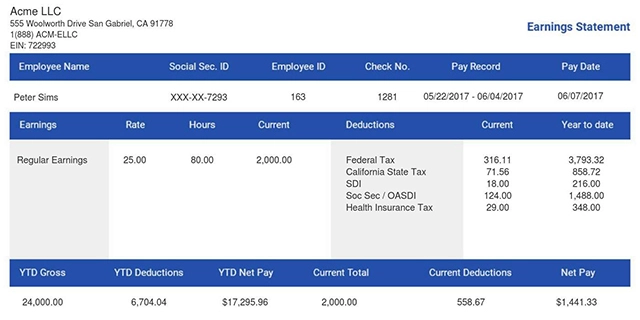
Your pay stub serves as proof of income and is also useful as proof of claim with an insurance company. It shows total wages, which are your wages earned, gross pay, net pay, taxes withheld, and deductions.
On a pay stub, you will also find basic records of the hourly rate and hours worked. These records are needed for tax filing, loans, rent applications, and wage disputes.
How Long Should You Keep Pay Stubs Legally?
The answer to “ How long do you need to keep pay stubs legally?” varies. This is because the government gives different ranges for how long to keep pay slips. On a federal level, different government organizations require these records for different reasons.
-
The IRS uses your pay stubs for tax purposes and requires a minimal period of three years. This is primarily for tax filing and record keeping. However, when it comes to employment tax records, the IRS often recommends keeping them longer.
-
The U.S. Department of Labor (DOL), under the Fair Labor Standards Act (FLSA), requires employers to maintain accurate payroll and wage records for record-keeping purposes. These important records, including pay rates, hours worked, and wage computations, must generally be retained for at least three years. While supporting time schedules must be kept for a minimum of two years.
So, what are the state-specific requirements for how long should you keep payroll stubs?
The state government across different states have their own distinct rules on how long. However, it is best to keep pay stubs for at least one year after the tax year ends. You can compare it with your W2 form and discard the routine stub copies.
For tax audits, three years is a safe minimum. The IRS audit window generally covers three years. Some state laws require employers to provide employees with physical copies of wage statements.
While some others allow electronic delivery only with employee consent. Always confirm the requirements of your specific state to stay compliant when deciding how long to keep pay stubs.
There are some situations where you might be required to keep your stubs for longer. Here is a breakdown of different timelines to keep your stubs:
-
Audits or tax disputes: You should keep your stubs for at least three years after filing. If the IRS asks, you need backup. This will help you save time when computing income tax returns.
-
Employment claims and wage disputes: Stubs from past pay periods are a reliable proof of payments for both employers and employees. It contains records relating to the regular hourly pay rate for hourly employees. It is also useful for salaried employees and freelancers to avoid legal action.
-
Major life events: While a pay stub contains identifying information, it is not proof of identity, as with birth certificates. However, it can be used to prove income in various applications. For loans, lenders usually want the last two to three years of paycheck stubs and income tax returns.
-
Self-employed or contractors: If you use pay stubs to prove income or to calculate quarterly taxes, keep records of three to six years.
-
If you receive electronic or digital records, keep the digital copies until you can verify that your tax returns and other records match. It is advisable to have both paper documents and digital records of your stubs.
-
A non-exempt worker or hourly worker should keep total hours and overtime records for at least three years.
How Long To Keep Other Records Linked to Your Pay Stubs?

In most cases, pay stubs are used alongside other financial documents. So when you manage pay stubs, remember other records matter too:
-
Income tax returns and W-2 forms for at least three years
-
Receipts for large purchases or financial assistance for a period of three to seven years
-
Bank statements that match payroll deposits for one to three years. They can help you verify your tax filing and net pay.
-
Records tied to benefits like HSA, retirement contributions, and insurance for as long as the benefits last.
Should an Employer Keep Employee Stubs?
Employers must follow federal and state rules. The Fair Labor Standards Act requires all employers to keep all records of employee hours and wages. For some processes, they might need to keep these details in a particular form. According to the IRS, employers are to keep a record of;
Employers should keep records that show hours worked, wage rate tables, gross pay, and taxes. It should include all purchase records made on behalf of the employee, either as a contribution or a bonus. All of these must be done in compliance with federal laws.
They are required as proof in case of a wage dispute and for auditing purposes before tax deadlines for businesses. Employers also need them to compute their payroll taxes and reports. They can be paper documents or digital copies, as long as they are accurate, accessible, and can be reproduced upon request. It must cover the start-to-end date of the pay period.
How To Organize and Store Pay Stubs
Proper storage and organization of pay stubs is very important. You need to find a system that is reliable, compliant, and accurate. There are two main options for organizing and storing your stubs.
1. Digital Storage
Digital pay stubs are one fo the most reliable ways you can store your stubs. They usually come with a cloud storage and backup feature. They are also very flexible when you need to share a stub across different platforms.
-
If you get paper records, you can convert them to digital by scanning your paper stubs. You can also use a pay stubs template to maintain consistency across your records, making it easier to verify totals and comply with audit requirements.
-
For digital pay stubs, always download them and save them from the portal for personal use.
-
Always name your files to include the name, date, month, and year for easy retrieval.
-
Keep your stubs in an encrypted cloud folder or a secure external drive to reduce clutter.
-
Always have multiple backups of at least two copies. One can be localized while the second can be on the cloud.
-
Keep files for at least three years after the tax return date. For key events, keep longer.
-
Pay stubs often include your Social Security Number or the last four digits of it. That is sensitive information. Use passwords and two-factor authentication to protect your login details. This is needed for sensitive data like Social Security Numbers and account numbers.
You can keep your payroll records accurate and compliant by using the 123 Paystub method. In three easy steps, you can generate professional, compliant pay stubs and maintain organized pay details for easier record management.
2. Paper Folders
For paper documents, you will need to adopt paper folders stored in a safe, reliable, and secure place.
-
Make sure that all folders are properly labeled for easy retrieval.
-
Ensure they are organized in a sequential order. This could be alphabetically by name or by pay period.
-
Make sure you keep the W-2 and tax returns with the folder.
-
When a year is done and W-2 matches, you can shred the older year's routine stubs.
How To Destroy Old Pay Stubs Safely
Pay stubs include very sensitive information. When you're ready to get rid of your pay stubs, it is important to do so properly. Otherwise, someone could get hold of your personal financial information.
-
For paper, the best way to discard a pay stub or any important financial document is to shred it. Use a cross-cut shredder for small tasks. However, if you have many files, use a shredding service.
-
For digital copies, delete the files from the storage device. Then go ahead to delete them from the recycle bin as well.
Remember to keep at least one backup until you are sure you will no longer need the record.
Wrapping Up
Now you know how long to keep pay stubs, and when you need to dispose of them. It's important to do so very carefully to protect your personal data. Make sure you confirm the specific requirements for your state for how long to keep pay stubs. By keeping your pay stubs, you'll be able to ensure that you have an accurate record of your earnings.
Managing your financial records is now easier with our paystubcreator. You can create accurate, compliant, and easy-to-read pay stubs online in minutes, helping you stay organized and audit-ready year-round.
- 1. Enter Your Information

- 2. Select Your Favorite Theme

- 3. Download Your Stub!


 By
By