

Semi-Monthly Payroll: Optimizing Your Pay Schedule for Business Success
 By
By
Most employers use the main pay schedules, like a monthly payroll or a weekly payroll schedule. Monthly pay allows employers to balance their financial figures. Meanwhile, weekly pay can allow employees to have more immediate control over their cash flow.
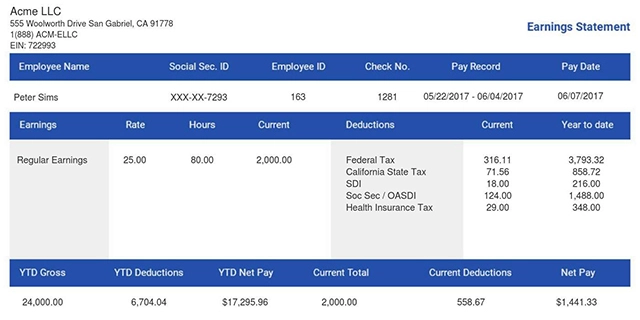
We are here to suggest a third option that strikes a balance: implementing a semi-monthly payroll system. While it makes payroll simple, it also makes it easy to create important documents like pay stubs. With this, you can create your employee pay stub with a paystub generator.
What Is a Semi-Monthly Pay Schedule?
A semi-monthly pay schedule is a payroll schedule where employees receive their wages twice a month. The payment occurs on the same dates each month. This typically means the 1st and 15th or the 15th and last day of the month. These fixed dates are a pretty predictable pay period for everyone involved.
People often confuse this pay frequency with biweekly pay schedules. Although they are similar, there are key differences between them. Semi-monthly payments always occur exactly twice a month. This results in 24 semi-monthly pay periods per year. In contrast, a biweekly schedule happens every two weeks. That means that there are 26 biweekly pay periods and two months where employees receive three paychecks.
This semi-monthly payment schedule is an excellent fit for employers who have salaried employees. They would have a consistent semi-monthly salary. Unlike some other payroll schedules, it can also be used for hourly workers. However, FLSA overtime rules use a 7-day workweek. A biweekly or weekly payroll aligns better for hourly staff. Therefore, this makes it a versatile option for companies that use multiple types of payment schedules.
Key Differences: Semi-Monthly vs. Bi-Weekly
Understanding the key differences between semi-monthly pay and biweekly pay is crucial. While both involve paying employees more than once a month, they’re still different in terms of their impact on budgeting and payroll processing:
-
Pay Frequency & Number of Paychecks: A semi-monthly payroll schedule yields 24 paychecks per year. Meanwhile, biweekly pay schedules yield 26 paychecks per year. This means employees on a bi-weekly plan receive two extra paychecks annually, but each check is smaller.
-
Consistency of Pay Dates: Semi-monthly pay is tied to specific dates (e.g., the 15th and last day of the month). So, the day of the month is consistent, but the day of the week may change. Biweekly pay always lands on the same weekday, like every other Friday.
-
Impact on Budgeting: The consistent dates of semi-monthly pay can simplify financial planning for businesses and employees managing monthly expenses. The fluctuating dates of biweekly pay can sometimes complicate cash flow management.
Benefits of Semi-Monthly Pay Schedules
Some of the benefits are specifically for employees, while others are aimed at businesses.
It’s Easier for Employees To Manage Their Money
If you pay your employees on weekly payroll schedules or biweekly pay schedules, you may hear complaints about managing monthly bills. This may not be a reflection of their annual salary but of the misalignment between frequent pay and monthly expenses.
Using semi-monthly schedules gives your employees two paychecks that are larger than weekly pay. Therefore, this allows them to cover their regular expenses with greater ease. The first semi-monthly payments can go towards major bills. The second paycheck can be used for other costs, giving employees greater control over their financial planning.
Your pay stub helps you record your income, and the best way to create your document is by using the 123 paystub approach. It provides a way to generate your professional pay stubs in a few simple steps.
It’s Easy To Mix This Method With Other Payroll Methods
Semi-monthly payroll can help a business manage its finances by aligning outgoings with incomings. You can ensure that salaried workers on a monthly payroll get paid on the same day of the month as your semi-monthly workers. This is mainly because these pay dates are fixed dates.
This consistency simplifies payroll processing. It also reduces the administrative burden compared to managing the variable pay dates of a bi-weekly plan. Also, it becomes more straightforward to generate important documents like pay stubs with this consistent schedule. You can easily use a pay stub template to generate this online.
Bank Holidays Won’t Mess Up Your Payment Schedules
If your employees are paid semi-monthly, on a bi-weekly schedule or weekly, there can be delays. For example, bank holidays can delay pay dates and disrupt financial plans. With a semi-monthly payment schedule, if a payday falls on a holiday, it is typically moved to the previous business day. This minor adjustment is less disruptive than missing an entire week's weekly pay, helping employees receive their funds on time with less stress.
Leap Days and Odd-Numbered Days Are No Longer an Issue
Pay schedules, such as weekly pay or biweekly pay, can lead to paydays shifting throughout the month. This inconsistency causes confusion. However, with a semi-monthly pay period, the pay dates are always on the same dates you set. Semi-monthly avoids the shifting weekday issue caused by 28–31-day months. Employees always know which day of the month to expect their direct deposits. This, in turn, improves clarity and reduces queries.
Figuring Out Accruals Will Be Easier
If your employees receive benefits, calculating accruals is streamlined with a semi-monthly payroll. The pay period is consistent and aligns with the calendar month. Therefore, it makes compliance, taxes, retirement contributions, and other deductions simple. It also ensures that overtime calculations are accurate and labor laws are followed. This makes calculating payroll for benefits more straightforward for your accounting team throughout the year.
What You Should Be Aware Of
It may be beneficial to switch to a semi-monthly payroll schedule. However, there are a couple of aspects to the plan you should be aware of:
Half-Days And Shift Swappers Might Be Hard To Track
Semi-monthly payments may be ideal for salaried employees and hourly employees who work a consistent schedule. This allows your accounting department to easily process the same amount each half-month.
However, it can be complex to track employees' hours worked. This is especially true if you have part-time employees or a system that allows people to swap shifts. Because these employees don't stick to a regular schedule, time tracking needs more attention.
If You Have Deadlines for the Hours You Work, It Can Get Confusing
Some employers use cut-off times to control overtime hours. With a semi-monthly pay period, which might take up to 15 or 16 days, it can be confusing for hourly workers. They may find it hard to track their accumulated time against a weekly overtime cap.
For systems with strict weekly limits on hours worked, semi-monthly pay schedules may not align well with these limits. This makes overtime pay calculations more complicated than when compared to a biweekly schedule.
Keep in mind that under the Fair Labor Standards Act (FLSA), you must calculate overtime for non-exempt employees on a weekly basis. So, if you prefer semi-monthly for your hourly employees, you must ensure the payroll system tracks weekly hours accurately. This can help to avoid misunderstandings about legality and the frequency of pay.
How To Calculate Semi-Monthly Pay Schedules
Understanding how to calculate a semi-monthly pay schedule is essential for accurate payroll processing. The method differs for salaried and hourly employees.
-
For Salaried Employees: The calculation is straightforward. You just need to take the employee's annual salary and divide it by 24. 24 is the number of semi-monthly pay periods in a year. For example, an annual salary of $60,000 divided by 24 equals a semi-monthly salary of $2,500 before deductions.
-
For Hourly Employees: You must calculate based on the hours you work during that specific pay period. Multiply the total hours recorded by the employee's hourly wage. This requires meticulous time tracking as the number of days in each pay period can vary.
Is a Semi-Monthly Payroll Schedule Right for You?

Choosing the right payroll schedule depends on your business structure. A semi-monthly payroll may be best for you if your team is mostly salaried employees. Because of this, you want predictable pay dates for easier cash flow management. It reduces the administrative burden with fewer pay periods than biweekly payroll or weekly payroll. This ultimately secures your business payroll.
However, a semi-monthly payroll might not be the best choice if you have a lot of hourly workers whose overtime pay needs weekly calculation. It may also not work if you're in an industry like retail, where you have new hires that need to be paid weekly.
In Summary
If you have workers on a salary, paid hourly, or a mixture of both, then you may consider using a semi-monthly payment system. It can help your business control its finances while allowing your employees to manage their bills with predictable semimonthly payments. This payroll method is great for any job that doesn't include shift swapping or capped hours.
A paystub maker is a great, affordable way to create custom paystubs for your semi-monthly pay periods. Create pay stubs easily with us today!
- 1. Enter Your Information

- 2. Select Your Favorite Theme

- 3. Download Your Stub!


 By
By