

Illinois 401k Mandate: What Employers Must Do in 2026
 By
By
If you run a business in Illinois, this rule is probably already your problem. The Illinois 401k mandate gives most private employers two choices: offer a retirement plan, or enroll workers in a state-run savings program. Either way, it changes what your payroll paperwork has to show. In June 2026, that program changed its name, and missing the requirement costs you per employee, per year.
This guide covers who the rule applies to and what changed in 2026. It also walks through what you owe each payday, what noncompliance costs, and how the deduction should appear on your team's pay stubs.
Key Takeaways
- The rule hits employers with five or more employees, two or more years in business, and no qualified plan.
- Illinois Secure Choice became My Illinois Savings on June 15, 2026, with a new portal at myilsavings.com.
- Penalties run $250 per employee the first year and $500 per employee every year after.
- Offering a 401(k), SIMPLE IRA, or similar plan exempts you, but the exemption has to be certified.
- What Is the Illinois 401k Mandate?
- Who Must Comply With the Illinois Retirement Mandate?
- What Changed in 2026: Secure Choice Is Now My Illinois Savings
- How the Illinois 401k Mandate Works
- Employer Responsibilities and Payroll Records
- What Are the Penalties for Ignoring the Illinois 401k Mandate?
- Your Other Option: Offer a Qualified Plan
- Conclusion: Meeting the Illinois 401k Mandate
What Is the Illinois 401k Mandate?
The Illinois 401k mandate is a state law. If you employ five or more people in Illinois, you must offer a retirement plan or enroll staff in the state program. That program is now called My Illinois Savings. Created by the Illinois Secure Choice Savings Program Act (820 ILCS 80), it funds a Roth IRA by default, not an employer 401(k). Savers can switch to a Traditional IRA instead.
That distinction matters. Workers are enrolled in an individual retirement account they personally own, funded by payroll deduction. Employers do not contribute, do not match, pay no program fees, and carry no fiduciary responsibility. The program has been running since 2018.
Who Must Comply With the Illinois Retirement Mandate?

You must comply if three things are true. Your business had at least five Illinois employees in every quarter of the previous calendar year. It has run for two or more years. And it does not already offer a qualified retirement plan. Part-time staff count toward the five, and so do seasonal workers who stay longer than 60 days.
The five-employee test is where owners slip up. It is not your headcount this morning. It is whether you cleared five Illinois employees in every quarter of last year. If you are unsure how to count heads, full-time equivalent rules explain how part-time hours add up. The Illinois retirement plan mandate also counts owners and family members who are taxed as employees. On the worker side, anyone 18 or older employed in Illinois is eligible.
What Changed in 2026: Secure Choice Is Now My Illinois Savings
On June 15, 2026, the program was renamed My Illinois Savings and moved to a new recordkeeping platform. So what is Illinois Secure Choice today? The same law wearing a different name. The governing statute is still the Illinois Secure Choice Savings Program Act, 820 ILCS 80. Older payroll guides call it Secure Choice Illinois or the Illinois Secure Choice Retirement Savings Program. Every one of those names points to the same program.
What actually changed is the front end. The employer portal now lives at myilsavings.com/employers, and workers manage their accounts at myilsavings.com/savers. Balances and investment elections carried over automatically, but employers and savers had to retrieve their accounts in the new system. Program fees changed at the transition too, so check the official program details rather than trusting older third-party figures. As of May 2026, the state reported 170,151 savers, more than $339 million saved, and over 25,000 registered employers across all 102 Illinois counties.
How the Illinois 401k Mandate Works

You register, upload your employee roster, and run the deductions each pay period. The program handles the rest. Employees then get 30 days to act. If they do nothing, they are automatically enrolled at 5% of gross pay into a Roth IRA. The Illinois Secure Choice opt out window starts the day you submit their information. After that, workers can stop, restart, or change their rate at any time.
Contributions climb 1% a year until they reach 10%, unless the employee turns that feature off. The account belongs to the employee and travels with them to their next job. For 2026, the IRS caps IRA contributions at $7,500, or $8,600 from age 50.
Employer Responsibilities and Payroll Records
Your role is administrative, not advisory. Keep the roster current, add new hires as they become eligible, mark leavers inactive, set up the deduction, and remit contributions on time. All of this sits alongside the state pay stub laws you already follow. Under Secure Choice, Illinois employers moved through five registration waves, and every one of them has closed.
What you must not do matters just as much. Do not offer investment, tax, or legal advice, do not promise returns, do not tell staff whether to contribute, and do not manage beneficiary designations.
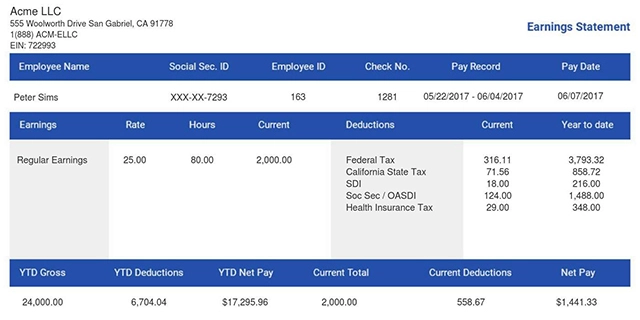
Payroll records are where this gets practical. Because the money lands in a Roth IRA, the deduction comes out after tax. It reduces take-home pay without reducing taxable wages. That means it belongs on its own line in the deductions block, alongside the other pay stub deduction codes you already report. The Illinois Department of Revenue determines employee counts from employer-reported data, which makes accurate payroll records your first line of defense.
What Are the Penalties for Ignoring the Illinois 401k Mandate?
Employers who ignore the mandate face $250 per employee for the first calendar year of noncompliance. Every year after that costs $500 per employee, under 820 ILCS 80/85. The Illinois Department of Revenue issues the penalty, and you have 120 days to file a written protest.
| Year of Noncompliance | Penalty per Employee |
|---|---|
| First calendar year | $250 |
| Each year after | $500 |
A 25-person business that never registered is looking at $6,250 for year one and $12,500 for each year after. Those years do not have to be consecutive for the higher rate to apply. No countdown remains: the final registration deadline passed on November 1, 2023. Need the Illinois Secure Choice phone number to resolve a notice? The employer line is 855-650-6913. Lines are open weekdays, 8am to 8pm CT.
Your Other Option: Offer a Qualified Plan
You are exempt if you sponsor a qualified plan. That list covers:
- A 401(k) or other 401(a) plan
- A 403(a) or 403(b) plan
- A 408(k) SEP or 408(p) SIMPLE IRA
- A 457(b) plan
- A qualified union plan
The catch is that exemption is an action, not a default. You certify it using your access code and federal tax ID. Do nothing and you look identical to a noncompliant employer from the state's side. A 401(k) also lets you match contributions and lets employees defer up to $24,500 in 2026, though it carries administration the state program does not. A 401(k) is pre-tax too, which changes how W-2 wages are calculated from a pay stub.
You Might Also Like
- Payroll Codes Explained
- What Does a Pay Stub Look Like?
- What Is Adjusted Gross Income and How Do You Calculate AGI?
- Can Jobs Hold Your First Paycheck?
- The Difference Between Payroll and Compensation
Conclusion: Meeting the Illinois 401k Mandate
This rule is not new, and its deadlines are not approaching. They have already passed. If you have five or more employees and no qualified plan, register at myilsavings.com or certify your exemption now. Then make sure your payroll paperwork keeps up. Create clear, accurate pay stubs with ThePayStubs.com so every retirement deduction is documented exactly the way the state expects.
- 1. Enter Your Information

- 2. Select Your Favorite Theme

- 3. Download Your Stub!

 By
By