

What Is a Levy? Types, Rules, and How to Stop One
 By
By
If a notice just told you that your wages or bank account are about to be seized, the first thing you need is a straight answer to a simple question: what is a levy, exactly? It is one of the most confusing words in finance, because it means two different things. Whether the notice landed in your mailbox or on your payroll desk, ThePayStubs keeps your pay records clean while you sort it out. This guide covers both meanings, the types of levies, how the process works, what a levy does to your paycheck, and how to stop one.
Key Takeaways
- A levy is the legal seizure of property to satisfy an unpaid debt, and it differs from a lien, which is only a claim.
- The IRS must send a Final Notice of Intent to Levy and wait at least 30 days before taking your wages or bank funds.
- A wage levy appears on your pay stub as its own post-tax deduction line and reduces your net pay.
- The 25% garnishment cap does not apply to IRS tax levies, which use an exempt amount instead.
What Is a Levy?
A levy is the legal seizure of property or assets to satisfy an unpaid debt. The IRS, a state agency, or a court-backed creditor can take wages, bank funds, or property directly. The same word also means to impose a tax or fee, which is where most of the confusion starts.
That double life explains why the question gets typed so many ways. Whats a levy, what does levy mean, and what are levies all land on one split definition:
- To levy something is to impose or collect it. Governments levy taxes, and a council may levy a fee on new construction. That is what does levying mean in everyday civic language.
- A levy as a noun is the seizure itself, or the amount imposed.
Dictionaries define levy along exactly those lines, and you will see levies meaning either one depending on context. When a news report says a country will levy a tax on imports, nobody is seizing a bank account. When a letter from the IRS uses the word, someone is. So what's a levy in the sense that brings most people here? The second one.
What Is a Tax Levy?

A tax levy is the IRS or a state tax agency seizing your assets to collect unpaid tax debt. It is an enforcement action, not a bill. Unlike a private creditor, the IRS needs no court judgment first, only the required notices and a 30-day waiting period.
What is a levy tax, then? Same thing, phrased the way people search for it after opening a letter. The debt already exists and has already been assessed, whether it came from income tax, self-employment tax, or the difference between payroll tax and income tax that trips up so many filers. The levy is simply the collection method of last resort, used after the reminders have run out.
Types of Levies
What is a levy in practice? That depends on which asset it targets, and the differences matter to your cash flow.
Wage Levy
Form 668-W is the document that reaches your paycheck, covering salary, commissions, and other income. It is continuous: once your employer receives it, the deduction repeats every pay period until the IRS issues a release. You do not get a fresh start each payday.
Bank Account Levy
Form 668-A reaches money a third party holds for you, including bank accounts and business receivables. A bank levy is a snapshot, not a standing order: it captures the balance on the day it arrives, and later deposits are normally untouched. The bank must wait 21 calendar days before surrendering the funds, which is your window to resolve it.
Property Seizure
The IRS can seize and sell real property, vehicles, and other physical assets. In practice this is rare and reserved for large balances, because selling property is slow and expensive.
Social Security and Federal Payments
Retirement income is not off limits, which catches people out when they assume one government check is safe from another.
Through the Federal Payment Levy Program, the IRS can take up to 15% of certain federal payments, including Social Security retirement benefits. Supplemental Security Income sits outside that program, and some federal vendor payments can be levied in full.
How Does a Levy Work?

A levy follows a notice sequence. The IRS assesses the tax, sends a bill, mails reminders, then issues a Final Notice of Intent to Levy (LT11, Letter 1058, or CP90). That final notice starts a 30-day clock and gives you the right to a hearing.
Knowing which letter you are holding matters, because only one starts the clock:
- CP14 is the first bill, telling you a balance is due. It follows the return you filed, or one the IRS filed for you if you never did. If you are behind, you can still file taxes using your last pay stub.
- CP501 and CP503 are reminders that the balance is still open.
- CP504 is a final reminder. It threatens your state tax refund, and the IRS can take that refund on this notice alone.
- LT11, Letter 1058, or CP90 is the Final Notice of Intent to Levy and Notice of Your Right to a Hearing. This is the one that permits a levy on wages or bank accounts after 30 days.
That distinction catches people out. A CP504 feels final, but it is not the notice carrying your hearing rights. So in the strict sense, what is a levy notice? It is the LT11, Letter 1058, or CP90.
What Is a Levy vs. a Lien or Garnishment?
These three terms get used interchangeably, and they should not be.
| Term | What it is | Who can issue it | Effect on your money |
|---|---|---|---|
| Lien | A legal claim securing a debt | IRS, state, creditor | Nothing is taken; it attaches to property you own |
| Levy | The actual seizure of assets | IRS, state, creditor with judgment | Funds or property are taken |
| Garnishment | An order routing part of your pay to a creditor | Creditor with a court judgment | A portion of each paycheck is diverted |
A lien is a claim, a levy is a taking. That resolves most of the confusion. If you want to see the difference on paper, our guide to what a garnishment looks like on a pay stub shows the line item itself.
The garnishment comparison carries a trap worth spelling out. Ordinary creditor garnishment is capped by federal law at the lesser of 25% of disposable earnings or the amount above 30 times the federal minimum wage. That cap comes from the Consumer Credit Protection Act, and it expressly does not apply to federal or state tax debts. An IRS wage levy is not limited to 25%.
What Is a Levy on Property?
Ask what is a levy on property and you may get two unrelated answers, so it helps to name them separately.
The first is a property tax levy. Your county, school district, or municipality sets an annual levy, which is the total amount it needs to raise from property owners. Divided across assessed values, that becomes the mill levy or the ad valorem rate on your bill. Nobody is seizing anything here. A local government is simply deciding how much to levy a tax for the coming year.
The second is an IRS levy on property, meaning the actual seizure of real estate or vehicles for unpaid tax debt. Same word, opposite experience.
How a Wage Levy Appears on Your Pay Stub
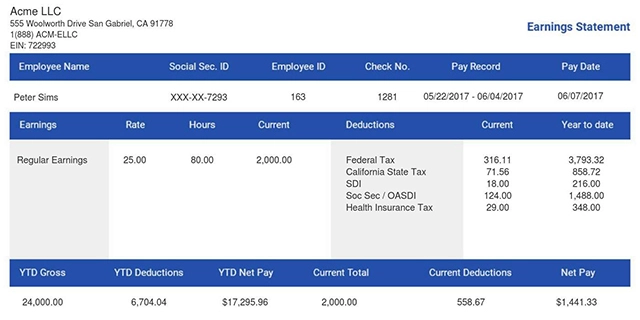
A wage levy shows up as its own post-tax deduction line, often coded LEVY, IRS LEVY, or FED LEVY. It reduces your net pay, not your gross. Your employer withholds everything above an exempt amount set by your filing status and dependents, then sends it to the IRS.
This is the part almost nobody explains, and where most of the anxiety lives:
- The line sits with your other deductions, after taxes, so your gross wages and your tax withholding are unchanged. Only take-home pay moves. If the abbreviation is unfamiliar, our guide to pay stub deduction codes decodes the rest of the column.
- State agencies run parallel programs. If you are asking what is state levy on paycheck, that is the answer: the same mechanism run by your state, under a code that usually names it.
- The exempt amount comes from IRS Publication 1494, reissued every December. It is based on your standard deduction and your number of dependents, not on a flat percentage, and it is calculated separately from your federal income tax taxable wages.
- Bonuses can be taken in full if the exempt amount was already paid out for that period.
Employers have work to do here too. When Form 668-W arrives, the employer hands the employee the Statement of Dependents and Filing Status to complete and return within three days. If it does not come back in time, the employer must calculate the exempt amount as married filing separately with zero dependents, the least favorable result for the worker. Withholding starts with the next payroll and continues until the IRS sends a release.
If a levy has reduced your take-home pay, keep every stub from that period. A landlord or lender will see a gap between gross and net that needs explaining, and the stub is the cleanest explanation you have.
How to Stop or Release a Levy
Acting during the 30-day window gives you the most options. After that, you still have several.
- Pay the balance in full. The levy is released once the debt is satisfied.
- Request a Collection Due Process hearing. File Form 12153 within 30 days of the final notice. This pauses collection while your case is reviewed.
- Set up an installment agreement. A monthly payment plan generally stops enforcement while you stay current. Here is how to set up a tax payment plan with the IRS.
- Submit an Offer in Compromise. If you genuinely cannot pay the full amount, the IRS may accept less.
- Request Currently Not Collectible status. If paying would leave you unable to cover basic living expenses, collection can be suspended.
- Claim innocent spouse relief. Form 8857 applies when the debt belongs to a spouse or former spouse.
- Prove economic hardship. The IRS must release a levy that creates immediate financial hardship.
One option is easy to miss: if a bank levy was issued in error and your bank charged you for it, Form 8546 reclaims those charges, up to $1,000, within one year.
You Might Also Like
- What Is FITW Tax?
- What FICA Stands For
- How to Change Your Direct Deposit Information With the IRS
- How to Calculate Tax on 1099-MISC Income
- Understanding Medicare Tax
Conclusion
So, what is a levy? It is either a charge a government imposes or the seizure of assets to collect a debt that has gone unpaid, and the context tells you which. The practical version most people meet is the tax levy, and its most visible sign is a new deduction line quietly shrinking a paycheck.
Whether you are an employee watching your net pay drop or an employer processing a levy notice, accurate records make everything easier. Create clear, professional pay stubs with ThePayStubs and keep documentation you can hand to a landlord, a lender, or the IRS with confidence.
- 1. Enter Your Information

- 2. Select Your Favorite Theme

- 3. Download Your Stub!


 By
By