

What Is Payroll Accrual and How to Calculate It (2026)
 By
By
Payroll accrual is a key part of running a small business. It means you record wages your team earns before you pay them. Say your payday falls at the end of the month. The last few days of November wages may not be paid until December. You still record those wages on your November books. They go down as a current liability on your balance sheet. This guide explains payroll accrual in plain terms. You will learn what it is, why it matters, and how to calculate it. You can also create accurate pay stubs in minutes at ThePayStubs.com.
Key Takeaways
- Payroll accrual records all wages and related costs your employees earn before payment is made. These wages show up as a current liability on your balance sheet.
- The accrual covers all employee compensation. That includes gross wages, bonuses, overtime, employer payroll taxes, and accrued paid time off.
- The basic formula is: gross wages accrued + bonuses and overtime + employer FICA taxes + accrued PTO.
- You reverse the accrued payroll entry on the first day of the next month.
- Always include the employer share of Social Security taxes and Medicare taxes. Social Security is 6.2% and Medicare is 1.45% for most workers.
What Is Payroll Accrual?
Payroll accrual is the wages your employees earn but have not yet been paid. You record these wages as a current liability on your balance sheet. They are also called accrued wages. The wages sit in your general ledger until payday.
Here is a simple example. Your employees work the last three days of November. Their paycheck for those days is written on December 1st. The work happened in November. So the wages belong on your November books.
This is how accrual accounting works. You record an expense when it is earned, not when it is paid. Cash-based accounting does the opposite. It records wages only when the cash leaves your account. Accrual accounting follows GAAP rules. It gives a clearer view of what your business owes.
Why Is Payroll Accrual Important?

Tracking payroll helps you manage your business with accurate records. It also helps you plan for future costs. Here are the main reasons it matters.
Better cash flow. Say you pay employees on the 15th. By month end they have earned half a month of wages. Without accruing those wages, your records understate what you owe. That can lead to underfunded payroll and an overdraft on payday.
Year-end tax planning. Accruing December wages can lower your tax bill. The expense counts in the current year, not next year. For example, a $50,000 December payroll reduces this year's taxable wages. That cuts the income tax you pay for the year.
Accurate financial reporting. Lenders, investors, and auditors read your financial statements. Accrued wages show the true payroll liabilities for the period. Skip the accrual and you understate what your business owes.
Types of Accrued Payroll
You need to know the different costs that must be accrued. Each one is part of total employee compensation. Knowing them makes your accrued payroll calculation accurate.
Wages and Salaries
This is the core of the accrual. For an hourly worker, multiply the hourly wage by hours worked in the period. That gives you gross pay. For a salaried worker, divide the annual salary by the number of pay periods in the year.
Bonuses, Commissions, and Overtime
These are extra earnings above base pay. Bonuses, commissions, and overtime all follow the same accrual rules as wages. Accrue them in the period the employee earns them.
Employer Payroll Taxes
You owe the employer share of FICA taxes on earned wages. FICA taxes include Social Security taxes and Medicare taxes. Social Security is 6.2% on wages up to $176,100 in 2026. Medicare is 1.45%. Add any unemployment taxes you owe as well.
Paid Time Off (PTO)
Accrued paid time off is another cost of employing workers. Unused PTO is still a liability on your books. You should report it each pay period. When an employee leaves, most states require you to pay out their accrued PTO in the final paycheck.
How to Calculate Payroll Accrual

This section shows you how to calculate accrued payroll for any worker. Here is how to accrue payroll in four simple steps.
Step 1: Calculate gross wages accrued. For hourly workers, multiply the hourly wage by hours worked in the pay period. For salaried workers, divide the annual salary by pay periods, then count the days in the period.
Step 2: Add supplemental pay. Include any bonuses, overtime, and commissions earned in the period. Leave out anything already paid in a prior pay period.
Step 3: Add employer payroll taxes. Add the employer FICA tax. That is 6.2% for Social Security up to $176,100 in 2026, plus 1.45% for Medicare. Then add FUTA at 6% on the first $7,000 of annual wages. Add any state unemployment tax (SUTA) you owe.
Step 4: Add accrued PTO. Add the value of paid time off earned in the period. Multiply the PTO hours by the employee's hourly wage.
Formula: Accrued payroll = gross wages accrued + bonuses and overtime + employer FICA and unemployment taxes + accrued PTO.
Payroll Accrual Example
Let's run through a quick accrued payroll calculation. A construction worker earns $25 per hour. The weekly pay period ends on Friday. November ends mid-week, so three business days go unpaid. The worker logs 24 hours from November 27th to 29th.
- Gross wages accrued: 24 hours × $25 = $600.00
- Employer Social Security (6.2%): $37.20
- Employer Medicare (1.45%): $8.70
- Accrued PTO (about 4 hours of value): $17.14
- Total accrued payroll: $663.04
Record this $663.04 as a debit to Salaries Expense. Credit accrued payroll on November 30th. Then reverse the entry on December 1st when you run the full payroll.
Payroll Accrual Journal Entry
A payroll accrual journal entry works like any other current liability. You debit Salaries Expense and credit the liability account at the end of the period. On the first day of the next month, you reverse the entry. You can pull the totals straight from your payroll register.
Here is the standard format.
End of period (November 30th):
| Account | Debit | Credit |
|---|---|---|
| Salaries Expense | $663.04 | |
| Accrued Payroll (Liability) | $663.04 |
December 1st (reversing entry):
| Account | Debit | Credit |
|---|---|---|
| Accrued Payroll (Liability) | $663.04 | |
| Salaries Expense | $663.04 |
The reversal clears the accrued expense before you run December payroll. Without it, you would record the same wages twice in one month. A one-time retention bonus would use a non-reversing entry instead.
Common Payroll Accrual Mistakes
Even skilled HR and payroll managers slip up at times. Most of these mistakes are easy to avoid with good payroll software. Here are the ones to watch for.
- Forgetting employer FICA. Many people accrue wages but forget the employer share. Include the employer Social Security and Medicare with your standard payroll deductions.
- Skipping accrued PTO at termination. Unused vacation time is a liability on your books. You must pay it out when an employee leaves.
- Mixing accrual and cash methods. Some firms accrue at year end, then switch to cash basis in January. This creates confusing reports and can trigger extra filing rules.
- Not reversing entries. Delete the accrual at the start of each new period. If you skip this, the same wages get double counted in your general ledger.
You Might Also Like
- How to Read a W-2 Like a Pro
- Payroll Tax vs. Income Tax: What's the Difference?
- How to Calculate W-2 Wages from a Pay Stub
- What's the Difference Between Payroll and Compensation?
- Paycheck Stubs: Everything You Need to Know
Conclusion
Payroll accrual is simply a clear way to track what you owe your team. Accruing payroll keeps your books accurate and your reports honest. It also helps you plan for taxes and avoid cash flow surprises.
At ThePayStubs.com, we make your records easy to keep current. We generate ready-to-use pay stubs for any employee or business. Whether you have one worker or many, ThePayStubs.com is the simple way to document pay and stay accurate.
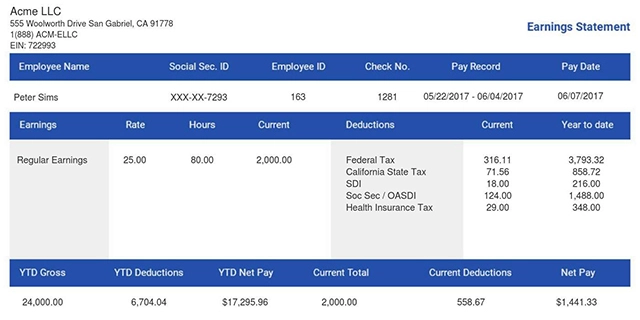
- 1. Enter Your Information

- 2. Select Your Favorite Theme

- 3. Download Your Stub!


 By
By