

How To File W2 and 1099 Together
 By
By
Every year, the federal government pays billions of dollars in tax refunds, and millions of Americans file each year. Even though this happens, many of those taxpayers have a paralyzing fear of filing. Fear of tax season has become as common as public speaking or going to the dentist.
Especially when you have more than just a W-2 to input, your taxes can be daunting. What are the requirements for a W2 and 1099? How do you file your taxes when you have multiple documents supporting your income?
If you're someone who needs to file W2 and 1099 together, this guide is for you. If you're someone with multiple streams of income, note that you can create a W2 form online. However, you need to understand the process of both your 1099 and W-2 forms together.
- Understanding Your Income Tax Forms: Form 1099 and Form W-2
- How Do You File Taxes if You Have Both Forms?
- Income and Self-Employment Tax Responsibilities
- How Can You Stay Prepared Throughout the Tax Year?
- Why You Need To Make Quarterly Estimated Tax Payments
- W2 and 1099: Your Complete Tax Return
- In Summary
Understanding Your Income Tax Forms: Form 1099 and Form W-2
What Is a Form 1099 for Independent Contractors?
A Form 1099 is another document created by the Internal Revenue Service. This tax form (1099-NEC) is used to report income that's generated through sources other than employment. It serves as evidence that additional income has been paid to an individual taxpayer. You may have received this income as an independent contractor.
If you own your business or if you're a freelancer, you'll likely receive a Form 1099 for each project that you complete. If a business has paid you $600 or more for that tax year, it must send you a 1099-NEC form. This payment is reported as non-employee compensation, which means taxes aren't typically deducted when an individual is paid as a freelancer.
Because of this compensation paid, you are responsible for any additional amounts you may owe. This also includes your own employment tax. If your employment status is self-employed, receiving a Form 1099 is a standard part of the tax year.
What Is a Form W-2?
A Form W-2 is another Internal Revenue tax form that is used to report employee income. It is used to both report wages paid to an employee and the taxes that were withheld from them. Employers have until the end of January each year to provide you with a Form W-2. It is usually from the previous year's earnings.
A 1099 employee is typically a freelancer or a contractor. Whereas, a W-2 employee is typically a full or part-time regular employee of the same company or business. For the W-2 employee, the same employer handles payroll taxes, including the Social Security tax and Medicare taxes. When you are a W-2 employee, your employer will withhold taxes from your paycheck based on your Form W-4.
How Do You File Taxes if You Have Both Forms?
If you’re filing 1099 and W2 together, chances are you won't owe as much as someone who only receives 1099 forms. When you're paid as a freelancer, taxes aren't taken out for you. That means that for each job, it's up to you to calculate how much you owe.
Many people find themselves in this situation, thinking, "I have a W-2 and 1099; how does this work?" The good news is, you can file 1099 and W2 together on the same tax return. You can generate any 1099 forms online if you need one.
This, of course, depends on how much income you generate from each source. When you file your taxes with both forms, nothing is that different. Whether you file on your own or through an accountant, you will input your information the exact same way. If you're using tax software, for example, it will ask you multiple times for "additional income." This is where you'll enter your 1099 information. Using good tax software simplifies the entire process of taxes with multiple tax forms.
Income and Self-Employment Tax Responsibilities
When you have both W-2 and 1099, understanding your complete tax liability is important. Your employee income has taxes withheld, but your self-employment income does not. This means you are responsible for paying the income tax and the self-employment tax on your freelance income.
The self-employment tax covers the Social Security and Medicare taxes that both the employer and employee would pay. It's important to understand these tax implications when you have 1099 and W-2 income. Your total tax obligations will include both your income taxes and your self-employment taxes.
How Can You Stay Prepared Throughout the Tax Year?
It's simple, simply keep track of your business expenses. Things like office costs, utility bills, and food can help offset the taxes that you owe significantly.
Here are some of the many tax deductions you can claim as an independent contractor or freelancer. They also include valuable independent contractor tax deductions:
-
Depreciation of business assets
-
Education expenses
-
Expenses for the business part of your home
-
Attorney and accounting fees
-
Vehicle expenses
-
Costs of renting or leasing equipment for your business
-
Health insurance for you and your family
-
Insurance for your business
-
License fees
-
Office expenses
-
Utilities
-
Professional association dues
-
Business travel
-
Business meals
These business expenses are crucial tax deductions that can lower your taxable income. As a self-employed person, you can also deduct health insurance premiums. Don't overlook these applicable deductions and additional tax deductions to reduce your overall tax bill.
Set money aside with each check to account for taxes that you may owe when it's tax time. That way, no surprises will set you back, and you'll be one step ahead. Many individuals filing freelance taxes may qualify for the Qualified Business Income (QBI) deduction. This is for all income generated by freelance or contract jobs. You can deduct 20% of your business income, which means your taxable income will be significantly less. However, this depends on the amount of your taxable income, the type of business and other limits.
Change your W-4 to have more tax withholdings, and you may increase your refund generated from your regular earnings. This can help offset any taxes that you owe from additional income or any bonus payment. Adjusting your tax withholdings is a smart strategy if you have a W-2 and 1099.
Why You Need To Make Quarterly Estimated Tax Payments
It's always important to opt to pay quarterly taxes if you'll owe $1000 or more in tax after withholding. Figure out how much you owe each quarter and pay that amount to the IRS as estimated tax payments. That way, you won't be hit by a big tax bill when it's time to file your taxes.
Managing your estimated tax is a key part of being a self-employed individual. If you don't make these estimated tax payments, you may face a penalty at tax time. Your estimated tax should cover your self-employment tax and the income tax on your self-employment income.
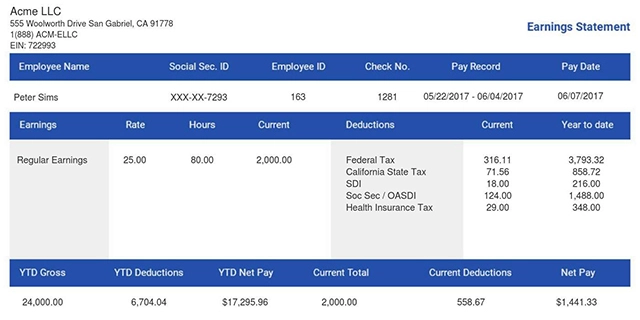
Especially for employees, you need your pay stubs to make the tax season easier for you. Therefore, you can use our 123 paystub method to create your document. You just need to fill in your employee information details, preview it, and download your pay stub instantly.
W2 and 1099: Your Complete Tax Return
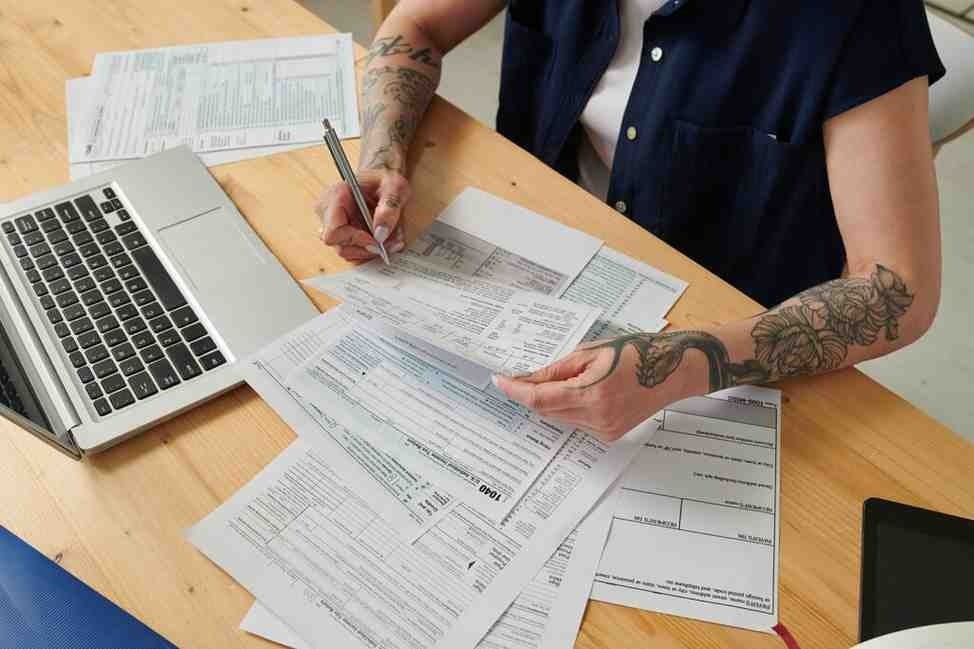
Your taxes are usually taken out of your W-2 based on what you requested on your completed W-4. It is rare for taxes to be taken out of freelance income. Therefore, they are not reflected on a 1099 form. Even though you have a regular job, you can still use applicable deductions for your freelance taxes.
While filing taxes with your W-2 and 1099, you need to follow these steps. It ensures that you accurately report all your income:
-
Gather Your Documents: The first thing to do is to collect all your tax forms. This includes every Form W-2 from your employers and every Form 1099 from your clients. Make sure that all payments reported are correct.
-
Report Your W-2 Income: Next, include the information that you have on your Form W-2 in the Form 1040. This includes your wages and the taxes withheld.
-
Report Your 1099 Income on Schedule C: Use Schedule C to report your business income and business expenses. This is where you list where you pay taxes reported on your Form 1099. You'll also subtract your tax deductions to find your net income from self-employment.
-
Calculate Self-Employment Tax on Schedule SE: Use Schedule SE to calculate how much self-employment tax you need to pay. You must pay self-employment tax if your net income from self-employment is $400 or more.
-
Combine Everything on Form 1040: Transfer your net income from Schedule C and your self-employment tax from Schedule SE to your Form 1040. Your tax software or tax professional can guide you through this.
In Summary
You may be wondering what to do when it's time to file taxes with your 1099 and W-2. While W-2 and 1099 are two different tax forms, they can be filed together on the same tax return. You may use both your Form W-2 and your Form 1099 to prepare your tax return. However, remember that keeping track of the taxes you'll owe is the best way to prepare yourself for tax season.
Whether you decide to file yourself or hire a tax professional, submitting W-2 and 1099 forms isn't difficult. Are you having trouble getting W-2s for your employees? Give our W2 form generator a try. Employees can then calculate the numbers that they need to file their taxes stress-free! In case you need the pay stubs, you can check out our paystub creator.
- 1. Enter Your Information

- 2. Select Your Favorite Theme

- 3. Download Your Stub!

 By
By