

Paying International Contractors: 6 Best Methods (2026)
 By
By
Hiring talent abroad is easier than ever. But paying international contractors the right way takes some planning. Remote work lets you hire from almost anywhere. The hard part is the paperwork. You need the right tax forms for each country your workers live in. A paystub generator helps you keep clean records of every payment.
This guide covers the six best ways to pay foreign workers. It also lists the tax forms you need before you send money. For each method, you get a simple, step by step setup. As you hire more people abroad, you must follow local and global tax rules.
Key Takeaways
- Get a signed Form W-8BEN from every foreign contractor before you pay them. Without it, the IRS makes you withhold 30% of each payment.
- The six main methods are international wire transfers, Wise, PayPal, Payoneer, payroll platforms like Deel, and cash services like Western Union.
- Workers based fully outside the US usually do not need a 1099-NEC from you.
- Add a 3% to 5% currency buffer to your budget. Exchange rates can swing fast.
- For the 2026 tax year, the 1099-NEC reporting threshold rose to $2,000.
What to Know Before Paying International Contractors
You need a few things before you pay foreign contractors. Paying international contractors starts with solid paperwork. Collect a signed Form W-8BEN, or a W-8BEN-E for a business. Get a written contractor agreement. Get their bank details, including the account number and SWIFT/BIC code.
An international contractor works from outside the United States. They pay taxes in their own country. They are not your employee. So you do not report them on a W-2. You also do not pay employment tax for them.
Can you pay self-employed workers abroad without withholding tax? Yes, in most cases. You do not withhold payroll taxes or issue a W-2. Say you hire a software developer in Poland. He works from home and gets paid in US dollars. His income counts as foreign sourced. So you do not withhold or pay any employment tax for him.
Each contractor signs a form like the W-8BEN during onboarding. The form confirms their foreign status. It lets both sides report taxes the right way. The contractor should keep a copy of the signed form.
Paying International Contractors: 6 Best Methods
The best way to pay international contractors depends on a few things. How often will you pay them? How large is each payment? Which country are they in? Here is a quick summary of the methods. We explain each one in more detail below. Paying international contractors well comes down to matching the method to each payment.
| Method | Speed | Typical Fee | Best For |
|---|---|---|---|
| International wire transfer | 1 to 5 business days | $35 to $50 per transfer | Large, one-off payments |
| Wise | 1 to 2 business days | From 0.33% | Frequent payments, lower fees |
| PayPal | Near instant | 3.49% + 1.5% international | Quick setup, one-off payments |
| Payoneer | 1 to 2 business days | 1% to 3% | Global reach, 190+ countries |
| Payroll platform (e.g. Deel) | Fast | $49+/contractor/month | Multi-country compliance |
| Western Union / MoneyGram | Same day (cash pickup) | Higher fees | Unbanked contractors |
Add 3% to 5% to your budget for currency swings. Take a $2,000 contract as an example. By payment day, the cost could rise to $2,100. That kind of surprise can hurt your cash flow.
Many owners also ask about the best way to pay international vendors. The answer is the same. When should you use local currency? Pay in local currency for countries with strong banks. Good examples are India, the Philippines, Mexico, and much of Eastern Europe. Follow the agreement for other countries. Some contractors prefer a strong currency like USD, so pay them that way.
International Wire Transfers for Paying Overseas Contractors

International wire transfers are the classic choice for large, one-off payments. They are also common for paying overseas contractors under big contracts. Banks send this kind of bank transfer through the SWIFT network. Almost every bank in the world can receive one.
To start a wire transfer, you need:
- Contractor's legal name and address
- Bank name and address
- Account number
- IBAN (International Bank Account Number), if used
- SWIFT/BIC code
Wire transfers come with more than one fee. Your bank charges a fee to send the money. The receiving bank often charges a fee too. Banks along the SWIFT chain may add their own charges. These are hard to predict. Your bank's currency exchange rate is also a cost. It often sits 4% to 6% above the mid-market rate.
A wire transfer clears in 1 to 5 business days. Always double check the routing details first. A small error can delay the payment. This method suits paying international contractors with large, rare invoices.
Best for large, infrequent payments over $3,000. The fixed fee becomes a small share of a big payment.
Not ideal for weekly or bi-weekly payments to many contractors. Each transfer takes manual work, even with the fees.
Money Transfer Apps: Pay Foreign Contractors with Lower Fees
Money transfer apps are another option for small businesses. They cost less than wire transfers. They are also easier to set up than a full payroll system. Here are three popular options.
Wise
Wise charges a low fee that starts at 0.33%. It uses the real mid-market rate with no hidden markup. The recipient does not need to set up an account. The money lands straight in their bank account. Wise works in about 70 countries. You can send funds in the contractor's currency or in USD.
Speed: 1 to 2 business days.
Wise is clear about its fees and rates. Its Batch feature also helps with a monthly payment to overseas contractors across a team.
PayPal
Most contractors already have a PayPal account. That makes setup very fast. The fee is higher, though. PayPal charges 3.49% of the amount plus 1.5% for international payments. It also adds a currency conversion fee. The money lands in their PayPal account. They can then move it to their bank.
Speed: Near instant.
Best for one-time payments, or for contractors who ask to be paid this way.
Payoneer
Payoneer reaches contractors in more than 190 countries. It supports over 70 currencies. Transfers between two Payoneer accounts cost about 1%, with a small minimum fee. Sending to a local bank account can cost up to 3%.
Speed: 1 to 2 business days.
Best for contractors in regions with few banks. The Payoneer prepaid card lets them spend their funds right away.
Payroll Platforms and Contractor Management Tools

Payroll platforms charge a monthly fee to handle your foreign contractors. They store each contractor's details and tax forms, such as the W-8BEN. They also send payments for you. This saves time once you have four or more contractors. Deel is one example. Its contractor plan costs about $49 per contractor per month. It also handles payments and local tax rules.
Freelancer platforms work in a similar way. If you hire someone on Upwork or Fiverr, you pay them through that platform. Since you found the worker there, it makes sense to pay them there too.
These fees add up fast. Use a platform only when the time you save beats the cost. A platform gives you the most control and visibility. It also lets you pay contractors in many currencies. As a rule, it pays off once you have more than four or five contractors.
Keep a record of every payment. Track each one, even when an app sends it for you. A contractor may ask for proof of payment later. Organized records beat digging through old emails and bank statements.
IRS Tax Requirements When Paying Foreign Contractors
Paying international contractors also means following IRS rules. Most of these rules deal with tax withholding. US companies must collect a few forms before they pay foreign contractors. The right forms help you avoid withholding tax.
Form W-8BEN: Collect It Before the First Payment
Form W-8BEN is the Certificate of Foreign Status for individuals. A foreign person fills it out to confirm they are not a US taxpayer. Form W-8BEN-E is the version for foreign businesses and other entities.
Here is the full life cycle of the W-8BEN:
- Request it during onboarding, before you make any payment.
- The contractor fills it out and returns a signed copy.
- Check their details. Confirm the name, country of residence, and signature.
- File it in your records. You do not send it to the IRS, but you must keep it on file.
- Set a 3-year reminder. A W-8BEN expires after 3 years. Ask for a new one when it lapses.
Without a valid W-8BEN, you must withhold 30% of the payment as backup withholding. Want to know how different workers are taxed? Read our guide on W-2 vs. 1099 tax filing.
Do I need to send a 1099 to a foreign contractor?
In most cases, no. A contractor who works fully outside the US and gives you a valid W-8BEN does not need a Form 1099-NEC. The rule changes if the person works inside the US. A foreign contractor who works in the US for 90 days or more needs a 1099-NEC for that US income. The same is true for a US citizen who works abroad.
The reporting threshold also changed. For the 2026 tax year, the IRS raised the 1099-NEC limit from $600 to $2,000. This applies to US-source income for both US citizens abroad and foreign contractors in the US.
There is also a permanent establishment risk. Heavy activity in one country can create a tax problem. The local government may treat your contractor as a taxable presence there.
What Happens If You Don't Withhold Correctly
Skip a valid W-8BEN and the rules are strict. You must withhold 30% of the payment as income tax. You then send that amount to the IRS. This rate applies when no tax treaty lowers it. Foreign contractors who work at your US office earn US-source income. You report those payments on Form 1042-S. Work done through a foreign office can create a permanent establishment. That can expose you to tax in the contractor's country.
How to Pay International Contractors Step by Step
Getting this right from the start saves you headaches. Here is a quick checklist on how to pay international contractors. A simple four-step process follows. These steps make paying international contractors much easier.
Pre-payment checklist:
- Contractor's legal name and address
- Bank account: account number, SWIFT/BIC code, bank name and address
- Signed Form W-8BEN or W-8BEN-E, before the first payment
- A contractor agreement with payment terms and currency
- Currency choice confirmed: USD or local currency?
Step 1: Contractor onboarding. Ask the contractor how they want to be paid. Collect their bank details, such as the IBAN. Have them complete a Form W-8BEN or W-8BEN-E. This form helps you avoid the 30% withholding.
Step 2: Agree on currency and schedule. Confirm the amount, frequency, and currency. Write these terms into the contractor agreement. Remember that a cross-border payment has two sides. Money leaves your bank, then lands in theirs. Check that neither bank adds a steep currency markup. Contractors with strong local banks may prefer their own currency. Those who take USD usually cover the exchange rate themselves.
Step 3: Choose your payment method. Pick the method that fits the payment size and frequency. Think about where the contractor lives and whether they have a local bank. Wire transfers suit large, rare payments. ACH or direct deposit suits smaller, regular ones. A multi-currency account helps when you pay several countries. One contractor in Europe and another in Asia can be paid from a single account.
Step 4: Document every payment. Keep proof of each payment as a record. Contractors may need it as proof of work in their home country. The records also help with audits and employment checks. Save receipts, confirmations, and wire details. Note the amount, the date, the exchange rate, and the work done.
Avoiding Worker Misclassification When Paying International Contractors
Worker misclassification is one of the biggest risks here. Worker classification rules differ from country to country. They decide who counts as an employee and who counts as an independent contractor. A US contractor could be seen as an employee somewhere else.
Foreign governments and courts often look at:
- Degree of control: how much you direct when, where, and how the person works
- Profit or loss: whether they can earn more or lose money on a project
- Provision of tools: who supplies the equipment, software, or workspace
- Integration: whether they work alongside your staff on core tasks
Why does this matter? It is less about tax and more about labor law. Some countries protect employees much more than contractors. In the UK, the IR35 rules put the burden on the hiring company. You must prove the worker is a true contractor.
Paying international contractors carries real legal risk, not just tax risk. The cost of getting it wrong can be high. You may owe back wages and benefits. You may also face large fines for a willful violation. The worker can bring a claim against you as well. Uber once paid $8.4 million to settle a case in California over driver misclassification.
A few steps lower the risk. Spell out the working relationship in the contract. State the payment terms clearly. Review long-term contractors once a year. This is true even for those who work only for you.
You Might Also Like
- Do 1099 Employees Get Pay Stubs? Full Guide
- How to Read a W-2 Like a Pro
- Self-Employed? Here's How to Show Proof of Income
- How to Get a Pay Stub from Direct Deposit
- Employment Verification Letter: What It Is and How to Get One
Conclusion
Paying international contractors comes down to a few clear steps. First, pick the best way to pay international contractors for your needs. Then handle the IRS forms and collect each W-8BEN before the first payment. Finally, classify your workers correctly to avoid fines and back taxes.
Small businesses that pay a few contractors will like Wise or Payoneer. Both are simple and have low fees. Larger teams that pay overseas contractors in many countries may prefer a payroll platform. You enter each contractor once, then pay as many as you need.
Contractors can help too. Keep your documents ready during onboarding. Keep your W-8BEN current. Track every payment you receive.
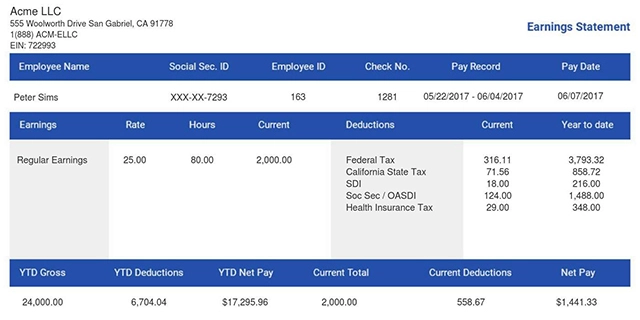
Use a trusted pay stub generator like ThePayStubs.com to create clean payment records. They work for bookkeeping and as proof of income for loans and rentals.
Set a reminder for when your W-8BEN expires in 3 years. Keep a small reserve for exchange-rate swings. With these basics in place, paying contractors abroad is simple. Most people get stuck on recurring payments. Put the currency and schedule in your contractor agreement, and you avoid most of the confusion.
- 1. Enter Your Information

- 2. Select Your Favorite Theme

- 3. Download Your Stub!

 By
By