What Does YTD Mean on a Pay Stub? (2026 Guide)
You open your paycheck and see two columns of numbers. One shows that you earned $2,000 this pay period. The other shows a much bigger figure, $12,000, labeled "YTD." Understanding YTD can save you from tax surprises and payroll errors, and our paystub generator can help you create accurate pay stubs with proper YTD fields.
So what does YTD mean on a pay stub, and why is it six times higher than your paycheck?
YTD stands for "Year-to-date." A year-to-date pay stub tracks your earnings, taxes, and deductions since January 1. Not just what you earned this pay period. Understanding "What does YTD mean on a pay stub?" can help you catch payroll errors, plan your taxes, and use your earnings records effectively. Every time you get paid, that running total updates automatically.
Whether you're asking "What does YTD mean on a check, a payslip, or a digital pay stub?" the answer is the same. It's a year-to-date running total. And understanding this specifically helps employees read their earnings records accurately.
This guide explains "What does YTD mean on a pay stub?" It breaks down every type of YTD value you'll see and shows how to calculate and verify your own YTD totals. If you've ever wondered "What does YTD mean on paycheck documentation?" or "What is YTD on pay stub records?", keep reading.
Key Takeaways
-
YTD on a pay stub stands for "Year-to-date" and tracks cumulative earnings, taxes, or deductions from January 1 through your current paycheck
-
Gross YTD shows what you earned before taxes. Net YTD shows your actual take-home pay total for the year
-
YTD resets to zero at the start of each new calendar year or fiscal year
-
Employers rely on YTD data for payroll tax compliance and accurate W-2 preparation
-
Self-employed workers can use a pay stub generator to create YTD-compliant pay stubs for loan or rental applications
- Key Takeaways
- What Does YTD Mean on a Pay Stub?
- What Are the Types of YTD Values on a Pay Stub?
- Why YTD Matters for Employees
- How Employers Use YTD Information
- How To Calculate YTD on Your Pay Stub
- What Does Gross YTD Mean on a Pay Stub?
- What Does YTD Mean on a Pay Stub: Before or After Taxes?
- YTD for Independent Contractors and 1099 Workers
- Common YTD Mistakes To Avoid
- YTD vs. FTD on a Pay Stub: What Does YTD Stand For on a Pay Stub vs. FTD?
- You Might Also Like
- In Conclusion
What Does YTD Mean on a Pay Stub?
YTD stands for "Year-to-date." On a pay stub, it shows the running total of your earnings, taxes, or deductions from January 1 (or your company's fiscal year start) through your current paycheck, not just what you earned this pay period. Every pay stub updates this cumulative figure.
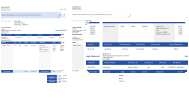
Most pay stubs show two columns side by side. This includes the current period amount and the YTD amount. If your current period gross is $2,000 but your YTD gross in March shows $12,000, that means you've received six biweekly paychecks since January.
Here's where to find YTD on a real pay stub:
- Look at the right side of the earnings table.
- You'll typically see labels like "YTD Gross," "YTD Fed Tax," "YTD FICA," and "YTD Net Pay."
- Each shows both the current-period figure and the running total.
When people ask about the YTD meaning on a paycheck, they're really asking why their pay stub shows two different dollar amounts. The smaller number is what you earned this pay period. The larger number is what you've earned all year.
Calendar Year vs. Fiscal Year
Most employers track YTD using the calendar year. The period runs from January 1 through December 31 and resets every January. Some companies use a fiscal year that starts and ends on a different date. If your employer uses a fiscal year, your YTD on paycheck resets on their fiscal year start, not January 1.
What Are the Types of YTD Values on a Pay Stub?
Your pay stub doesn't show just one YTD number. It shows a separate running total for every line item, including earnings, each tax category, and each deduction type. Understanding "What does YTD amount mean for each line?" helps you read your pay stub accurately.
YTD Gross Earnings
YTD gross earnings are the total amount you've earned from January 1 through your current paycheck, before taxes or deductions. It includes your base salary, overtime, bonuses, and commissions. The YTD gross meaning is simply everything you earned this year, before anything is taken out.
For example, if you earn $2,000 biweekly and you're on your sixth paycheck of the year, your YTD gross would be $12,000. The gross pay YTD figure is the one lenders and landlords typically request when asking for proof of income. In the UK and Australia, the same concept appears on payslips, but the YTD meaning payslip conventions differ slightly by country.
Note that in 2026, Social Security tax is withheld at 6.2% up to a wage base of $176,100. Your YTD gross tracks whether you're approaching that limit. The 2026 401(k) contribution limit is $23,500. Your YTD 401(k) deduction line shows how close you are.
YTD Payroll Deductions
YTD deductions track the cumulative total of everything withheld from your paychecks throughout the year:
-
Federal income tax withheld based on your W-4 filing status
-
Social Security (6.2%) and Medicare (1.45%) taxes (the FICA taxes)
-
State and local income taxes where applicable
-
Health, dental, and vision insurance premiums
-
401(k) contributions (up to $23,500 in 2026)
-
HSA or FSA contributions
See our guide to pay stub deduction codes for a full list of payroll abbreviations you'll encounter.
YTD Net Pay
YTD net pay is your total take-home pay from January 1 through your current paycheck. Year-to-date take-home meaning is straightforward. It's your gross YTD minus all deductions. If you take home $1,450 per paycheck and have received six checks, your YTD net pay is $8,700.
YTD Tax Withholding
YTD tax withholding shows only the cumulative taxes withheld, such as the federal, state, Social Security, and Medicare taxes. This is essentially a preview of the withholding amounts that will appear on your W-2 at year end.
Why YTD Matters for Employees
Understanding the YTD meaning in paycheck records pays off in several ways.
-
Financial Planning: Your YTD gross earnings give you a real-time look at how much you've earned so far this year. You can project your full-year income, set savings targets, or adjust your monthly budget based on actual earnings rather than estimates.
-
Tax Planning: YTD tax withholding tells you how much has been withheld for federal and state taxes so far. If that figure seems low relative to your expected annual tax bill, submit a new W-4 to increase withholding and avoid a balance due in April.
-
Benefits Tracking: Watching your YTD 401(k) and HSA contribution lines helps you stay on pace toward annual limits throughout the year.
-
Proof of Income: What is YTD in paycheck terms? Your YTD gross is widely accepted as proof of income for loan applications, apartment rentals, and credit cards. Lenders want to see your most recent pay stub showing YTD gross earnings. Learn how to get your pay stubs if you need copies for documentation.
-
Error Detection: Comparing YTD figures across two consecutive pay stubs makes it easy to catch payroll mistakes. If your YTD gross didn't increase by your expected pay this period, something needs investigating. Knowing "What does YTD mean on a pay stub?' allows you to spot these discrepancies immediately.
How Employers Use YTD Information
Employers depend on YTD figures for several business-critical functions.
-
Payroll Tax Compliance: Employers track each employee's YTD earnings to accurately withhold federal, state, Social Security, and Medicare taxes. The IRS requires employers to withhold the correct amounts throughout the year, not just at year end.
-
Year-End Reporting: At year end, cumulative YTD figures populate W-2 forms. Boxes 1, 3, 5 (wages) and 4, 6 (taxes withheld) come directly from YTD payroll totals. See our guide on how to read a W-2 to match those boxes to your YTD data.
-
Budget Management: A company's total YTD payroll expense shows how much of its annual labor budget has been spent. Managers compare YTD payroll against projections and make staffing decisions accordingly.
-
Benefits Administration: HR teams monitor each employee's YTD 401(k) and FSA contributions to make sure no one accidentally exceeds IRS annual limits. Understanding "What does YTD mean on a pay stub?" is equally critical for HR staff as it is for employees.
How To Calculate YTD on Your Pay Stub
Calculating your YTD is straightforward. Multiply your gross pay for one pay period by the number of completed pay periods this year. You can also add the current period's amounts to the YTD figure on your previous pay stub.
What does year-to-date mean on a pay stub? It means a running cumulative total updated with every paycheck. And what does year-to-date mean on pay stub records, more specifically? It means your employer tracks each line item, including your gross pay, taxes, and deductions, from January 1 forward. Knowing "What does YTD mean on a pay stub?" makes that calculation simple.
Here's a step-by-step example for a biweekly employee earning $52,000 per year ($2,000 per paycheck):
-
End of January (2 pay periods): YTD Gross = $4,000
-
End of March (6 pay periods): YTD Gross = $12,000
-
End of June (13 pay periods): YTD Gross = $26,000
-
End of September (19 pay periods): YTD Gross = $38,000
-
End of December (26 pay periods): YTD Gross = $52,000
For deductions: If $500 total is withheld per paycheck, your YTD deductions after six pay periods would be $3,000.
If your pay varies due to overtime or bonuses, use the simpler method:
Take the YTD figure from your last pay stub and add this period's amounts directly. You can also use a paycheck calculator to estimate your gross pay per period.
Also check: Need pay stubs that show accurate YTD totals? Our pay stub templates include all standard YTD fields.
What Does Gross YTD Mean on a Pay Stub?
Gross pay YTD (sometimes labeled "YTD Gross" or "Gross Earnings YTD") is your total earnings for the year before any deductions. It includes base salary, overtime, bonuses, and commissions. The gross YTD meaning is simply the total amount your employer paid you this year, before anything was subtracted.
Lenders and landlords ask for gross YTD specifically because it shows your full earning potential. Your net YTD (after deductions) is significantly lower and doesn't reflect what you can earn in a full year.
Gross YTD meaning is distinct from your net YTD. One shows earning capacity, the other shows actual cash received. For income verification, always reference the gross YTD line.
What Does YTD Mean on a Pay Stub: Before or After Taxes?
YTD appears both before and after taxes on most pay stubs. Gross YTD shows your total earned before any deductions. Net YTD (sometimes labeled "YTD Net Pay") shows what you actually took home after taxes and deductions. A separate "YTD Tax Withheld" line tracks only the cumulative taxes deducted so far.
What is YTD on paycheck for tax purposes? Look at the YTD tax withholding lines. You'll see separate YTD figures for federal income tax, state tax, Social Security, and Medicare withheld. These combine to show your total YTD taxes paid.
Here's a quick guide to which YTD figure to use:
-
Gross YTD: For income verification (loans, rentals, employment records)
-
Net YTD: For personal cash flow and budgeting
-
YTD Tax Withholding: For tax planning and W-2 comparison
What is YTD on a paycheck in practical terms? It depends on which row you're reading. The label next to each YTD figure tells you what that running total tracks.
YTD for Independent Contractors and 1099 Workers
If you're a freelancer or 1099 worker, you don't automatically receive a YTD paystub from your clients. No employer tracks YTD for you. That's your responsibility. Understanding "What does YTD mean on a pay stub?" is just as important for self-employed workers as it is for W-2 employees.
You can track your YTD income manually. Add up every payment you've received since January 1. Independent contractors can also reference our guide on 1099 pay stubs for documentation options. This includes 1099-NEC income, 1099-K platform payments, and any other business income. This running total is your year-to-date paystub equivalent as a self-employed worker.
Why does YTD tracking matter for 1099 workers? The IRS requires quarterly estimated tax payments. Knowing your YTD gross income helps you calculate what you owe each quarter, due April 15, June 16, September 15, and January 15.
For proof of income purposes, many freelancers need documentation for lease agreements or loans. Use our self-employed pay stub guide to create professional pay stubs that show accurate YTD earnings for self-employment income.
Common YTD Mistakes To Avoid
Even when payroll runs correctly, YTD errors happen. Here's what to watch for and how to catch them early.
-
Thinking YTD Equals Your Current Paycheck: This is the most frequent confusion. Your paycheck shows what you earned this period. What is YTD on pay stub documents? Your cumulative total since January 1, not just this period. What is a year-to-date pay stub showing? The full running total from the start of the year.
-
Forgetting Overtime, Bonuses, or Commissions: If a bonus isn't included in your YTD gross, the figure appears lower than your actual earnings. Confirm every form of compensation appears in the YTD total.
-
Missing Benefit Deductions: If a new health plan or 401(k) contribution doesn't show in your YTD deduction lines from your enrollment date, contact HR to get it corrected.
-
Payroll System Errors: Software glitches happen. Your YTD on pay stub could be inflated or understated after switching payroll systems or correcting a prior period.
-
Mid-Year Withholding Changes: If you submitted a new W-4 mid-year, your YTD tax totals will reflect different rates across different pay periods. This is normal, but it can look confusing.
-
Retroactive Corrections: If your employer corrects a prior paycheck error, the current pay stub's YTD on a pay stub will shift. A correction code usually appears on the stub when this happens. Anyone who understands "What does YTD mean on a pay stub?" will recognize these adjustments for what they are.
How To Spot Errors
Multiply your per-period gross by the number of pay periods completed. If your YTD gross differs from this estimate by more than $50, ask HR for an explanation.
YTD vs. FTD on a Pay Stub: What Does YTD Stand For on a Pay Stub vs. FTD?
Some pay stubs show an "FTD" column alongside YTD. What does YTD stand for on a pay stub? Year-to-date. FTD stands for Federal Tax Deposit (or Federal Tax Deducted). It shows only the federal taxes deducted in the current pay period, not a cumulative total.
| YTD | FTD | |
|---|---|---|
| Stands for | Year-to-date | Federal Tax Deposit/Deducted |
| Scope | Cumulative from Jan 1 | Current pay period only |
| What it tracks | All earnings, deductions, and taxes | Federal tax deductions only |
| Resets | Annually | Every pay period |
| Appears on | Every pay stub line | Tax section only |
FTD isn't a universal standard. Not all payroll systems include it, and its exact meaning can vary by provider. If you see it and you're unsure what it represents, check with your HR or payroll department.
You Might Also Like
Now that you know "What does YTD mean on a pay stub?", these related guides cover other pay stub topics you should be familiar with.
In Conclusion
Knowing "What does YTD mean on a pay stub?" and checking it regularly gives you a full view of your financial year in one place. Every employee benefits from understanding YTD before tax season arrives. Check your YTD gross to see what you've earned, your YTD tax lines to see what's been withheld, and your YTD net to see what you've taken home. Reviewing your YTD meaning, paycheck by paycheck, helps you catch errors early. It also helps you plan your tax withholding accurately and produce the income documentation you need when it matters.
Need a professional pay stub that includes accurate YTD totals? Use our paystub generator to create complete, detailed pay stubs in minutes, whether you're self-employed, a freelancer, or just need documentation outside your employer's system.