

What Do I Need To Finance a Car at a Dealership? (2026)
 By
By
What do I need to finance a car at a dealership? Lenders ask for five things. You need proof of identity, proof of income, proof of residence, insurance, and vehicle info. Each item is part of the standard lender requirements for auto financing.
Lenders check all five before approving your loan or setting your rate. In 2026, many lenders can verify some details online. Still, having your car loan documents ready speeds up approval. It also cuts time in the F&I office. For self-employed workers, a pay stub generator is a key part of that paperwork.
This guide covers every car dealership document on the checklist. It also shows what lenders check beyond the paperwork.
Key Takeaways
- Federal law requires a photo ID for every auto loan application.
- Proof of income is required. Lenders may skip this step if your credit score is 740 or higher.
- Your insurance coverage must be active before you drive off the lot. Bring the full declarations page at signing.
- A 20% down payment lowers your monthly payment and total interest. That matters more with 2026 auto loan rates at 7-8%.
- Get preapproved by a bank or credit union first. That gives you a real rate to compare with dealership financing.
- Key Takeaways
- What Do I Need To Finance a Car at a Dealership?
- Proof of Identity
- Proof of Income
- Proof of Residence
- Proof of Insurance
- Vehicle Information
- Down Payment Details
- Trade-In and Current Registration
- What Lenders Look for When You Finance a Car at a Dealership
- How To Prepare To Finance a Car at a Dealership
- You Might Also Like
- Conclusion: What Do I Need To Finance a Car at a Dealership?
What Do I Need To Finance a Car at a Dealership?
To finance a car at a dealership, you need five things. These include a photo ID, proof of income, proof of residence, valid auto insurance, and your Social Security number. A driver's license works for ID. Pay stubs, W-2s, or bank statements work for income. If you are trading in, you can use your title and registration.
The checklist for "What do I need to finance a car at a dealership?" looks like this:
- Government-issued photo ID (driver's license, passport, or state ID)
- Social Security number (required for the credit pull)
- Proof of income (pay stubs, W-2s, bank statements, or tax returns)
- Proof of residence (utility bills, bank statement, lease, or mortgage statement)
- Proof of insurance (insurance card for preapproval; full declarations page at signing)
- Vehicle information (VIN, make, model, year; the dealer provides this for their inventory)
- Down payment funds (cashier's check, personal check, or debit/credit card)
- Trade-in documents (title, registration, payoff amount if still financed)
Lenders may waive some rules if your credit score is 740 or higher. Proof of income is the most common skip.
Proof of Identity
Federal law requires that every auto loan application include a valid photo ID. A driver's license is the standard pick. A passport or state ID also works. Your ID shows your legal name, date of birth, and current address. Lenders use it with your Social Security number to run a credit pull.
In 2026, many lenders typically check identity online. You may not need paper copies at every stage, but keep them close. Make sure the address on your ID matches your credit report. This avoids delays.
Proof of Income
Lenders need proof that you can repay the loan. The papers you bring depend on how you earn.
For W-2 Employees
Bring your two most recent pay stubs, your latest W-2, and two to three months of bank statements. Some lenders also count alimony, child support, or Social Security income with the right papers. Borrowers with a credit score of 740 or higher may skip the income step. For a full list of proof of income documents lenders accept, review the six most common cases.
For Self-Employed and Gig Workers
If you drive for Uber, deliver for DoorDash, or work as a contractor, your proof of income looks different. You can use your 1099 forms, the last two years of tax returns (with Schedule C), and bank statements showing regular deposits.
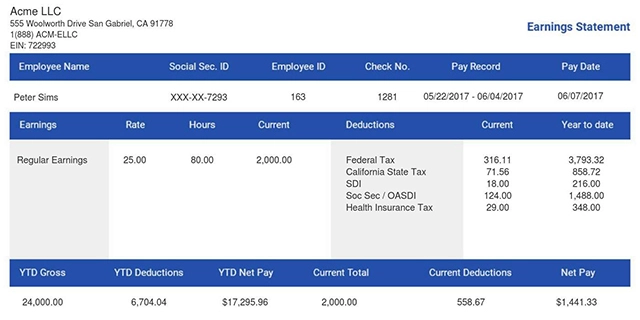
Many gig workers don't get employer pay stubs. Learn what a pay stub for an auto loan looks like. Also, see what lenders check when they review self-employed income.
Proof of Residence
Lenders check your address to confirm your identity. They also match it to your credit report. Your state sets the sales tax rate on your purchase. Accepted papers include utility bills, bank statements, mortgage or lease statements, or postmarked official mail from the last 60 days.
P.O. boxes are not accepted, except for APO/FPO military addresses. If the address on your driver's license already matches your credit report, most lenders skip this step.
Proof of Insurance
Your insurance coverage must be active before you drive off the lot. Most lenders ask for full coverage insurance. That means liability, collision insurance, and comprehensive insurance. The typical max deductible is $500 to $1,000.
What you need to show depends on where you are in the process:
- For preapproval: Your insurance card is enough.
- For loan finalization: Use the full declarations page. It includes your policy number, NAIC number, and coverage details. An insurance card alone won't cut it at signing.
Your current policy usually covers a new vehicle for a short grace period. Call your insurer as soon as the purchase is done.
Vehicle Information
If you are using dealership financing, they handle the VIN and related paperwork. If you are going through your own bank or credit union, be ready to share vehicle details. These include:
- the VIN
- make
- model
- year
- trim
- price
- mileage
- any add-ons, such as GAP insurance or an extended warranty.
For used vehicles, also bring the title, odometer reading, and proof of any existing liens. Getting preapproved first gives you a 30-day window to shop. You do not need a specific VIN upfront.
Down Payment Details
A down payment is not always required. But more money down lowers your monthly payment and total interest. The 20/4/10 rule is a good guide. Put 20% down, finance for no more than 4 years, and keep total car costs under 10% of your take-home pay. Knowing your gross monthly income is the first step in using this rule.
Here's how your down payment affects the cost of a $40,000 new vehicle at 6.61% over 48 months:
| Down Payment | Monthly Payment | Total Interest |
|---|---|---|
| 10% ($4,000) | $856 | $5,067 |
| 20% ($8,000) | $761 | $4,504 |
With 2026 rates at 7 to 8% for new vehicles, a bigger down payment saves more over the loan term. You can pay with a cashier's check, a personal check, cash, or a debit/credit card.
Trade-In and Current Registration
If you are trading in your car, bring the title and current registration. If you still owe money, also bring your loan payoff amount and financing papers. Some states have extra rules. California, for one, needs a smog certificate for some vehicles.
The car dealership handles the title and registration transfer for you. Before you accept a trade-in offer, check your car's value with an outside pricing guide. Then you can negotiate with confidence.
What Lenders Look for When You Finance a Car at a Dealership
When you finance a car at a dealership, lenders check your credit score, credit history, and income stability. They also look at your debt-to-income ratio. Learn how banks verify income for an auto loan to see what they pull and confirm.
Scores of 740 or higher get prime rates around 5 to 6%. Scores below 600 face subprime rates of 15% or higher. Lenders also look at your job history, loan-to-value ratio, and the car's age and mileage.
Here's how credit score ranges map to typical rates in 2026:
| Credit Score | Category | Typical Rate |
|---|---|---|
| 740 and above | Prime | 5–6% |
| 670–739 | Near-prime | 6–8% |
| 600–669 | Non-prime | 9–14% |
| Below 600 | Subprime | 15%+ |
Lenders use the FICO Auto Score (range: 250-900). It puts extra weight on your auto loan payment history. A debt-to-income ratio of 35% or lower is good. A lower loan-to-value ratio often means better terms. If your score needs work before you apply for an auto loan, a credit builder loan is one option to consider.
How To Prepare To Finance a Car at a Dealership
Once you know "What do I need to finance a car at a dealership?", assemble all the car loan documents before you walk in. The biggest mistake buyers make is scrambling for papers in the F&I office.
Getting preapproved is one of the smartest moves. Applying through the dealer is easy, but it may not get you the lowest rate. A bank or credit union's preapproval gives you a real rate to use as leverage. Preapprovals are good for 30 days. Apply with two or three lenders first. If you are self-employed, review how to show proof of income when self-employed before you apply. That way, your papers are complete.
Before you apply, check your credit report for free at annualcreditreport.com. Errors are more common than you think. They can raise your interest rate.
You Might Also Like
- Pay Stubs for Loan Applications
- Proof of Income If Paid in Cash
- What Is Annual Income
- DoorDash Pay Stubs
- Personal Loans for Uber Drivers
Conclusion: What Do I Need To Finance a Car at a Dealership?
Now you have a clear answer to "What do I need to finance a car at a dealership? Your driver's license, proof of income, proof of residence, insurance coverage, and Social Security number are the core items every lender needs. Your credit score and down payment are the two biggest factors you can improve before you apply.
If you are self-employed, a freelancer, or a small business owner, you need clean income records. A reliable pay stub generator creates professional, accurate pay stubs before your dealership visit.
- 1. Enter Your Information

- 2. Select Your Favorite Theme

- 3. Download Your Stub!

 By
By