

Time Off Request: How to Ask + Email Templates (2026)
 By
By
Here's something worth thinking about: 46% of U.S. workers don't use all their vacation days each year, according to Pew Research. A lot of them say they weren't sure how to request time off, or didn't feel comfortable submitting a time off request. That's a real problem, because knowing how to ask the right way is what separates a quick approval from an awkward back-and-forth.
This guide walks through the full process step by step. We cover the best way to submit, ready-to-use email templates, and what U.S. law requires. If you're an employee starting the process, the first step is to check your PTO balance. A pay stub generator makes that quick and easy.
Key Takeaways
- Give at least two weeks notice for any planned vacation or paid time off request
- Always submit your time off request in writing: email creates a paper trail
- Include exact dates, the type of leave, and a backup plan
- Verify your available PTO balance on your pay stub before committing to dates
- No federal law requires employers to offer paid time off, but FMLA protects certain unpaid leave
What Is a Time Off Request?
A time off request is a formal notice an employee submits to take a scheduled break from work. This applies whether the leave is for vacation, sick leave, personal time, or FMLA. Most employers require a written request submitted at least two weeks ahead. A written request creates a paper trail that protects both sides.
For most workers, the request covers any planned leave. This includes vacation days, paid time off, personal days, and longer types like maternity leave, paternity leave, or bereavement leave. The formal process shows you're organized. It gives management time to plan. It creates a record both sides can check later. This works the same way proof of income documents do when you apply for a loan or lease.
The Bureau of Labor Statistics reports that 96% of full-time private sector workers have access to paid vacation. Yet a surprising number don't know the right process for requesting it. Submitting a clear, well-timed request improves your approval odds. It also shows you respect your team's workflow.
For small business owners, the dynamic is reversed. You're on the receiving end: approving requests and keeping employment verification documents and payroll records current. Having a consistent process protects your business and your staff equally.
How to Submit a Time Off Request
Submitting a time off request takes more than firing off a quick message. A short checklist makes sure nothing gets missed and your manager has what they need to say yes. Knowing how to request time off properly saves time for everyone involved.
Step 1: Check Your Available PTO Balance
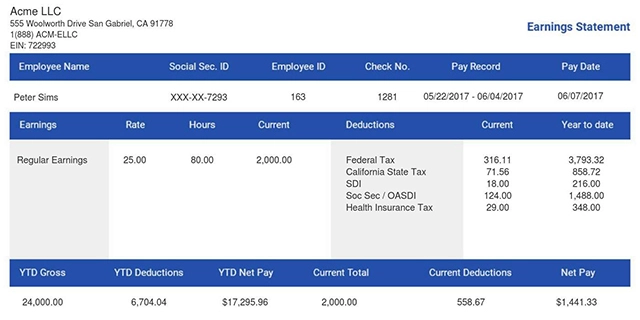
Before committing to specific dates, check how many PTO hours or vacation days you have. Your PTO balance often appears on your pay stub under a label like "PTO Balance," "Vacation Accrued," or something similar. Some companies track accrued PTO separately from used hours.
If your pay stubs don't show your PTO balance clearly, ask HR for an up-to-date statement. Our guide on calculating W-2 wages from a pay stub explains each field. If you're a small business owner creating pay stubs for your team, ThePayStubs.com makes it easy. Add PTO accrual and running balances so your team always knows exactly where they stand.
Don't skip this step. Requesting dates you can't cover puts your approval at risk before talks even start.
Step 2: Review Your Company's Time-Off Policy
Every company handles leave differently. Before drafting your request, check your employee handbook for the time off policy details:
- The required notice period (most companies ask for at least 2 weeks for planned leave)
- Any blackout dates, peak periods, or times when requests won't be approved
- Which leave types are covered and what paperwork is needed
- How to submit: email, HR portal, or employee time off form
Knowing these details upfront keeps you from getting denied on a technicality.
Step 3: Choose Your Submission Method
Most employers process leave through one of three channels:
- Email: the most common method and the one that creates the clearest documentation
- HR software or time-tracking portals such as ADP, Workday, Gusto, or Rippling. These are standard at mid-size and larger companies
- Paper leave request form: still common at smaller businesses
For remote or hybrid teams in 2026, you may also need to note your absence in a shared team calendar. Notify a time-zone lead too if your absence creates a coverage gap across regions.
When in doubt, email is the safest option. It creates a record both sides can check later.
Step 4: Draft and Send Your Request
Knowing how to ask for time off email properly starts with covering four things:
- Your exact dates (start date, end date, and return date)
- The type of leave (vacation, PTO, sick, personal)
- A brief plan naming who handles your tasks during your leave
- A polite close with a clear ask
Keep it concise. A 100-word email beats a 300-word one every time. You'll find complete templates in the next section.
Step 5: Follow Up to Confirm
Silence doesn't mean approval. If you haven't heard back within 2 to 3 business days, send a brief follow-up referencing your original message. Something like: "Just checking in on my time off request for [dates]. Please let me know if you need anything else."
Get written approval before making any non-refundable travel plans. Verbal approval is easy to miscommunicate. A confirmed email thread is not.
Time Off Request Email Templates

A good time off request email gets approved faster and cuts back-and-forth. The templates below are ready to use. Customize the dates, type of leave, and details to fit your needs.
Standard PTO / Vacation Request Email
Pick this template when requesting any planned time away from work.
Subject: PTO Request: [Start Date] to [End Date]
Hi [Manager's Name],
I'd like to request time off from [start date] through [end date], returning on [return date]. This would use [X] days of my available paid time off.
During my absence, [Colleague Name] has agreed to cover [key responsibility]. I'll make sure all current projects are up to date before I leave. I'll also set an out-of-office message with a point of contact.
Please let me know if these dates work or if you'd like to discuss an alternative.
Thanks,
[Your Name]
Why this works: It states the dates clearly, names a backup contact, and ends with a polite ask rather than an assumption.
Short-Notice or Urgent Leave Request Email
For last-minute personal situations, family emergencies, or unexpected illness.
Subject: Urgent Leave Request: [Date]
Hi [Manager's Name],
I'm reaching out to request an urgent leave starting [date] due to [brief reason, such as "a family emergency" or "an unexpected personal matter"]. I expect to return on [date] but will keep you updated if that changes.
I've asked [Colleague] to handle [task] in the meantime and will be reachable by email for urgent items.
I apologize for the short notice and appreciate your understanding.
[Your Name]
Extended Leave Request Email
For sabbaticals, medical leave, or any absence spanning two or more weeks.
Subject: Request for Extended Leave Beginning [Date]
Hi [Manager's Name],
I'm writing to request an extended leave starting [start date] through [end date] for [brief reason such as "a planned medical procedure," "parental leave," etc.].
I'd like to discuss how to hand off my work and keep things on track. Harvard Business Review suggests a three-step approach for long leaves: prepare, negotiate, and implement. I'm ready to work through each step with you.
Please let me know your availability this week.
Best,
[Your Name]
Sick Leave Request Email
Keep it brief. You don't owe your employer a detailed medical explanation. A short, clear note is enough. Some employees use sick days as mental health days, which is a valid use of sick leave in most company policies.
Subject: Sick Day for [Your Name] on [Date]
Hi [Manager's Name],
I'm not feeling well today and need to take a sick day. I'll be back on [return date] assuming I'm better, and I'll let you know if that changes.
[Colleague] is aware and can handle anything urgent in the meantime.
Thanks for understanding,
[Your Name]
Maternity / Paternity Leave Request Email
Parental leave needs early planning. Submit it 30 to 60 days before your leave starts when you can.
Subject: Parental Leave Request for [Your Name]
Hi [Manager's Name],
I'm expecting a new child and plan to take parental leave starting around [date]. I'd like to take [X weeks] of leave.
I'm happy to build a transition plan so my work is fully covered before I leave. I'll have a handover doc ready [X weeks] before my leave begins.
Please let me know a good time to discuss.
Best,
[Your Name]
Bereavement / Personal Reasons Template
For loss or personal circumstances, keep the tone polite and the details brief.
Subject: Leave Request for Personal Reasons on [Dates]
Hi [Manager's Name],
I need to request leave from [start date] to [end date] for personal reasons. I'll be back at work on [return date].
I'll have my most pressing tasks handled before I go. I've asked [Colleague] to be the point of contact while I'm away.
Thank you for your understanding.
[Your Name]
Note for small business owners: When you receive time off requests from staff, respond in writing within 1 to 2 business days. Confirm the approved dates, update your team calendar, and keep a copy for payroll records. A documented approval process protects your business if a dispute comes up later. If a request is denied, explain the reason clearly to avoid confusion.
How to Write a Professional Time Off Request Email
A clear request time off email follows a simple structure. It gives your manager what they need in one read. Miss any of these five components and you'll get a follow-up question.
Every strong PTO request email includes:
- Subject line: State the leave type and dates upfront. "PTO Request: June 12 to 16" beats "Time Off" every time.
- Exact dates: Start, end, and return date. Be specific.
- Type of leave: Vacation, sick, personal, parental, or FMLA. Be specific.
- Coverage plan: One sentence naming who covers your work is enough for most requests.
- Polite close: A thank-you and a clear ask.
Before vs. after: the same request done wrong and right:
| Approach | Example |
|---|---|
| Vague | "Hey, I was thinking of maybe taking some time off next week. Let me know if that's okay." |
| Clear | "Hi [Manager], I'd like to request PTO from [date] to [date]. [Colleague] will cover [task], and I'll have all deliverables completed before I leave." |
The vague version creates work for your manager. They need to ask follow-up questions before responding. The clear version gives them everything in one read.
Tips to keep in mind:
- Keep the email under 150 words. Concise emails are easier to approve.
- Don't book non-refundable travel before you have written confirmation.
- Sending too late is the main reason requests get denied. Give plenty of advance notice.
- For cross-region remote teams, mention backup coverage if your absence creates a time-zone gap.
Use the pto request email example templates in this guide as a starting point and customize from there. The structure does most of the work for you.
US Laws Governing Time Off Requests

Understanding what the law requires helps you know when a time off request is a courtesy and when it's a protected right.
No federal law in the United States requires employers to offer paid vacation or paid time off. Rules also differ by employment type. Our guide on W-2 vs 1099 tax filing covers how each type affects your benefits. The Department of Labor leaves vacation benefits up to each employer. If your company offers paid time off, the terms are set by company policy, not federal statute.
What federal law does require:
- FMLA (Family and Medical Leave Act): Employers with 50 or more employees must allow up to 12 weeks of unpaid leave per year for qualifying events. Qualifying reasons include a serious illness or caring for a sick family member. The birth, adoption, or placement of a child also qualifies. FMLA leave is job-protected: your employer can't terminate you for taking it.
- Jury duty leave: Federal law requires employers to allow time off for jury service.
- Military leave: USERRA protects the rights of workers who take military leave. Independent contractors and gig workers have a different situation. See our article on whether contractors receive a 1099 pay stub for details.
State laws in 2026:
As of 2026, more than 30 states have mandatory paid sick leave laws. Accrual rates vary, but a common standard is 1 hour of paid sick leave per 30 hours worked. States including California, New York, Colorado, and Massachusetts have very broad worker protections. When federal and state rules overlap, the more employee-friendly rule applies.
What this means for workers: Employers can deny a PTO request for vacation. They generally can't deny qualifying FMLA leave or state-mandated sick leave. Know which type of leave you have before accepting a denial as final. A request denied for business reasons is usually valid, but ask for the specific policy reason in writing.
For small business owners: Check your state's specific sick leave mandate before setting or finalizing your time-off policy. Failing to comply can lead to fines that vary by state.
Tips for Getting Your Time Off Request Approved
Submitting a time off request early and in writing gives you the best chance at approval. A few strategic steps make a real difference.
Ask early. For planned vacations, give at least 2 weeks' notice. Give even more lead time during peak business periods, year-end deadlines, or major project phases. Last-minute requests are denied far more often than well-timed ones.
Propose a backup plan. This is the single biggest factor in a quick approval. Use this simple structure for your work coverage plan:
- Who handles your specific tasks while you're out
- What you'll complete and hand off before your last day
- Who serves as the team's point of contact for clients or stakeholders
- How colleagues can reach you for genuine emergencies (optional)
Be strategic about timing. Avoid requesting leave during blackout dates, busy project phases, or when a coworker is already out. Checking team calendars before you ask prevents awkward situations and boosts your odds.
Ask, don't announce. "Would it be possible to take July 14 to 18 off?" respects that your manager's input matters. "I'll be out July 14 to 18" assumes approval before it's been given. The framing tends to make a difference.
Follow up before your leave. About a week before your leave starts, send a short reminder to confirm dates, update your shared team calendar, and kick off your handover process. Set a proper out-of-office reply once the approval is confirmed.
Remote and hybrid teams in 2026: If your team spans multiple time zones, name a specific colleague who covers your work in your region. Async plans that link to shared docs or project trackers help keep things running.
Taking your vacation and PTO protects work-life balance. It also lowers the long-term risk of employee burnout. According to Harvard Business Review, burnout costs employers $125 billion to $190 billion in healthcare costs per year. That number climbs when workers feel unable to take the time they've earned.
You Might Also Like
- DoorDash Pay Stubs: How to Get Yours
- How to Calculate Tax on 1099 Misc Income
- Self-Employed? Here's How to Show Proof of Income
- Pay Stubs for Loan Applications
- What Is Gross Monthly Income?
Conclusion
A good time off request comes down to clarity, timing, and prep. Submit early, put it in writing, name a backup contact, and confirm in writing. Done right, the process is simple, not stressful.
This applies on both sides. Both workers and owners benefit from a clear, simple process. Getting it right helps everyone.
Before submitting your next time off request, check your current pay stub to confirm your available balance. You can also use our paystub generator to create accurate pay stubs that include PTO and vacation accrual details.
- 1. Enter Your Information

- 2. Select Your Favorite Theme

- 3. Download Your Stub!

 By
By