

What Is a PEO in Insurance? Coverage, Costs, and Cons
 By
By
Two people usually end up asking what is a PEO in insurance, from opposite directions. One is an employee who spotted an unfamiliar company name on their pay stub. The other is a small business owner who opened a renewal quote, saw the premium jump again, and started looking for a way out. Below: what a PEO is, how the plan is built, what it covers, what it costs, the drawbacks, and how it changes the payroll paperwork you get from a pay stub generator or an employer.
Key Takeaways
- A PEO is a professional employer organization that becomes a co-employer of your staff, which lets your team join the PEO's benefit plans.
- Coverage usually bundles medical, dental, vision, and workers' compensation, plus options like life and disability insurance.
- You pay two things: the insurance premium and the PEO's administrative fee, billed either as a percentage of payroll or per employee per month.
- The biggest risk is exit. Leave the PEO and the health plan generally goes with it.
- What Is a PEO in Insurance?
- How PEO Health Insurance Works
- What Does PEO Insurance Cover?
- What Do PEO Health Insurance Rates Look Like?
- Pros and Cons of PEO Insurance
- PEO Insurance vs. Brokers vs. the Open Market
- PEO vs. PPO: Two Very Different Acronyms
- Your Pay Stubs and Payroll Records Under a PEO
- Is PEO Insurance Right for Your Business?
- Conclusion: What Is a PEO in Insurance?
What Is a PEO in Insurance?
A PEO, or professional employer organization, is a firm that becomes the co-employer of your staff so it can provide payroll, benefits, and insurance under its own umbrella. In insurance terms, a PEO means your employees join the PEO's group health plan instead of one you buy yourself.
So what does PEO stand for in insurance? Professional employer organization, and it describes an arrangement rather than a product on a shelf. The mechanism is co-employment, a contractual split where two companies each hold part of the employer role.
| You (the client business) keep | The PEO takes on |
|---|---|
| Hiring, firing, and promotions | Payroll processing and tax filing |
| What people do day to day | Benefits administration and enrollment |
| Pay rates and schedules | Workers' compensation coverage |
| Your products, customers, and strategy | Compliance support and onboarding |
That table is what is a PEO in insurance stripped to its mechanics, and it captures the PEO insurance meaning in one breath: you keep the business decisions, the PEO takes the paperwork. So what is PEO insurance in practice? Group coverage you rent access to rather than buy directly. Hardly niche: NAPEO counted more than 230,000 client businesses and 4.5 million people covered in its October 2025 research. One distinction matters: an employer of record becomes the sole legal employer, while a PEO only shares the role.
How PEO Health Insurance Works

So what is PEO health insurance? The PEO holds the relationship with the insurance carrier, and your employees enroll alongside workers from other client companies.
Pooling is the point. A ten-person company shopping alone has little leverage. Fold those ten into a pool of thousands of worksite employees and the buying power changes, which is why PEO group health insurance can reach plan designs a small employer can't get alone. It doesn't guarantee a lower price; it changes which plans are available.
Legally, this usually creates a multiple employer welfare arrangement. The Department of Labor's position is that a leasing organization's plan covering employees of two or more clients is by definition a MEWA, pulling in federal and state oversight. State rules shape what's available where, so the PEO insurance carriers behind your plan should be named in your paperwork.
What a Certified PEO Means
The IRS runs a voluntary Certified Professional Employer Organization program, and certification decides where federal employment tax liability lands. A CPEO is solely liable for those taxes on work site employees; with a non-certified provider, the client generally stays responsible. ESAC separately accredits PEOs on financial assurance and reports that nearly 73% of industry wages run through accredited providers.
What Does PEO Insurance Cover?
PEO insurance coverage typically bundles medical, dental, and vision plans with workers' compensation. Most PEOs also offer life insurance, disability insurance, an employee assistance program, and retirement options such as a 401(k). Employees enroll through the PEO, which handles claims administration and the carrier relationships.
PEO medical insurance usually comes in several tiers so employees can trade premium against deductible, and accounts like an HSA, FSA, or HRA are common. What you don't get is the ability to design the plans yourself.
Workers' compensation is the piece people forget. PEO workers comp insurance is typically folded into the agreement rather than quoted separately, which makes the total harder to compare. Ask whether comp is carried by the PEO or brokered, and get that written into the PEO insurance policy documents.
What Is a PEO Insurance Plan?
On paper it's the same stack of coverage anyone else enrolls in: a medical tier plus whichever dental, vision, and ancillary lines your employer elected. A PEO health insurance plan looks ordinary to the employee, and the ID card behaves normally at the pharmacy counter. The difference sits upstairs, in who owns the carrier contract, which is what determines your options at renewal.
What Do PEO Health Insurance Rates Look Like?

PEO health insurance rates come in two parts: the insurance premium itself and the PEO's administrative fee. That fee is charged either as a percentage of gross payroll or as a flat per-employee-per-month rate. What each employee pays still depends on plan tier, age, location, and the employer contribution.
Cost is usually the second thing people ask after what is a PEO in insurance. No government body publishes PEO pricing, but commonly cited industry estimates put administrative fees between 2% and 12% of total payroll, or roughly $40 to $160 per employee per month. Treat those as a sanity check, never a quote.
A percentage-of-payroll fee grows every time you give raises. A flat monthly fee per employee is steadier but can sting if you employ many part-timers. Ask for the premium and the fee separately. PEO health insurance rates for employees track the tier they pick, their age band, and how much you cover. Those premiums come out pre-tax, so they show up when employees calculate W-2 wages from a pay stub.
Pros and Cons of PEO Insurance
Any honest answer to what is a PEO in insurance has to cover both sides of the trade.
The Upside
Access is the real draw. Small employers frequently can't reach competitive group plans on their own, and pooling changes that. Benefits administration stops being your problem, and compliance support comes with it, including Affordable Care Act reporting. NAPEO-commissioned research published in September 2024 found PEO clients grew more than twice as fast and were 50% less likely to go out of business.
The Downside
You give up control. Plan designs, carriers, and renewal timing are decided by the PEO, and bundled pricing hides whether benefits or administration is costing you.
A PEO doesn't move your legal obligations either. Average at least 50 full-time and full-time-equivalent employees and you're an applicable large employer under the ACA. That status attaches to you as the common law employer, no matter who administers the plan.
Then there's the exit problem. Coverage runs through the PEO's arrangement, so leaving generally ends the plan for your employees. Replacement coverage has to be in place first, and departing staff often need pay stubs from a previous employer once access ends. COBRA is the trap underneath: continuation ends when an employer stops providing any group health plan, so whether departing employees keep it depends on you standing up a successor plan.
PEO Insurance vs. Brokers vs. the Open Market
| PEO | Insurance broker | Open market | |
|---|---|---|---|
| Who holds the plan | The PEO | You | You |
| Pricing | Premium plus admin fee | Premium plus commission | Premium only |
| Admin burden | Lowest | Shared | Highest, yours |
| Plan choice | Limited to the PEO's menu | Wide | Wide |
| Compliance help | Included | Varies | None |
| Exit risk | High, coverage ends | Low | Low |
A broker shops the small group market while you keep the policy. Going direct is cheapest on paper and heaviest on your time. A health insurance PEO trades plan control and exit flexibility for access and offloaded administration.
PEO vs. PPO: Two Very Different Acronyms
People asking what is a PEO in insurance sometimes mean the PPO on their benefits card. The two aren't related. A PEO co-employs staff and administers benefits. A PPO, or preferred provider organization, is a plan network of doctors and hospitals where you pay less in network. Different layers entirely, which is why you can be enrolled in a PPO through a PEO.
Your Pay Stubs and Payroll Records Under a PEO
If you're the employee, expect the PEO's name on your paperwork. NAPEO confirms the PEO pays wages under its own EIN and issues your Form W-2 under that same EIN. The employer on your tax form may not be the company on the door, and your pay stub commonly follows the same pattern. That's normal in co-employment, not a mistake, and it helps to know how to read a W-2 before you hand documentation to a landlord or lender.
If you're the owner, a PEO filing your payroll taxes doesn't retire your record-keeping. Loan applications, audits, and employment verification requests still land on your desk, and you'll want your own copies rather than a support ticket and a wait.
Is PEO Insurance Right for Your Business?
PEO insurance fits small businesses that cannot get competitive small-group rates on their own, or have no HR staff to run benefits and issue documents like an employment verification letter. It fits less well if you want to choose your own carrier and plan designs. Before signing, confirm the PEO's IRS certification status and what happens to coverage if you leave.
Knowing what is a PEO in insurance matters less than what you can verify about a provider. Finding the best PEO for health insurance comes down to four answers:
- Is the provider an IRS-certified PEO?
- Is it ESAC-accredited?
- Does the health plan terminate when the agreement does, and on what notice?
- Is workers' compensation carried by the PEO or brokered to a third party?
Any provider that won't answer these plainly has told you something useful about how the rest of the relationship will go.
You Might Also Like
- How Do You Get Your W-2 Online?
- How to Request a W-2 From a Previous Employer
- W-2 vs 1099: Filing Taxes When You Have Both
- W-2 vs Paystub: What's the Difference?
- How to Calculate Tax on 1099-MISC Income
Conclusion: What Is a PEO in Insurance?
Here's the short answer to what is a PEO in insurance. A co-employer puts your team on its group plans, bundling medical, dental, vision, and workers' compensation with the payroll work behind them. Hold onto that PEO insurance definition when you start comparing quotes, because what is PEO in insurance terms is an arrangement you rent, not a policy you own. PEO group insurance is only the coverage half of the bill; the administrative fee is the other half, and the two are worth pricing separately.
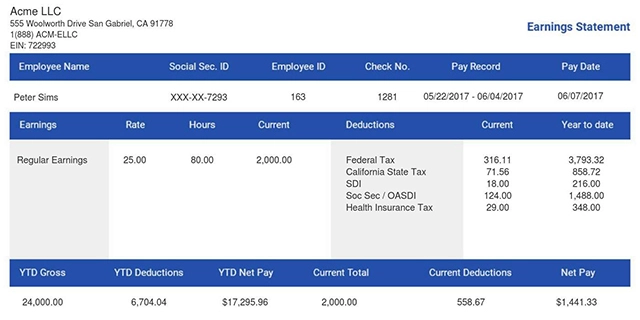
Then there's the PEO meaning insurance shoppers actually need: verify certification, verify accreditation, and verify what happens to coverage when the agreement ends. Either way, keep your own pay records. A reliable paystub generator produces clean pay documentation in minutes, on your own schedule.
- 1. Enter Your Information

- 2. Select Your Favorite Theme

- 3. Download Your Stub!

 By
By