

Compensation Discussion: How to Talk About Pay (2026)
 By
By
Around 70% of managers say they're uncomfortable talking to employees about pay, according to guidance published by West Virginia University. The person on the other side of the desk usually isn't any more relaxed. So the compensation discussion gets rushed, postponed, or squeezed into the last three minutes of a performance review. Both people walk out unhappy.
It doesn't have to go that way. Most of the difficulty comes down to preparation, and preparation starts with accurate pay records. A compensation discussion is a structured conversation about money, and structure is something you can plan for.
Here's what this guide covers. What a compensation discussion includes, and how to prepare for one. What to say on either side of the table. What federal law protects when you talk about pay. Where pay transparency stands in 2026. And the one step afterward that decides whether your raise ever shows up.
Key Takeaways
- Compensation conversations cover your full pay package, not just base salary.
- Bring three things: results with numbers attached, a market range from two sources, and your recent pay stubs.
- Section 7 of the National Labor Relations Act protects most private-sector employees who discuss wages with coworkers.
- As of 2026, 16 states and Washington DC have pay transparency laws on the books.
- Get the new figure, the effective date, and the form of the increase in writing, then check your next pay stub.
- What Is a Compensation Discussion?
- How to Prepare for a Compensation Discussion
- How to Discuss Compensation With Your Manager
- How to Lead a Compensation Discussion With an Employee
- What to Say and What Not to Say in a Salary Discussion
- Can You Get Fired for Talking About Pay?
- What Is Pay Transparency, and Why Does It Matter in 2026?
- How to Discuss Compensation in an Interview
- After the Compensation Discussion: Get It in Writing
What Is a Compensation Discussion?
A compensation discussion is a conversation between an employee and an employer about pay. It covers total compensation, meaning base salary plus bonuses, benefits, retirement contributions, and paid time off. These conversations usually happen at an annual review, when an employee requests a raise, or when a job offer is on the table.
That last point trips people up. A compensation conversation isn't only about the number on your offer letter. Health coverage, a 401(k) match, and paid leave all carry real dollar value, which is why the different types of compensation are worth knowing before you walk in. A manager who can't move base pay this quarter may still have room somewhere else.
One quick note on terminology. "Compensation Discussion and Analysis" is a completely different thing. There's more on that in the FAQs below.
How to Prepare for a Compensation Discussion

Most advice stops at "do your research," which isn't advice. Here's what to walk in with.
- Results with numbers attached. Not "I took on more responsibility." Instead: "I took over the vendor renewals in March and cut that spend by 12%." Adjectives don't survive a budget meeting. Figures do.
- A market range from two independent sources. One salary site is an opinion. Two that agree give you a market value you can defend. Federal wage data like the Employment Cost Index helps here too. It's neutral, and nobody's selling it to you.
- Twelve months of pay stubs. You need your real total, including overtime, shift differentials, and bonuses. People routinely misremember what they earn by a few thousand dollars. It's an awkward thing to get wrong out loud.
Your manager is probably looking at a compa-ratio. That's your pay divided by the midpoint of the band for your role. Sitting at 0.85 of midpoint is a far stronger argument than "I feel underpaid." Asking where you sit in the band is a fair question.
Timing matters too. Many companies lock pay changes to a compensation review meeting cycle. Ask when the window opens, so you don't build your case around a date that's already passed.
If you're self-employed or your employer doesn't issue detailed stubs, you can build clean records with our pay stub templates.
Small business owners delivering the number need the same three artifacts, pointed the other way. Gather the employee's results, the market range, and what payroll can absorb.
How to Discuss Compensation With Your Manager
Book a meeting and say what it's for. Burying the request at the end of a status call leaves your manager ambushed and you rushed, and neither helps. "I'd like 30 minutes this week to talk about my compensation" is enough. Before you book it, check the salary range for the role so your salary request lands inside a band somebody can actually approve.
Then lead with the ask, not the windup. State the number, give the evidence, stop talking.
Salary Negotiation With HR Conversation Example
Here's how the opening should sound:
"I'd like to move my base salary to $78,000. I've run the vendor renewals since March and cut that spend by 12%, and I've taken on onboarding for the two new analysts. Comparable roles in this market are listing between $76,000 and $84,000. Can we get there?"
Three sentences, one number, evidence in the middle. Nobody has to guess what you want.
If the answer is no, don't argue. Ask questions instead, because the answer to a "no" is information:
- What would I need to do to reach that number?
- When's the next point where pay can change?
- Is a one-time adjustment or a bonus possible instead?
Then stay gracious either way. You'll work with this person again on Monday. A compensation discussion with your manager that ends badly costs more than the raise was worth.
How to Lead a Compensation Discussion With an Employee

If you're the one delivering the number, the format matters as much as the figure.
Hold the compensation meeting privately, with enough time that nobody's watching the clock. Send a short agenda beforehand so the employee isn't blindsided.
Give context before you give the number. Explain the compensation framework behind your compensation strategy. Name the budget you're working inside and the market data behind the decision. Employees rarely get upset about a number in isolation. They get upset when it arrives with no reasoning.
Walk the whole compensation package, not just base pay. Total rewards covers the employer share of health premiums, the retirement match, and the non-salary benefits that count as indirect compensation. Most people underestimate all three.
When the answer is no, say why, and say what would change it. "Not this cycle" is a dead end. "Not this cycle, and here are the two things that would make it a yes in June" is a plan.
When it's a pay cut, be direct about four things: the reason, the amount, how long it lasts, and the effective date. Say whether the pay cut is company-wide or specific to one role, because people assume the worst if you don't.
One rule with no exceptions: never compare one employee's pay to another's by name. That's a fast route to a fairness complaint, and it's not information anyone can use.
What to Say and What Not to Say in a Salary Discussion
Phrasing does a lot of work in compensation discussions. These talking points cover both sides of the table.
| Say this | Not this |
|---|---|
| "I'd like to move my base to $78,000." | "I was hoping for a bit more." |
| "Here's what changed in my scope this year." | "I've been here three years now." |
| "What would it take to get to that number?" | "Is that really the best you can do?" |
| "This decision came from the band midpoint and this year's budget." | "That's just what HR approved." |
| "I can't discuss what anyone else earns, but let's look at your range." | "You're actually paid more than most of the team." |
| "Let me confirm the effective date in writing." | "It'll show up in your check at some point." |
Every line in the left column is a number, a reason, or a question. That's the trick.
Can You Get Fired for Talking About Pay?
In most cases, no. Section 7 of the National Labor Relations Act protects private-sector employees who discuss wages with coworkers, whether or not they belong to a union. Firing or disciplining someone for that is generally unlawful. The protection does not extend to supervisors, independent contractors, agricultural workers, or most public employees.
Is talking about pay illegal? It usually runs the other direction: the pay-secrecy rule is the legal problem, not the conversation. A handbook clause or a verbal instruction telling staff not to compare pay can itself be an unfair labor practice. Can companies prevent you from discussing salary? For most private employers, no. The National Labor Relations Board publishes this plainly.
Federal law about discussing wages covers ordinary situations, not just union organizing. Comparing offers in a group chat counts. So does discussing salary with coworkers over lunch. Discussing wages at work with someone doing your job at another site sits inside the same protection. All of it counts as concerted activity.
I Was Fired for Discussing Wages. Now What?
If you were fired, demoted, or written up after discussing salary at work, take these steps:
- Write down dates, names, and what was said, while you still remember it clearly.
- Save the evidence: the handbook page, the email, the Slack message, the write-up.
- Pull your pay records together, including stubs and any offer or raise letters.
- File an unfair labor practice charge with the NLRB. Charges are free, you don't need a lawyer to file one, and there's a six-month window from the date of the violation.
What Is Pay Transparency, and Why Does It Matter in 2026?
Pay transparency means openly sharing salary information, such as posting ranges in job ads or publishing pay bands internally. It matters in 2026 because 16 states and Washington DC now require some form of disclosure. Employees who can see the range also ask better questions instead of guessing.
Pay transparency laws split into two rough groups. Most states with a rule, including California, Colorado, New York, and Washington, require a good-faith range in the job posting itself. A smaller set discloses later in the process: Rhode Island supplies the range on request, and Nevada hands it to any applicant who has finished an interview. Connecticut switches from the second group to the first on October 1, 2026, which is a good reminder to check your own state's current trigger instead of assuming.
So why is pay transparency important beyond compliance? The benefits of pay transparency show up in fewer bad-faith negotiations and faster hiring. You also lose fewer people who find out sideways that they're underpaid. The honest trade-off: transparency surfaces pay disparity you may not have known about. Once it's visible, you have to fix it.
Pay transparency examples run along a spectrum: a posted range in an ad, published salary bands employees can look up, or full salary lists anyone can see. Most small employers land in the middle. Pay transparency best practices for a written pay transparency policy are modest. Define your bands, say what moves someone through one, name who approves exceptions, and apply it consistently. The pros and cons of pay transparency come down to whether you're ready to defend what you already pay.
How to Discuss Compensation in an Interview
Candidates should give a researched range rather than a single number, then turn the question around. Try this: "Based on the market I'm looking at between $76,000 and $84,000. What's the band you've set for this role?" Most job postings in disclosure states already list it, so check before the screening call.
Employers should ask job candidates about range early, during the initial screening. Nobody wants to spend two weeks discovering they're $20,000 apart on a ballpark figure. Keep specifics for the offer stage. If a candidate's number lands inside your budget, "that's within our range" is the entire answer.
One legal note for hiring managers: asking about salary history is unlawful in a number of states and cities. Ask what a candidate wants, not what they currently make.
After the Compensation Discussion: Get It in Writing
Here's the step nobody covers, and it decides whether any of this was real.
Before you leave the room, confirm three specifics in writing:
- The new figure
- The effective date
- Whether it's base pay, a bonus, or a one-time adjustment
Those three are exactly what payroll needs to process the change. A verbal yes isn't a raise. It's a payroll edit that somebody still has to key in, against a specific date, in a specific pay period.
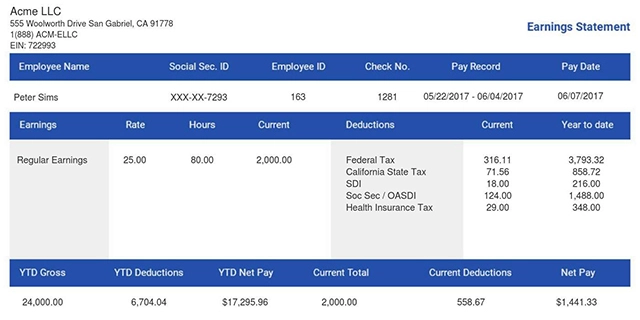
So check the first pay stub after the effective date. Look at gross pay and the hourly rate or salary line, and read the deduction codes while you're there. Check whether any back pay was owed for a mid-period change. If the number's wrong, you want to catch it in one pay period, not at tax time. Keep the stubs, because they're the record if the figure is ever disputed.
You Might Also Like
- Compensation Planning: Building the Pay Budget Behind the Number
- What's the Difference Between Payroll and Compensation?
- How to Calculate Your Hourly, Weekly, and Monthly Income
- Are Bonuses Taxed Differently?
- Employment Verification Letter: What It Proves and Who Needs One
Conclusion
A compensation discussion goes better when all three parts are handled. Prepare with evidence instead of feelings. Know that federal law protects your right to talk about pay with coworkers. And confirm the outcome in writing, then verify it against your next pay stub.
That last part is where good conversations quietly fall apart. Maybe you're self-employed, running payroll for a small team, or you just need clean documentation of what you earn. A reliable paystub generator creates accurate, professional pay stubs in minutes, so the number you agreed to is the number you can prove.
- 1. Enter Your Information

- 2. Select Your Favorite Theme

- 3. Download Your Stub!

 By
By