

What Is Spread of Hours Pay in New York? (2026 Guide)
 By
By
New York's spread of hours rule catches many employers off guard. If an employee's workday stretches more than 10 hours from clock-in to clock-out, they're owed an extra hour of pay at minimum wage. That includes breaks, meal periods, and time between shifts. Understanding the spread of hours meaning is the first step to staying compliant, and accurate pay stubs are your first record of compliance. It's one of New York's most often violated labor laws.
This guide covers who the rule applies to, how to calculate spread pay, and the compliance gaps most businesses miss.
Key Takeaways
- New York's spread of hours rule requires 1 extra hour of pay at minimum wage when an employee's workday spans more than 10 hours, including breaks
- Applies to non-exempt, hourly employees in the service industry: restaurants, hotels, home healthcare, and more
- Higher-paid employees outside hospitality may be exempt if their regular wages already cover the spread pay requirement
- Spread of hours pay does not count toward overtime calculations
- Show spread pay as a separate labeled line item on employee pay stubs
What Is Spread of Hours Pay in New York?
New York's spread of hours pay is an extra hour of wages at minimum wage. It's owed to non-exempt employees whenever their workday spans more than 10 hours from start to finish. That covers breaks, meal periods, and gaps between shifts. It also applies if an employee works a split shift on that day.
Two separate conditions trigger the rule:
- Spread exceeds 10 hours: The interval between first clock-in and last clock-out is more than 10 hours, even if total hours worked are far less
- Split shift: A schedule where working hours are not consecutive, with a gap of more than 1 hour between shifts
When both conditions apply on the same day, only one extra hour is owed, not two. This is a frequent point of confusion for payroll managers.
Unlike federal FLSA overtime rules, which count total weekly hours, this rule looks only at a single calendar day. A 35-hour week doesn't protect against this rule. One day's span of 10+ hours is all it takes. The rule lives in New York's wage orders: 12 NYCRR 146-1.6 governs the hospitality industry (restaurants and hotels), while 12 NYCRR 142-2.18 covers other service industries, with split shifts defined in 142-2.17.
How Spread of Hours Pay Is Calculated

The amount is one additional hour of pay at New York's basic minimum wage for that workday.
As of 2026, the rates are:
- New York City, Long Island, and Westchester County: $17.00/hour
- Rest of New York State: $16.00/hour
The rate is based on where the employee performs the work, not where the employer is headquartered. A company based in Albany with staff working in Westchester must apply the $17.00 rate to those employees.
Key rules for the calculation:
- The amount doesn't change with the employee's regular pay. A server earning $22/hour still receives $17.00 for the spread hour in NYC.
- Tipped employees receive the full basic minimum wage for the spread hour, not their lower tipped rate.
- Meal allowances, lodging credits, and similar offsets can't reduce or eliminate spread pay.
New York updates minimum wage annually each January. Check dol.ny.gov for current rates before each calendar year.
Who Does the Spread of Hours Law Apply To?
New York's spread of hours law applies to non-exempt, hourly employees in the service industry: restaurants, bars, hotels, catering companies, home healthcare agencies, entertainment venues, and automotive service businesses. Retail, building services, and farming aren't covered. Restaurant and hotel employees always owe spread pay regardless of their hourly rate — no exception for tipped workers or high earners in hospitality.
For employers with multiple locations, the rate is set by where the employee physically works, not the employer's headquarters. A company based in Syracuse with staff in Manhattan must apply the NYC rate to those workers. Maintaining accurate employment verification and income records that reflect correct regional rates is essential for compliance. The rule covers W-2 employees, not independent contractors with 1099 income — that distinction affects whether this rule applies.
Spread of Hours vs. Overtime Pay

These two rules run parallel but are entirely separate calculations.
Federal FLSA overtime kicks in when total weekly hours exceed 40, paying 1.5 times the regular rate. New York's spread rule triggers when a single day's span exceeds 10 hours, paying one extra hour at minimum wage. The two rules operate on different time scales and different pay formulas.
Both can apply on the same day. A server with an 11-hour span owes spread pay for that day. Overtime kicks in too if weekly hours push past 40. Spread pay doesn't count toward the 40-hour overtime threshold. It's not included in the regular rate used for overtime either.
| Federal Overtime | NY Spread of Hours | |
|---|---|---|
| Trigger | More than 40 hrs in a workweek | Day span more than 10 hrs |
| Payment | 1.5× regular rate | 1 hr at minimum wage |
| Sector limit | None (all covered workers) | Service industry only |
Real-World Examples of Spread of Hours Pay
A restaurant server works 11am–2pm, then returns for a 6pm–10pm shift. She worked 7 hours, but her workday spanned 11 hours. That triggers the rule: one extra hour at the New York minimum wage ($17.00 in NYC as of 2026). A barista who works straight through 8am–5:30pm with a break does not trigger spread pay.
More scenarios:
- No trigger: Hotel housekeeper works 9am–5pm with a 30-minute break. Day span is 8 hours. No spread pay owed.
- Split shift trigger: Event crew member sets up 7am–9am, then returns for teardown 9pm–11pm. Four hours clocked, but a 16-hour span means spread pay is due.
- Long single shift: Line cook works continuously from 9am to 8pm. Eleven hours of work over an 11-hour span triggers spread pay.
For employers: A restaurant with 5 servers each triggering spread pay 3 nights per week owes 15 extra minimum-wage hours weekly — $255.00 in NYC. Missing them consistently adds up: NY DOL wage claims include back wages plus liquidated damages. Accurate pay stubs that include spread pay also help employees qualify for loans and housing when proof of income is required.
The Higher-Pay Employee Exception
In most service industries outside restaurants and hotels, spread pay can be offset when regular wages already cover the required minimum. If total wages equal or exceed (hours × minimum wage) plus one extra minimum-wage hour, no additional spread payment is owed.
Example: A home healthcare aide earns $18/hour and works 10 hours on a day with an 11-hour span. The NY minimum wage outside NYC is $16.00.
- Required minimum: (10 × $16.00) + $16.00 = $176.00
- Actual wages: 10 × $18 = $180
Since $180 exceeds $176.00, no additional spread pay is due.
This exception doesn't apply to restaurant and hotel employees. They always receive spread pay regardless of their hourly rate. If you're unsure whether your business qualifies as "hospitality" under the wage order, consult an employment attorney. Don't assume the exception applies. For employees, reviewing how W-2 wages are calculated from a pay stub can confirm whether the offset was applied correctly.
Common Compliance Mistakes to Avoid
Three mistakes account for most compliance violations in New York:
Tracking Hours Worked but Not the Daily Span
Many payroll systems log total time clocked without capturing the full span of the workday. A record might show 8 hours worked without flagging that the employee's day ran from 9am to 9pm. Configure your payroll or time-tracking system to capture first clock-in and last clock-out for each day. Flag any daily span over 10 hours for review before finalizing payroll.
Assuming Tipped or Higher-Earning Employees Are Exempt
In hospitality, no pay rate exempts an employee from spread pay. A tipped server who earns $450 in a shift on a 12-hour spread day still gets an extra $17.00 in NYC. Tips don't offset the spread pay requirement. Apply the rule uniformly to all hospitality employees, including those paid partially in cash who may lack standard payroll records.
Missing Split-Shift Days in Manual Payroll
Split shifts look routine individually — each segment is short and unremarkable. Automate the check: flag any employee whose daily span from first punch to last punch exceeds 10 hours, then review before finalizing payroll.
NY DOL audits can reach back 6 years for wage violations. Penalties include back wages plus liquidated damages.
How to Document Spread of Hours Pay on Your Pay Stub
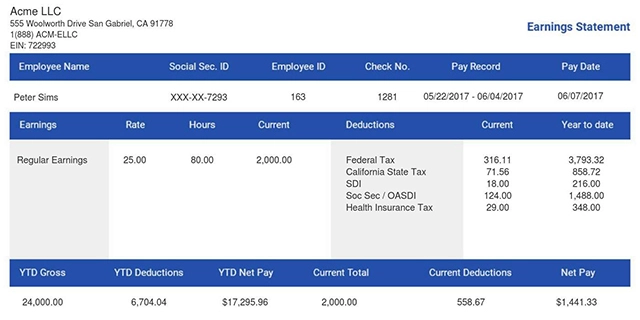
New York requires itemized wage statements, and best practice is to show this premium as a separate line item. Label it "Spread of Hours Premium" or "Spread of Hours Pay" with the amount listed apart from regular wages and overtime.
For employees: Check your pay stub after any day your workday started early and ran late. If you worked a qualifying spread and the line isn't there, you may have unpaid wages.
For employers and self-employed workers: Use a paystub creator to generate professional pay stubs that properly separate the spread premium from regular wages. Accurate pay stubs protect both parties if a wage dispute arises.
You Might Also Like
- DoorDash Pay Stubs: What Drivers Need to Know
- 1099 Pay Stub: Should Independent Contractors Receive a Pay Stub?
- Proof of Income Documents: 6 Instances You'll Need a Pay Stub
- What Is Gross Monthly Income
- Self-Employed? Here's How to Show Proof of Income
Conclusion
Spread of hours pay is one of New York's most commonly missed wage requirements. The rule is clear: if a workday spans more than 10 hours, an extra hour at minimum wage is owed. Employers need to track the daily span, not just total hours clocked. Employees should verify that their pay stubs reflect this line.
Use a reliable paystub generator to create accurate pay stubs that include all required line items. Clear records protect both sides.
- 1. Enter Your Information

- 2. Select Your Favorite Theme

- 3. Download Your Stub!

 By
By