

How To Pay 1099 Contractors and What It Means
 By
James Wilson
By
James Wilson As a self-employed or 1099 contractor, understanding your payroll is highly essential. This is important, especially when dealing with tracking and monitoring your finances.
For small business owners who need to pay 1099 contractors, as well as for the contractors themselves, understanding the process is important for effective tax and financial management. This is then inevitably used by employers to show even more transparency.
While you get the freedom to work alone, it comes with the big responsibility of managing all your income, earnings, and expenses. To make it easier, you need a pay stub to simplify the process and make the work easier.
This guide can help you realize the potential of pay stubs. However, if you're searching for efficient contractor payment solutions and want to generate a pay stub, you can create your document online using a stub creator.
- What Is a 1099 Contractor Form?
- Do Independent Contractors Need Pay Stubs?
- Essential Components of an Independent Contractor Pay Stub
- How To Generate an Independent Contractor 1099 Pay Stub
- Worker Classification for Contractors and Employees
- Why It’s Important To Pay 1099 Contractors With Payroll Software
- To Sum It Up
What Is a 1099 Contractor Form?
The 1099 for contractor form is completed by the employer. It indicates the payment amounts that the employer paid to the independent contractor. It should not be declared as income earned while being an employee. That is in contrast to employees who have their taxes withheld for them right from their paycheck.
Independent contractors are responsible for paying their own taxes. This includes self-employment taxes. When you need to pay independent contractors, providing a Form 1099 is a key year-end step.
A 1099 contractor is an independent worker who basically does freelance jobs or gigs and is not formally employed. These individuals only perform certain roles or complete a particular task in order to get paid immediately or on a set cycle. Since these independent contractors do not work formally, they typically do not enjoy the employee benefits that formal staff or employees enjoy.
Now, if you're wondering whether a 1099 worker receives their independent contractor pay stub, the answer is no. These contractors generally do not receive employer-issued pay stubs like employees do. Instead, contractors typically issue invoices or may create their own pay stubs. A pay stub is a salary or earnings statement that summarizes an employee's total earnings within a specific pay period (whether monthly or yearly). It generally contains details of that employee's payment, tax details, compensation, and other tax deductions.
Independent contractor pay stubs, however, are not so different from normal pay stubs. They are generated or created to make every record of any contractor payments easier, especially since they get paid by multiple clients. The pay stubs contain in-depth information like the wages earned per client, how many hours worked, and all deductions.
Pay stubs for 1099 contractors are usually not required by the Internal Revenue Service (IRS). However, they help contractors track income throughout the year so they can accurately report their earnings. They also need it when filling out their tax form 1099-NEC after the year is over. This form is a type of Form 1099, issued to independent contractors. It reports their income to the IRS and is usually issued by business owners, organizations, or financial institutions that hire independent workers.
The 1099 for contractor form usually contains compensation for each work done, and is of different types. Each of the types, however, is based on specific types of income, and the Form 1099 NEC is commonly used.
Do Independent Contractors Need Pay Stubs?
In most states, pay stub requirements don't apply to independent contractors. Although it’s a good idea to keep payment records. However, providing them with guarantees of transparency, such as tracking the actual income, is important. Workers use pay stubs in tax declarations, credit requests, or as proof of income for contractors.
Pay stubs are also helpful for these contractors, particularly in cases of non-payment or short-payment claims. Using management software can streamline administrative tasks. This includes using a pay stub generator to create pay stubs for independent contractors, ensuring transparency and trust. They may help them develop trust with employers so that they can work together.
Benefits for Contractors
Pay stubs also enable a 1099 for contractors to monitor the earnings received. This helps to make the right financial decisions. During any filing tax season, they help make the process quicker and easier. Contractors also prefer using pay stubs, especially when applying for loans or mortgages.
Benefits for Employers
Issuing pay stubs enhances the level of transparency. The establishment of paid records helps to reduce confusion and conflict between a business and contractors. They also assist in compliance during an audit or tax review. Proper records are crucial for tax compliance.
Essential Components of an Independent Contractor Pay Stub
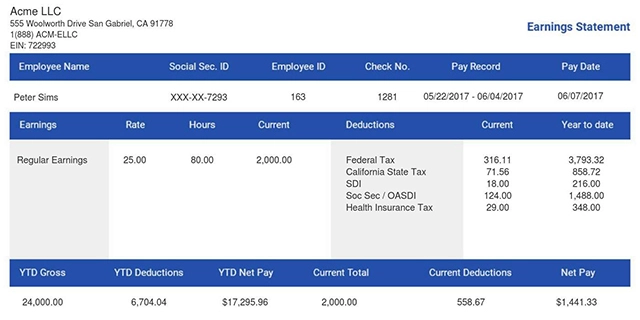
As mentioned earlier, an independent contractor's pay stub contains certain details that explain your earnings. Understanding some of the components of a pay stub helps you in many ways. Some of the elements include:
-
Personal Information: This is the independent contractor's identification. It includes your name, address, payers’ information, pay date, and period.
-
Client Information: This contains details of who you've worked for or clients/organizations you're currently working for as a 1099 contractor. It includes the names, addresses, and contact information of the clients.
-
Gross Income: Gross income refers to the income before any deductions or expenses. It constitutes full payment for work done during the work period. Note that gross pay is not the same as net pay.
-
Pay Rate: This is the rate you agree to work for. This can be an hourly rate, per-project rate, or other agreed-upon structure. This section outlines the process by which the payment amount is determined.
-
Working Hours: This is the number of hours worked within the work period. Mostly, it helps you and your client understand how the gross income was arrived at.
-
Expenses: Let's say you incur business expenses, such as travel, materials, or HR software. The client can reimburse such costs or have them subtracted from the gross income.
-
Current Total: This is typically calculated by multiplying the hours worked by your pay rate. It is the total amount you get paid.
-
Deductions: Since independent contractors pay their own taxes, this section helps estimate what needs to be set aside. Examples of deductions might include federal, state, and local taxes, as well as self-employment taxes, such as Social Security and Medicare. Understanding these tax obligations is key.
-
Net Pay: This is the final amount you take home as an independent contractor after deducting taxes and other expenses.
How To Generate an Independent Contractor 1099 Pay Stub
Here are the simple steps to follow to generate an independent contractor pay stub:
1. Obtain All the Required Payment Details
Get all the 1099s for contractor details, as well as their record of payment. You need to have the correct tax ID numbers, names, and addresses used. This is to help in the filing process. You must collect a Form W-9 to obtain the contractor's Taxpayer Identification Number(TIN).
2. Use a Pay Stub Generator or Software
There are platforms that can help you simplify this process. They provide easy-to-use pay stub templates for preparing the best pay stubs. Using dedicated payroll HR software can streamline this for business owners who frequently pay contractors. While selecting paystub templates, choose one with the appropriate space for contact information, wages, and report payments & deductions. The right payroll software can make this happen in just a few clicks.
3. Add Contractor Payment Details and Other Information Needed
After picking your desired template, enter all the required information where necessary. You're to enter your personal information, client information (and address), and earning information (including gross and net income, rates, and fees).
4. Review and Verify Details
Review all calculations and components to make sure data inputs are accurate. Errors amplify the possibility of disagreements or penalties during tax season audits.
5. Save the Pay Stub
For record-keeping and tax compliance purposes, retain a copy of the document. This will definitely come in handy for tax purposes.
Worker Classification for Contractors and Employees
Worker classifications are needed for business owners. As one, you need to know if a worker is an employee or an independent contractor. This helps to avoid situations of misclassified workers as independent contractors, and ultimately avoids penalties. The IRS uses common law rules to determine employee status:
-
Behavioral control
-
Financial control
-
The type of relationship.
You must consider all of these three factors when classifying workers. In the long run, you need to have proper worker classifications. It is needed for tax compliance.
This difference between contractors and employees is a key aspect of business operations. The person performing the work must be correctly classified. For an official determination, business owners can file Form SS-8 with the IRS.
If you’re an independent contractor, you typically operate your own business and use your own equipment. You’re also responsible for your self-employment taxes, which include the Social Security and Medicare taxes. For properly classified independent contractors, businesses generally don’t withhold federal payroll taxes or pay employer payroll taxes (FICA/FUTA).
However, if a worker is misclassified, the business could be held responsible for unpaid employment taxes, penalties, and other liabilities. This is also why a worker must be classified correctly.
Why It’s Important To Pay 1099 Contractors With Payroll Software

For small business owners, using payroll software is often the best way to manage payroll for 1099 contractors. This method for contractor payroll makes things easier. You can manage employee payroll and independent contractor payroll from the same system. This makes all contractor payments unified.
Good payroll software also automates creating tax forms like the Form 1099 NEC. This helps you ensure that you report payments correctly and maintain tax compliance. This is especially helpful for paying freelancers and remote workers efficiently.
Utilizing good payroll software can help manage these payment schedules and methods efficiently. They ensure you pay contractors on time, every time. Other payment options include wire transfers and digital platforms.
To Sum It Up
Employers and 1099 contractors benefit from pay stubs. They improve efficiency, facilitate paying taxes, and minimize errors. A pay stub is a relevant document. Records are kept using pay stubs. In this way, they protect themselves from legal issues and all sorts of complications.
Our site features a user-friendly independent contractor stub generator, a helpful tool to generate your contractor pay stubs. It includes all the basic elements covering your earnings. It then automatically calculates them and gives you the most accurate pay slip. To make it even easier, you can create your pay stubs through the 123 paystub method. It allows you to quickly generate pay stubs for your records.
- 1. Enter Your Information

- 2. Select Your Favorite Theme

- 3. Download Your Stub!

 By
By