

Pay Date vs. Pay Period vs. Check Date: What's the Difference?
 By
By
Even if you don't always agree with the amount, there's rarely a debate over when paydays fall.
By the end of this article, you'll understand pay periods, pay dates, and check dates, the key terms found on every pay stub. There are four common payroll schedules. Employers choose one based on employee type, cash flow, and state pay requirements.
Key Takeaways
- A pay date is the day you receive wages via direct deposit or paycheck.
- A pay period is the date range during which your work hours are counted.
- A check date is the official date printed on your paycheck that determines which tax year wages are reported in.
- Biweekly is the most common pay schedule in the U.S. (26 pay dates per year).
- Employers typically process payroll 3-5 business days before the pay date.
What Is a Pay Date?
A pay date is the specific day an employer pays an employee, whether by direct deposit to a bank account or by paper check. It is the day your pay stub is issued. The pay date is set by the employer based on their payroll schedule. The most common schedules in the U.S. are biweekly and semi-monthly.
What Is a Pay Period?

A pay period is the time frame covering the days an employee worked and earned wages. Common pay periods are weekly (7 days), biweekly (14 days), semi-monthly, or monthly. A pay period always ends before the pay date. Payroll takes 3 to 5 business days to process after each period.
Your pay period and pay date are not the same day. If your pay period ends on a Sunday, you will not be paid until your employer has finished calculating your earnings and deductions, including overtime.
Check Date on a Pay Stub: Definition and Purpose
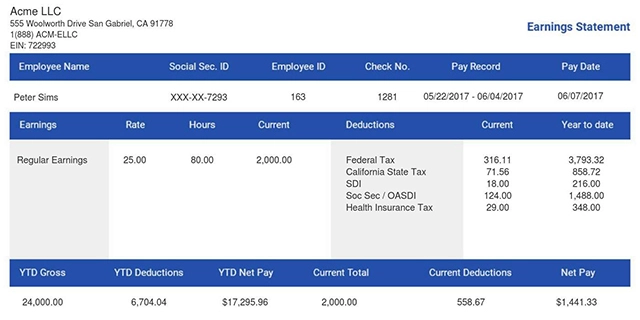
The check date is the date printed on the paper pay stub or shown in your payroll system. It usually matches the pay date. The check date is when the employer initiates payment to the employee. With direct deposit, funds land in the employee's bank account 1 to 2 days later. The check date also determines which tax year wages are reported in on a Form W-2.
Many employees wonder about the check date meaning on their pay stub. The check date on your paycheck is the official issue date printed on the check. Simply put, the check date is the date your employer records as the payment initiation date. This date is especially important at year-end. If the check date is December 31, those wages count toward the current tax year on the W-2, even if deposited in the new year. The check date meaning matters most at tax time.
Are you unsure of what the pay period and check date dates should be on your pay stub templates at ThePayStubs.com? Your tax preparer will then have all of the necessary information required to properly prepare your tax forms.
Pay Date vs. Pay Period: What's the Difference?
When comparing pay date vs pay period, the key difference is timing. The distinction is simple. The pay period is the work window, and the pay date is when you receive your wages. Here's an example:
- Pay Period: December 29 to January 11 (work hours tracked)
- Payroll Processing: Jan 12 to Jan 16 (5 business days to calculate wages, taxes, and deductions)
- Pay Date: January 17 (money deposited or check issued)
The processing gap exists to calculate your gross pay, deductions, and payroll taxes. After deductions, what you receive is your net pay. Payroll departments typically need 3 to 5 business days to complete this.
Types of Pay Periods and Payroll Schedules
The four standard payroll schedules vary in the number of paydays in a year.
Weekly
Weekly pay cycles every 7 days, giving employees 52 paydays a year. This schedule is common in retail, construction, and hospitality, where tips and irregular earnings are frequent.
Biweekly
Biweekly pay periods cover 14 days and run 26 times a year. About 43% of private employers in the U.S. use this schedule. In 2026, some months will have 3 paydays. Both salaried and hourly employees may be paid on this basis.
Semi-Monthly
Semi-monthly uses fixed calendar dates, such as the 1st and 15th, to achieve 24 paydays per year. Some employers, like those in high-tech and banking, prefer fixed calendar paydays for simpler benefit and garnishment processing. It is more common with salaried employees.
Monthly
Monthly pay provides 12 paydays per year. It's typical for managers and executives whose salary stays consistent month to month.
On-Demand Pay
Some employers now offer on-demand pay (also called earned wage access). This lets employees withdraw earned wages before the official pay date. It is separate from the standard payroll schedule.
How Do Employers Choose a Pay Schedule?
When employers choose a pay period, they must weigh payroll frequency, state pay requirements, and administrative costs. The four main factors are:
-
Employee Type: Hourly workers typically need weekly or biweekly pay. Salaried employees can work on a semi-monthly or monthly schedule.
-
State Laws: California requires at least 2 paydays per month. Massachusetts requires payment within 6 days of the period end. New York requires weekly pay for manual laborers. See the U.S. Department of Labor for full state requirements.
-
Cash Flow: More frequent pay dates mean more bank transactions. This can affect business liquidity.
-
Payroll Admin Cost: Processing payroll 52 times a year (weekly) is far more resource-intensive than 12 times (monthly).
You Might Also Like
- Payroll Codes and Abbreviations Explained
- How to Read a W-2 Like a Pro
- Paycheck Stubs: What They Are and How to Get Them
- How to File Taxes Using Your Last Pay Stub
- Free Pay Stubs Online: Your Options
Final Thoughts
Your pay date is when wages arrive. Your pay period is the work window those wages cover. Your check date is the official document date for tax purposes. Understanding all three helps you budget accurately and prepare your tax return with confidence.
Need Pay Stubs for a loan, renting an apartment, or for taxes? Use our paystub generator.
- 1. Enter Your Information

- 2. Select Your Favorite Theme

- 3. Download Your Stub!

 By
By