

EITC Refund Date 2026: When To Expect Your Money
 By
By
If you claimed the Earned Income Tax Credit on your tax return, you're probably wondering about your EITC refund date. The short answer is that most filers who e-filed and chose direct deposit can expect their money by March 2, 2026.
However, the timeline isn't straightforward because of the PATH Act. This forces the IRS to hold all EITC and ACTC refunds until mid-February. If you're also preparing income documents this tax season, a pay stub generator can help you stay organized.
About 31 million Americans claim the EITC each year, and the waiting game starts fresh every tax season. This guide covers the exact 2026 EITC refund schedule, why your refund may be delayed, and how to track your money.
Key Takeaways
-
The IRS cannot issue EITC or ACTC refunds before mid-February 2026 due to the PATH Act.
-
Most early filers with direct deposit can expect refunds by March 2, 2026.
-
The PATH Act Hold lifts on February 16, 2026, with IRS funding batches starting February 18.
-
Use "Where's My Refund" on irs.gov for personalized refund status updates after February 21.
-
Filing electronically and choosing direct deposit are the fastest ways to get your refund.
- Key Takeaways
- What Is the Earned Income Tax Credit?
- What Is the PATH Act and Why Does It Delay Your EITC Refund Date?
- 2026 EITC Refund Schedule
- When Will I Get My EITC Refund?
- How Fast Will You Get Your EITC Refund by Deposit Method?
- ACTC Refund Date: Does the Child Tax Credit Follow the Same Timeline?
- How To Track Your EITC Refund
- Common Mistakes That Delay Your EITC Refund
- Tips To Move Up Your EITC Refund Date
- You Might Also Like
- Final Thoughts
What Is the Earned Income Tax Credit?
The Earned Income Tax Credit (EITC) is a federal tax benefit for low- to moderate-income workers. For the 2025 tax year, the credit ranges from $649 for no qualifying children to $8,046 for three or more children. You must have earned income to qualify.
The EITC is also called the Earned Income Credit (EIC). It directly reduces the income tax you owe. If the credit exceeds your tax bill, you'll receive the difference as a refund. That's why so many people are eager to know their EITC refund date.
For the 2026 tax year, the maximum credit rises to $8,231 for families with three or more qualifying children. Here's a quick breakdown of the 2025 EITC amounts.
| Children | Max Credit (2025) | Max AGI (Single) | Max AGI (Married) |
| 0 | $649 | $19,104 | $26,214 |
| 1 | $4,328 | $50,434 | $57,554 |
| 2 | $7,152 | $57,310 | $64,430 |
| 3+ | $8,046 | $61,555 | $68,675 |
To qualify, you'll need a valid Social Security number and earned income from employment or self-employment. Your investment income must also be $11,950 or less. The IRS sees errors on roughly 33% of EITC returns, so double-check your qualifying child status and income before filing. Understanding what FIT taxable wages means on your paycheck can help you report income accurately.
What Is the PATH Act and Why Does It Delay Your EITC Refund Date?

The PATH Act of 2015 requires the IRS to hold all refunds that claim the EITC or ACTC until mid-February each year. This applies to your entire refund, not just the credit portion. The delay helps the IRS verify claims and prevent identity theft and fraudulent filings.
The Protecting Americans from Tax Hikes Act was signed into law in December 2015. It gives the IRS extra time to cross-reference income and withholding information from employers (W-2s) against what taxpayers report. If you need help reading your W-2, check out this guide on how to read a W-2 like a pro. This additional verification period catches fraudulent returns before refunds go out.
For the key path Act refund date for 2026, the IRS lifts the hold on February 16. That's Presidents' Day. Since federal offices are closed that day, actual processing begins February 18. Both EITC and ACTC claims trigger this same hold, so if you claimed either credit (or both), your entire refund is affected.
2026 EITC Refund Schedule
The 2026 filing season opened on January 26, and the IRS began accepting returns. However, if you claimed the EITC, your refund won't start processing until mid-February. Here's the EITC refund schedule 2026 with key dates:
| Date | Day | What Happens |
| Jan 26 | Monday | 2026 tax filing season opens |
| Feb 14 | Saturday | PATH Act hold deadline (IRS must hold EITC/ACTC refunds through this date) |
| Feb 15 | Sunday | Weekend (no processing) |
| Feb 16 | Monday | Presidents' Day (federal holiday); no refund processing |
| Feb 17 | Tuesday | First business day after Presidents' Day; IRS finalizes first batch |
| Feb 18 | Wednesday | IRS begins processing and releasing the first batch of EITC refunds |
| Feb 20 | Thursday | Second funding batch released |
| Feb 21 | Saturday | Where's My Refund updated with projected deposit dates for early filers |
| Mar 2 | Monday | Most EITC/ACTC refunds available via direct deposit |
| Mar 6 | Thursday | Nearly all PATH Act refunds deposited |
Presidents' Day on February 16 means federal offices are closed that Monday. IRS processing begins February 18 this year. The IRS typically releases PATH Act refunds in two batches, and the dates above are based on historical patterns.
Keep in mind that the IRS processes most refunds within 21 days, but doesn't guarantee any specific date. Don't plan to spend around your expected refund until the money actually arrives in your account.
When Will I Get My EITC Refund?

Most taxpayers who file electronically and choose direct deposit can expect their EITC refund by March 2, 2026. Some filers may receive their money a few days earlier. Check irs.gov/refunds after February 21, 2026, for your personalized refund date.
Your actual EITC refund date depends on several factors:
-
Filing Method: E-filing is significantly faster than mailing a paper return.
-
Deposit Method: Direct deposit beats paper checks by weeks.
-
Return Accuracy: Errors or missing information trigger additional IRS review.
-
When You Filed: Earlier filers within the PATH Act window get processed first.
If the IRS needs more information about your return, they'll send you a letter. Responding promptly helps avoid further delays. The IRS won't call you about your refund, so be cautious of scam calls claiming to be from the IRS.
How Fast Will You Get Your EITC Refund by Deposit Method?
With direct deposit, expect your EITC refund within 1 to 5 business days after the IRS releases funds, typically by early March 2026. Prepaid debit cards may arrive slightly faster. Paper checks mailed by the IRS take 4 to 6 weeks to arrive.
Here's how the EITC direct deposit date compares to other methods:
| Method | Speed After IRS Release | Notes |
| Direct deposit (bank) | 1-5 business days | Fastest standard option |
| Prepaid debit card | 1-3 business days | May post faster than bank |
| Paper check (mail) | 4-6 weeks | Slowest. Subject to mail delays |
Your financial institution may also need time to process the deposit. Some banks post refunds on the same day they receive them from the IRS, while others take 1-2 additional business days. Credit unions tend to post deposits faster than large banks. If you need to change your direct deposit information with the IRS, do so before filing.
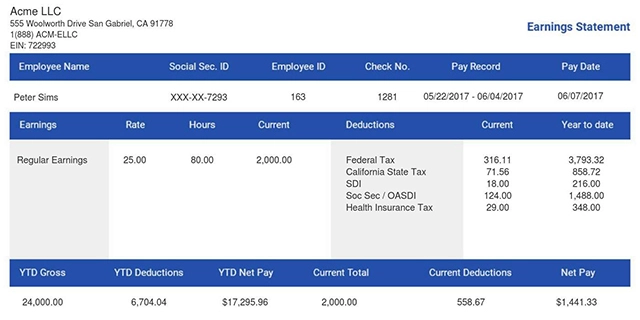
If you need proof of income while waiting for your refund, you can create accurate pay documentation with a pay stub generator for loan applications or rental agreements.
ACTC Refund Date: Does the Child Tax Credit Follow the Same Timeline?
Yes, the Additional Child Tax Credit (ACTC) follows the exact same PATH Act timeline as the EITC. The IRS holds both credit refunds until mid-February 2026, with most direct deposit refunds arriving by March 2. Both credits trigger the same hold.
If you claimed both the EITC and ACTC on the same return, your refund is only held once. The child tax credit refund date and the ACTC refund date align perfectly with the EITC schedule above. There's no separate or additional delay for claiming both credits.
The ACTC is the refundable portion of the Child Tax Credit. For 2025, the maximum refundable amount is $1,700 per qualifying child.
How To Track Your EITC Refund
Track your EITC refund status using the IRS "Where's My Refund" tool at irs.gov/refunds, the IRS2Go mobile app, or your IRS Online Account. These tools update once daily, usually overnight. For EITC and ACTC filers, expect updated status information starting February 21, 2026.
Here's how to check your EITC refund date using each tool:
1. Where's My Refund (IRS.gov)
Visit irs.gov/refunds and enter your Social Security number, filing status, and exact refund amount. The tool shows three stages. These include:
- Return Received
- Refund Approved
- Refund Sent
2. IRS2Go Mobile App
Download the free IRS2Go app for iOS or Android. It offers the same refund-tracking features as the website. It also provides push notifications when your status changes.
3. IRS Online Account
Create or sign in to your IRS Online Account at irs.gov. This gives you the most detailed view of your tax account, including refund status, payment history, and any notices.
Don't check more than once per day. The system updates overnight, so checking multiple times may not give you new information.
Common Mistakes That Delay Your EITC Refund
Even after the PATH Act Hold lifts, certain errors on your return can push your EITC refund date back further. The IRS reports that roughly one-third of EITC claims contain errors. Here are the most common mistakes:
-
The qualifying child doesn't meet all four tests. Your child must meet age, relationship, residency, and joint return requirements. This is the most frequent error.
-
More than one person claimed the same child. Only one taxpayer can claim a qualifying child. If separated or divorced parents both claim the same child, the IRS will reject one of the returns.
-
Social Security number or name doesn't match. The SSN and name on your return must exactly match your Social Security card. Even small discrepancies cause processing delays.
-
Filing as single or head of household when married. Married taxpayers can't claim the EITC if they file as single or head of household. You must file jointly or, in some cases, as married filing separately.
-
Over- or underreporting income. Include all W-2, 1099-NEC, and 1099-MISC income. The IRS matches your return against employer filings. Mismatches in these can trigger reviews that push your EITC refund date back even further. Self-employed filers should learn how to show proof of income to avoid discrepancies.
Tips To Move Up Your EITC Refund Date
Want your EITC refund date to be as early as possible? Follow these tips:
-
File Electronically: E-filed returns process much faster than paper returns, which can take 6-8 weeks.
-
Choose Direct Deposit: This is the fastest way to receive your refund after the IRS releases it. Learn how to get a pay stub from direct deposit to keep your records straight.
-
File Early: Submit your return as soon as you have all your tax documents. January filers get processed in the first PATH Act batch.
-
Double-Check Everything: Accuracy prevents delays. Verify Social Security numbers, income amounts, and qualifying child information.
-
Use IRS Free File: If your income is $89,000 or less, you can file electronically for free through IRS.gov.
You Might Also Like
Final Thoughts
Your 2026 EITC refund date depends on the PATH Act timeline, your filing method, and your deposit choice. The earliest direct deposits start arriving around February 18, with most refunds hitting accounts by March 2. Track your status through irs.gov after February 21 and make sure your return is accurate to avoid delays.
Need pay documentation for a loan, rental application, or personal records? ThePayStubs.com can help you create professional pay stubs quickly and accurately.
- 1. Enter Your Information

- 2. Select Your Favorite Theme

- 3. Download Your Stub!


 By
By