

IRS Form 8832: LLC Entity Classification Election Guide (2026)
 By
By
When you form an LLC, the IRS doesn't let you pick how you're taxed. It assigns a default tax status based on your business structure. For many small business owners, that default works fine. But for others, Form 8832 can unlock real tax savings.
This guide explains IRS Form 8832, including who files it, how to complete it, and what it means for your payroll and pay stub obligations.
Key Takeaways
- Form 8832 (Entity Classification Election) lets eligible businesses choose how the IRS taxes them, whether as a corporation, partnership, or disregarded entity
- Single-member LLCs default to disregarded entity status; multi-member LLCs default to partnership treatment
- Filing Form 8832 elects C-Corp status. To elect S-Corp status, you need Form 2553 instead
- Once you file, you're locked into the new tax status for 60 months without special IRS approval
- As of 2026, Form 8832 must be sent by mail (online filing is not available)
- What Is IRS Form 8832?
- Who Can File Form 8832, and Who Can't?
- Form 8832 vs. Form 2553: Which Election Do You Need?
- How To Fill Out IRS Form 8832, Step by Step
- Where To Mail Form 8832 by State (2026)
- Form 8832 Deadlines and the 60-Month Rule
- How Changing Your Entity Status Affects Payroll and Pay Stubs
- You Might Also Like
- Conclusion
What Is IRS Form 8832?
IRS Form 8832 is the "Entity Classification Election". Some people search for it as 88/32. It lets LLCs, partnerships, and certain foreign entities choose how the IRS taxes them. You can elect to be taxed as a corporation, partnership, or disregarded entity. Without this form, the IRS assigns a default status. That default may not be the best fit for your tax goals.
Here's what the Form 8832 election does in practice:
- It changes how your business income gets reported and taxed.
- It does not change your legal structure under state law.
- Your LLC stays an LLC, but the IRS treats it like a C corporation for tax purposes.
The three tax options you can elect using Form 8832 are:
-
Corporation: Your LLC pays a flat 21% federal corporate tax rate on profits. Payouts to owners get taxed again as dividends. But C-Corp status offers fringe benefit deductions and the ability to bring in outside investors.
-
Partnership: Multi-member LLCs that want to keep pass-through taxation but make their partnership status official.
-
Disregarded Entity: A single-member LLC going back to sole proprietor taxation after choosing a different status before.
A Form 8832 LLC election won't change your state filing, create a new legal entity, or elect S-Corp status. For an S-Corp, you need Form 2553.
Who Can File Form 8832, and Who Can't?
Single-member LLCs, multi-member LLCs, partnerships, and eligible foreign entities can all use Form 8832. It lets them change their tax status with the IRS. Domestic corporations can't use it. They're locked into C-Corp treatment by default. Sole proprietors without an LLC also don't qualify. If you're fine with your default IRS tax status, you don't need to file.
Single-Member LLCs
By default, a single-member LLC is a disregarded entity. The IRS ignores it as a separate entity. All income and expenses flow to your personal return (Schedule C). You pay self-employment tax on the full net profit. Electing C-Corp status separates business income from personal income. You lose pass-through ease but gain perks like retained earnings and fringe benefit deductions.
Multi-Member LLCs
Multi-member LLCs default to partnership taxation. Each member gets a Schedule K-1 showing their income share. That income flows to personal returns via Form 1065. Electing C-Corp status triggers a deemed liquidation under IRC Section 708. This can create capital gains. Work with a CPA before making this move.
Who Can't Use Form 8832
Some entity types aren't eligible. Domestic C corporations are locked into C-Corp status by law. Certain banks, insurance companies, and Domestic International Sales Corporations (DISCs) are also restricted to set tax classes.
Form 8832 vs. Form 2553: Which Election Do You Need?

Form 8832 elects C-Corp, partnership, or disregarded entity tax treatment. Form 2553 elects S-Corp status. S-Corp rules are stricter: no more than 100 shareholders, and only U.S. citizens or resident aliens can own shares. If you want S-Corp taxation, file Form 2553, not Form 8832.
| Goal | Form to File |
|---|---|
| Retain default LLC tax treatment | No form needed |
| Be taxed as a C corporation | Form 8832 |
| Be taxed as an S corporation | Form 2553 (not Form 8832) |
| Revert to the disregarded entity | Form 8832 |
The Form 8832 vs 2553 table above covers the most common cases. S-Corps let profits and losses pass through to shareholders' personal returns. This avoids corporate-level tax. C-Corps have no such limits. They are often the choice for venture-backed firms or those with equity plans.
How To Fill Out IRS Form 8832, Step by Step
Before you start, gather a few items. You need your entity's legal name (as filed with the IRS) and your Employer Identification Number (EIN). Also, have your business address ready. For single-member LLCs, you'll need the owner's Social Security Number, too.
Step 1: Election Information
- Line 1: Check if this is a first-time election or a change to an existing one.
- Lines 2-5: Enter your entity's name, EIN, and address.
- Line 6: Pick the tax status you want. This can be 6a (C-Corp), 6b (partnership), 6c (disregarded entity), or 6d-6f (foreign entity options).
- Line 8: Enter the effective date. It can be no more than 75 days before the filing date, or up to 12 months after. Getting this wrong is a common Form 8832 mistake.
Step 2: Signatures
For single-member LLCs, the owner signs. For multi-member LLCs, all members must sign. Missing signatures are a top reason Form 8832 gets rejected.
Step 3: Late Election Relief (If Applicable)
If you missed the filing window, include a written note in Part II asking for relief.
Common Filing Mistakes to Avoid
- Picking an effective date outside the 75-day / 12-month window
- Missing member signatures on multi-member LLC filings
- Thinking the federal election applies to your state taxes (it doesn't)
Where To Mail Form 8832 by State (2026)

As of 2026, Form 8832 can't be filed online. The Form 8832 mailing address depends on where your business is located. If you're wondering where to file Form 8832, it's always by paper mail.
| Business Location | Mailing Address |
|---|---|
| CT, DE, DC, IL, IN, KY, ME, MD, MA, MI, NH, NJ, NY, NC, OH, PA, RI, SC, VT, VA, WV, or WI | Department of the Treasury, Internal Revenue Service, Kansas City, MO 64999 |
| All other U.S. states | Department of the Treasury, Internal Revenue Service, Ogden, UT 84201 |
| Foreign entities | Department of the Treasury, Internal Revenue Service, Ogden, UT 84201-0023 |
After mailing, the IRS usually sends a written notice within 60 days. Ensure you keep this letter. It proves the election is in effect. If 60 days pass with no reply, contact the IRS center where you filed.
There's no filing fee for Form 8832.
Form 8832 Deadlines and the 60-Month Rule
The 75-Day / 12-Month Window
Your effective date can be set up to 75 days before the filing date or up to 12 months after it. Want the election to start January 1? File by March 15 of that year. If you file outside these windows, the IRS may reject the election.
The Five-Year Lock-In (60-Month Rule)
Once you file Form 8832, you can't change your tax status again for 60 months. The IRS won't approve a new election during that time. Two exceptions exist:
- Mistake of fact: The election was based on wrong data.
- Ownership change: More than 50% of the business changes hands (merger, buyout, or sale).
Talk to a CPA before filing. The five-year lock-in is a big commitment.
Late Election Relief and State Tax Points
If you missed the window, Revenue Procedure 2009-41 may let you file late. To qualify, the entity must have acted as if the election were in effect. The failure to file must also have been by accident.
A federal Form 8832 election does not change your state tax status on its own. Rules differ by state. Check your state's tax agency, and keep track of business tax deadlines as well.
How Changing Your Entity Status Affects Payroll and Pay Stubs
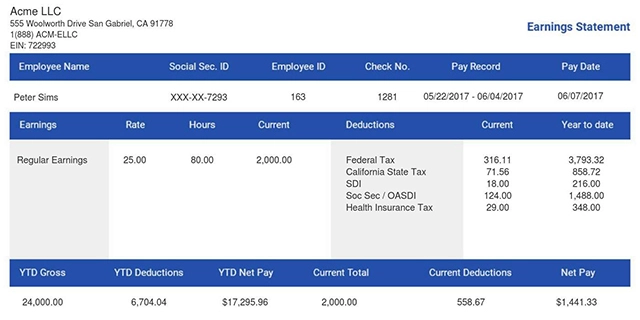
When a single-member LLC elects C-Corp status, payroll becomes required. As a disregarded entity, the owner reports income on their personal return. No formal payroll is needed. Once C-Corp status kicks in, the IRS expects owner-employees to get reasonable pay as W-2 wages. That means FICA withholding, income tax withholding, and pay stubs for each pay period.
Making this switch? You'll need accurate pay stubs for your new W-2 salary or any new hires. ThePayStubs.com helps you create them in minutes.
You Might Also Like
- Self-Employed Proof of Income: Documents That Work
- Payroll Tax vs. Income Tax: What's the Difference?
- How to File Taxes With Your Last Pay Stub
- Do Independent Contractors Get a Pay Stub?
- Proof of Income If You're Paid in Cash
Conclusion
Form 8832 gives LLCs and eligible businesses a real choice. Instead of the IRS default, you can pick the tax status that fits your goals. Maybe you're a freelancer cutting self-employment tax, or you're a growing firm seeking investors. Either way, this Form 8832 IRS election is worth knowing.
The 60-month lock-in and payroll duties that follow need careful planning. Work with a tax professional before filing. Make sure your choice fits both your federal and state tax plans. Once your status changes, use ThePayStubs.com to create accurate pay stubs for your W-2 salary. Stay compliant from day one.
- 1. Enter Your Information

- 2. Select Your Favorite Theme

- 3. Download Your Stub!

 By
By