

Schedule 3 (Form 1040): Credits and Payments Guide (2026)
 By
By
Filing your 2026 federal tax return and wondering if you need a Schedule 3 form? This IRS document reports additional tax credits and tax payments beyond what Form 1040 covers.
The IRS created Schedule 3 as part of the 2018 Form 1040 redesign. This cut six supplementary schedules down to three. A paystub generator can help you organize your income records before filing.
This guide walks you through every section so you can file accurately and claim every dollar you deserve.
Key Takeaways
-
This Schedule Form 1040 has two parts. Part I lists part nonrefundable credits. Part II lists other payments and refundable amounts not on the main Form 1040.
-
Not every taxpayer needs it. Only those claiming credits beyond the Child Tax Credit and Earned Income Credit.
-
Line 8 totals all Part I credits and transfers to Form 1040, Line 20.
-
Line 15 totals Part II tax payments and transfers to Form 1040, Line 31.
-
Download the current PDF free from IRS.gov.
What Is Schedule 3 Tax Form?
Schedule 3 (Form 1040) is a supplementary IRS tax form. It reports additional credits and payments that don't fit on the main Form 1040.
Part I covers nonrefundable credits, such as the foreign tax credit and education credits. Part II handles other payments and refundable credits, such as the net premium tax credit. The full official name is 1040 Schedule 3 (Additional Credits and Payments).
What is 1040 Schedule 3 in practical terms? You attach it to your return when you qualify for credits. The IRS moved off the main 1040 in the 2018 redesign. Before that change, taxpayers had to choose between Form 1040, 1040A, and 1040-EZ.
Now everyone uses the 1040 form and attaches schedules as needed. Schedule 1 handles additional income and deductions. Schedule 2 covers additional taxes. The Schedule 3 1040 attachment is for additional credits and payments. What is Schedule 3 tax form? It can put money back in your pocket through credits.
Who Needs To File?


You need to file this form if you're claiming credits not listed on Form 1040. Examples include:
- The foreign tax credit (Form 1116)
- Child and dependent care credit (Form 2441)
- Education credits (Form 8863)
You also need it if you made extension tax payments or had excess Social Security tax withheld. The IRS Schedule 3 applies to all filing statuses.
You must attach Form 2441 for child care, Form 1116 for foreign taxes, and Form 8863 for education credits. The 1040 form Schedule 3 is required when you claim any of these. It also covers the:
- Retirement savings contributions credit
- Residential energy credits
- General business credit
- Credit for the elderly or disabled
You do NOT need the Form 1040 Schedule 3 if your only credits are the Child Tax Credit or Earned Income Credit. The Additional Child Tax Credit and American Opportunity Tax Credit also go directly on Form 1040. Many standard filers skip this tax form Schedule 3 entirely.
Part I: Nonrefundable Credits
Part nonrefundable credits reduce your tax bill dollar for dollar, but they can't create a refund beyond what you owe. Part I of 1040 Schedule 3 covers these credits across Lines 1 through 8.
Line 1: Foreign Tax Credit
If you paid taxes to a foreign country, claim this credit using Form 1116 to avoid double taxation. You may skip Form 1116 if your foreign taxes were $300 or less ($600 if filing jointly).
Line 2: Child and Dependent Care Credit
Working parents who paid for childcare can claim this credit using Form 2441. Qualifying expenses include daycare, after-school programs, and care for disabled dependents.
Line 3: Education Credits
Report nonrefundable education credits from Form 8863. The American Opportunity Credit gives up to $2,500 per student. The Lifetime Learning Credit offers up to $2,000 per tax return. Income limits apply:
- $90,000 for single filers
- $180,000 for joint filers
Line 4: Retirement Savings Contributions Credit
The Saver's Credit rewards retirement contributions to a 401(k) or IRA. The credit ranges from 10% to 50% of contributions based on your income. For 2026, the AGI limit is $79,000 for married filing jointly. Use Form 8880 to claim this credit.
Line 5: Residential Energy Credits
Claim credits for solar panels and energy-efficient home upgrades using Form 5695. Line 5a covers the residential clean energy credit. Line 5b covers the energy-efficient home improvement credit.
Lines 6a-6z: Other Nonrefundable Credits
This section covers several credits:
- General business credit (Form 3800)
- Prior year AMT credit (Form 8801)
- Adoption credit (Form 8839)
- Credit for the elderly or disabled (Schedule R)
- Clean vehicle credit (Form 8936)
- Mortgage interest credit (Form 8396).
Example: Assuming you claim an $800 child and dependent care credit on Line 2 and a $2,500 education credit on Line 3. Your combined credits total $3,300. On a $5,000 tax bill, this cuts your liability to $1,700.
Understanding Schedule 3 Line 8

This line is key to the form. Schedule 3 line 8 is the total of all nonrefundable credits from Part I. It combines Lines 1 through 5b and Line 7. You then transfer the amount from Schedule 3 line 8 to Form 1040, Line 20. This total directly cuts your federal tax for the year.
Understanding FIT taxable wages on your pay stub can help you estimate how much you owe before applying these credits.
The amount on Line 8 can't exceed your total tax. If your part nonrefundable credits are larger than what you owe, the excess is lost. It doesn't carry over or create a refund. This is the key gap between Part I and Part II.
Part II: Other Payments and Refundable Credits
Other payments and refundable credits appear in Part II of the Schedule 3 Form 1040. These can create a refund even when your tax liability is zero. This section spans Lines 9 through 15.
Line 9: Net Premium Tax Credit
If you bought health insurance through the Marketplace and got Form 1095-A, use Form 8962 to figure your net premium tax credit. Report the result here.
Line 10: Extension Payments
Enter any tax payment you made when filing Form 4868 for an automatic extension.
Line 11: Excess Social Security Tax Withheld
If you had multiple jobs and your combined Social Security withholding exceeded the wage base, claim the excess here. The 2026 wage base is $184,500. If a single employer overwithheld, file Form 843 instead. Having accurate pay stubs makes it easier to verify your withholding amounts.
Line 12: Credit for Federal Tax on Fuels
Report fuel tax credits from Form 4136 for non-highway fuel use.
Lines 13a-13z: Part Other Payments and Refundable Credits
This section includes undistributed capital gains (Form 2439), Section 1341 repayment credits, and net elective payment election amounts from Form 3800.
About Schedule 3 Line 15
This line totals all "Other payments and refundable credits" from Part II. Schedule 3, line 15. Specifically, it adds together Lines 9 through 12 and Line 14. The total from Line 15 is then transferred to Form 1040, Line 31. Unlike Line 8, these credits and payments can create a refund even if you owe zero tax.
What is Schedule 3 in terms of refund impact? This distinction matters for your tax return Schedule 3. Part I credits (Line 8) cap at your tax liability. Part II credits (Line 15) can put cash back in your account, similar to how stimulus payments work as refundable credits.
Common Filing Mistakes To Avoid
Following the Schedule 3 instructions carefully can help you avoid these common errors:
-
Forgetting To Attach Form Documentation: Each credit references a specific form (1116, 2441, 8863, etc.). Missing attachments delay processing.
-
Using the Wrong Tax Year Form: Always download the current year version. A 2023 Schedule 3 isn't valid for a 2026 filing.
-
Claiming Credits Already on Form 1040: The Child Tax Credit and Earned Income Credit belong on Form 1040, not this schedule.
-
Missing the Refundable AOTC Portion: The American Opportunity Credit is partially refundable. The refundable part goes on Form 1040, Line 29.
You'll also need your W-2 form handy when filing, since it shows your total federal tax withholding.
Where To Get the PDF
Download the current IRS Form 1040 Schedule 3 from the IRS website at irs.gov/pub/irs-pdf/f1040s3.pdf. For the Schedule 3 PDF and instructions, see the general instructions for Form 1040 at irs.gov/pub/irs-pdf/i1040gi.pdf.
Some filers look for it using the shorthand 1040/3. Need a prior year version? The 2023 form and other prior year versions are available at irs.gov/forms-pubs/prior-year. You can also access free fillable forms through the IRS Free File program.
For Sch 3 Form 1040 and Form 1040 Sch 3 searches, the IRS website has the official versions ready for download. If you also need to file a 1099 form, you can generate one online.
You Might Also Like
In Conclusion
Filing taxes correctly means knowing which forms to use. Schedule 3 of 1040 is a valuable tool for reducing your federal tax bill by claiming additional credits and making tax payments. Each line helps you maximize your savings. Always attach the required forms for each credit and use the current year version. Double-check that Line 8 and Line 15 transfer correctly to Form 1040.
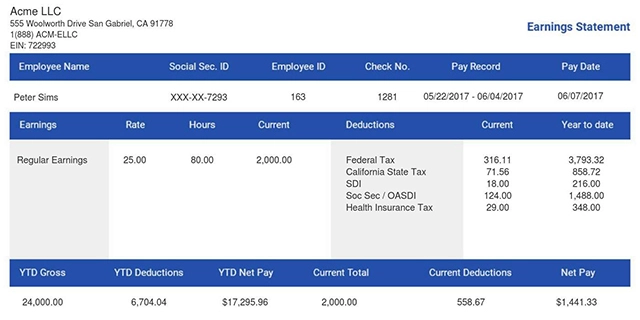
Need professional pay stubs for income verification or tax preparation? Browse our pay stub templates to create accurate, professional pay stubs in minutes. ThePayStubs.com makes it easy to document your earnings for any purpose.
- 1. Enter Your Information

- 2. Select Your Favorite Theme

- 3. Download Your Stub!


 By
By