

What Is Net Salary? Definition, Calculation & Examples (2026)
 By
James Wilson
By
James Wilson You land a job at $55,000 a year. You do the math, and it's about $4,583 a month. Then your first pay stub shows $3,400. So what is net salary, and where did the rest go?
Net salary is what hits your bank account after taxes and deductions. This guide breaks down the net income meaning, shows how to calculate net pay, and explains why your take-home pay is the only number that matters for budgeting.
Key Takeaways
- Net salary (also called net pay or take-home pay) is your earnings after all taxes and deductions
- Gross pay is always higher. It's your earnings before anything is withheld
- Core formula: Gross Pay − Deductions = Net Salary
- Employees typically see 20–35% withheld. Freelancers often see more
- Budgeting should always start from net income, not gross income
What Is Net Salary?
Net salary is your take-home pay. It is the amount put into your bank account after all taxes and deductions. Also called net pay, it equals your gross earnings minus all payroll taxes and benefit costs withheld.
Those costs include mandatory items (federal and state taxes, FICA) and voluntary ones (health insurance, 401(k)). Employees checking their pay stubs and small business owners running payroll both rely on this number.
What Is Gross Pay?
Gross pay is your total earnings before any deductions. For hourly workers, it is your hourly rate multiplied by the hours worked, plus any overtime. Under the FLSA, overtime is paid at 1.5 times your regular rate. For salaried workers, it is your annual salary split by pay periods. These include 26 for biweekly, 24 for semi-monthly, and 12 for monthly.
Gross pay includes base salary, overtime pay, bonuses, and commissions. These are all parts of your gross monthly income before deductions.
How To Calculate Your Net Salary

To calculate net salary, start with gross pay. First, subtract pre-tax items such as 401(k) and HSA contributions. Next, subtract FICA: 6.2% for Social Security tax and 1.45% for Medicare tax. Then subtract federal income tax (based on your W-4 and IRS brackets) and state income tax. What remains is your net salary.
A Real 2026 Example: A retail worker earning $22 per hour, working 40 hours per week on a biweekly pay period:
| Item | Amount |
|---|---|
| Gross pay (80 hrs × $22) | $1,760 |
| Social Security (6.2%) | −$109.12 |
| Medicare (1.45%) | −$25.52 |
| Federal income tax (est., single filer) | −$170 |
| Health insurance premium | −$75 |
| 401(k) contribution (5% pre-tax) | −$88 |
| Net salary per paycheck | ≈$1,292 |
Common Deductions That Reduce Your Net Pay
Payroll deductions fall into two groups. These include:
1. Mandatory (Set by Law)
- Federal income tax: Based on your Form W-4 and IRS brackets
- State income tax: Varies by state. Nine states have none
- FICA: Social Security (6.2% up to the 2026 wage base of $176,100) and Medicare (1.45%)
- Wage garnishments, if any: Court-ordered for debt or child support
2. Voluntary (Benefit Elections)
- Health insurance premiums
- 401(k) and other retirement plan contributions
- HSA or FSA contributions
- Life and disability insurance
Pre-tax deductions (401(k), HSA) reduce your taxable income before payroll tax is applied. Post-tax deductions like Roth 401(k) come out after taxes, so they do not lower your taxable income. Tools from providers like ADP can show how each deduction hits your check.
Gross Pay vs. Net Pay: Key Differences

| Gross Pay | Net Pay | |
|---|---|---|
| Definition | Earnings before deductions | Take-home after all deductions |
| On your pay stub | Top line | Bottom line |
| Used for | Job offers, tax reporting | Budgeting, financial planning |
| Direction | Always higher | Always lower |
The core of gross pay vs net pay is that gross is an offer number, while net is a life number.
What Is Net Salary After Taxes?
If you ask, "What is my net income?" the answer starts with gross pay. Subtract FICA (7.65%), federal income tax, state income tax, and benefit costs. State rates range from 0% in Texas, Florida, and Nevada to 13.3% in California. For most workers, total taxes cut gross pay by 20-30%.
A common mistake is mixing up your marginal tax rate (22-24% for many earners) with your effective rate. The effective rate is what you really pay overall, often 12-15% for middle-income Americans.
Why Net Monthly Income Is the Number That Matters
The net monthly income meaning is simple. It is the cash you can spend each month after taxes and deductions. You should budget from this number, not gross.
The 50/30/20 rule (50% needs, 30% wants, and 20% savings) only works when applied to net.
- Biweekly workers: Multiply your net paycheck by 2.167 to get your monthly income figure.
- Freelancers: Self-employment tax is 15.3%, covering both halves of FICA. Set aside 30-35% of gross for taxes. The monthly net income meaning for freelancers is what remains after those set-asides.
You Might Also Like
- How to Read a W-2 Like a Pro
- Self-Employed: How to Show Proof of Income
- How to Get a Pay Stub from Direct Deposit
- Payroll Codes Explained
- Proof of Income If Paid in Cash
Conclusion: The Bottom Line on Net Salary
Net salary is the real version of your income. It's what stays after taxes and deductions. When creating a budget, always use this number, not your gross income.
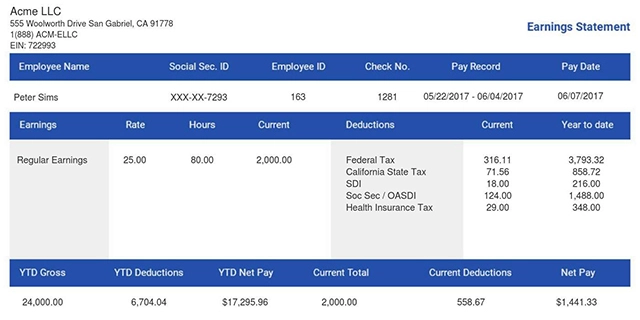
For clear pay records showing gross pay, deductions, and net salary in one place, use our pay stub generator at ThePayStubs.com.
- 1. Enter Your Information

- 2. Select Your Favorite Theme

- 3. Download Your Stub!


 By
By