

Payroll Overpayment: How To Handle It Legally (2026)
 By
James Wilson
By
James Wilson A payroll overpayment happens more often than most employers expect. A miskeyed pay rate, a time clock that didn't sync, or a bonus that ran twice can result in an employee being paid more than they earned.
Accurate pay stubs are the starting point for tracing the error. Use a paystub generator to keep professional records on hand. When a payroll overpayment occurs, both sides need to know the legal rules and how to resolve it without damaging the working relationship.
This guide covers how to identify the error, recover the funds legally, fix the tax records, and keep it from happening again.
Key Takeaways
- Employers have a legal right to recover a payroll overpayment under federal law, but must follow state-specific rules before deducting from paychecks.
- Recovery cannot reduce a non-exempt employee's pay below the applicable minimum wage in that pay period.
- Always notify the employee in writing and get written authorization before making any deductions.
- Prior-year overpayments require IRS Form W-2c and Form 941-X to correct the tax record.
- It's beneficial to act quickly. Some states have short collection windows (Michigan: 6 months from the error date).
- Key Takeaways
- What Is a Payroll Overpayment and Why Does It Happen?
- Can Employers Legally Recover a Payroll Overpayment?
- How State Laws Affect Payroll Overpayment Recovery
- How To Notify the Employee and Set Up Repayment
- Correcting Tax Records After a Payroll Overpayment
- How Far Back Can an Employer Recover a Payroll Overpayment?
- How To Prevent Payroll Overpayments
- You Might Also Like
- Conclusion
What Is a Payroll Overpayment and Why Does It Happen?
A payroll overpayment occurs when an employer pays an employee more than they earned in a given pay period. Common causes include data entry errors that overstate hours worked, duplicate bonus payments, and incorrect pay rates applied after a promotion. Time clock discrepancies from missed punches and benefit election changes not processed before the next cycle runs are also frequent triggers.
The error can affect one paycheck or quietly accumulate over several pay periods before anyone notices. Understanding pay stub deduction codes can help both employers and employees catch discrepancies early, before an overpayment grows.
Can Employers Legally Recover a Payroll Overpayment?

Under the Fair Labor Standards Act (FLSA), employers generally have the right to recover a payroll overpayment through deductions from future wages. Federal law treats overpaid wages as a mistaken advance, not earned compensation.
One limit is that no deduction can push a non-exempt employee's pay below the federal minimum wage of $7.25 per hour for hours worked in that pay period. If the full recovery would breach that floor, it must be spread across multiple pay periods.
Many employees are surprised to learn that repayment is typically calculated on the gross amount, not the net amount they received. The employer already remitted payroll taxes on the full overpayment and must file corrected tax forms to recoup them. The employee then receives updated documents to amend their return.
Employers who offer direct deposit pay stubs as part of their payroll setup often find that employees can verify amounts quickly when a discrepancy is reported.
How State Laws Affect Payroll Overpayment Recovery
State laws often impose stricter requirements than the federal baseline. Here's a quick reference for common states:
| State | Key Requirements |
|---|---|
| New York | Deductions capped at 12.5% of gross wages per paycheck; written authorization and advance notice required |
| California | Voluntary written agreement required; can't reduce pay below state minimum wage |
| Texas | Written authorization required before any deduction |
| Michigan | Written notification required; only 6 months to collect |
| Washington | Must provide documentation of the overpayment and repayment terms |
As of 2026, 23 states have minimum wages above the federal $7.25 per hour. Employers need to check the applicable state minimum, not just the federal floor, when designing a repayment schedule. For a full breakdown, see the state pay stub laws guide for employer requirements by state.
How To Notify the Employee and Set Up Repayment

Schedule a private meeting rather than sending an email. Acknowledge the error clearly and confirm it wasn't the employee's fault. The written notice should include the exact overpayment amount, the affected pay dates, and at least two repayment options.
Standard options include:
- Payroll deduction: Spread recovery across multiple pay periods. Requires a signed written agreement.
- Direct deposit reversal: NACHA rules allow ACH reversals within 5 business days of the original transaction. After that, this option closes.
- Lump-sum payment: Offer this option, but don't require it. If the employee can't repay in one go, installments protect both parties.
As an employee, request a written installment agreement before any deductions start. If the overpaid worker has already left, send a certified letter with documentation and propose a plan before considering legal action.
Correcting Tax Records After a Payroll Overpayment
For prior-year overpayments, two IRS forms are required:
- Form W-2c: Gives the employee a corrected wage statement to file an amended tax return.
- Form 941-X: Lets the employer correct Social Security and Medicare taxes previously reported to the IRS.
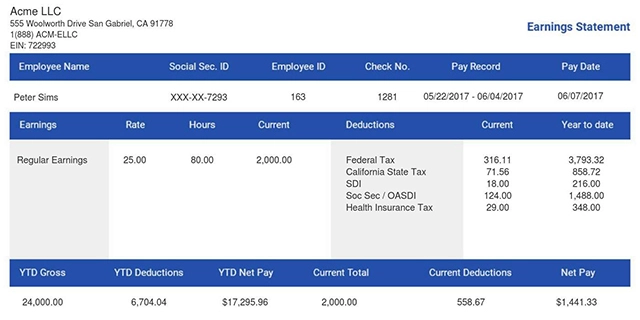
The original pay stub is your key evidence here. It shows exactly what was paid, in which period, and what was withheld. Maintaining accurate, detailed pay stubs from the start simplifies corrections and potential disputes. Use a paystub generator to create and archive professional pay records for your team. If the correction involves W-2 discrepancies, our guide on how to read a W-2 explains each box so employees know exactly what to verify.
How Far Back Can an Employer Recover a Payroll Overpayment?
It depends on your state. Act immediately upon discovering the error.
New York allows the collection of a payroll overpayment up to 8 weeks before notifying the employee, with a total window of up to 6 years. Michigan limits recovery to 6 months from the date of the overpayment. Federal law has no specific deadline, but prior-year corrections require IRS filings within the IRS amendment windows.
How To Prevent Payroll Overpayments
Prevention comes down to a few consistent practices:
- End-of-period review: Cross-check totals against time clock reports before processing payroll.
- Dual approval: Require a second sign-off on retroactive adjustments, bonus payments, and post-promotion rate changes.
- Written policy: Require employees to review their pay stubs each period and report discrepancies immediately.
- Integrated tools: Connecting time and attendance systems directly to payroll reduces manual entry errors.
Errors will still happen even with good controls. Having a documented recovery process ready in advance means you can respond quickly and professionally. Keeping solid employment verification and proof-of-income documents on file makes any payroll dispute easier to resolve from the start.
You Might Also Like
- Payroll Codes: A Guide to Abbreviations on Your Pay Stub
- Walmart Paystub: How to Access Your Pay Information
- How to Tell the Difference Between a Real and a Fake Pay Stub
- 1099 Pay Stub: Should Independent Contractors Receive a Pay Stub?
- How to Get a W-2 from a Previous Employer
Conclusion
A payroll overpayment is common and can be resolved. The key is to act quickly, communicate clearly, and follow state law. Employers need a signed repayment agreement and the right tax filings. Employees are protected by installment plans and written agreements that prevent sudden financial strain.
Accurate pay records make corrections faster and cleaner. Use a reliable paystub generator like ThePayStubs.com to build and maintain professional pay documentation for your team.
- 1. Enter Your Information

- 2. Select Your Favorite Theme

- 3. Download Your Stub!

 By
By