

Employee Evaluation Template: Free Sample Form + Examples (2026)
 By
By
Review season has a way of sneaking up on small teams. You run payroll for six people with a paystub maker. Two of them are asking about raises, and you don't have an HR department to lean on. An employee evaluation template fixes that. It gives you one simple form to rate each person the same way, write down real examples, and keep a record you can point to later.
This guide gives you a template you can copy and paste today, at no cost. You'll also see what each part of the form does, which rating scale to pick, sample comments, and how a review should connect to pay changes. If you're the one being reviewed, it helps you prepare too.
Key Takeaways
- Use one template for every employee so reviews stay fair and easy to compare.
- Include employee details, a rating scale, goals, comments, and signatures.
- Pick the review type that fits your schedule: annual, quarterly, or 30-60-90 day.
- Tie every rating to a specific example, not a feeling.
- File the signed form with payroll records, especially when a raise follows.
- What Is an Employee Evaluation Template?
- What to Include in Employee Evaluation Forms
- Free Employee Evaluation Template You Can Copy
- Rating Scales for an Employee Performance Evaluation Template
- Types of Employee Evaluation Templates
- How to Use an Employee Evaluation Template
- Sample Employee Evaluation Comments
- Linking Evaluations to Raises and Pay Records
- Paper Templates vs Performance Review Software
What Is an Employee Evaluation Template?
An employee evaluation template is a ready-made form that managers use to rate an employee's work over a set review period. It usually lists the employee's details, a rating scale, goals, comments, and signature lines. Using the same template for everyone keeps reviews fair, consistent, and easy to file.
Think of it as the skeleton of a performance evaluation. The form tells you what to look at. You fill in what actually happened.
Employee evaluation forms matter for two reasons. First, they make reviews consistent. When every worker is rated on the same points, it's easier to spot who's growing and who needs help. Second, they create a paper trail. A signed form shows what was said, when, and what goals were set.
That record helps both sides. A business owner can use it to back up a raise, a promotion, or a tough talk about performance issues. An employee can use it to show their track record when asking for more pay or applying for a new job.
Good evaluation forms for employees are short. Most small businesses do fine with one or two pages.
What to Include in Employee Evaluation Forms

Every solid form has five parts. Skip one, and the review gets harder to use later.
Employee Information
Start with the basics: name, job title, department, manager, and hire date. Add the review period, such as "January 1 to June 30, 2026." This employee information makes the form easy to find in a file months from now.
Rating Scale Key
Every employee evaluation template needs a clear key at the top of the page. If a 3 means "meets expectations," say so. A clear key stops two managers from reading the same score in two different ways.
Performance Goals
List the goals set in the last review, then mark whether each was met. Add two or three new goals for the next period. Goals tied to professional development, like a new skill or certification, give people something to work toward.
Comments and Examples
Of all the parts of an employee evaluation template, this one adds the most value. Leave space under each rating for a short example. "Closed 14 support tickets a day, above the team average of 10" beats "good worker" every time.
Signatures and Date
End with lines for the manager, the employee, and the date. The employee's signature doesn't mean they agree. It only shows they saw the review. Add a small box for employee comments so they can respond in writing. Once signed, the employee performance evaluation form becomes part of the personnel record.
For a small shop, a one-page staff evaluation form with these five parts is often enough.
Free Employee Evaluation Template You Can Copy
Paste this form into Word or Google Docs. Change the ratings and categories to fit the role.
Employee Information
| Field | Details |
|---|---|
| Employee name | |
| Job title | |
| Department | |
| Manager | |
| Review period | |
| Review date |
Performance Ratings (1 = Needs improvement, 3 = Meets expectations, 5 = Exceeds expectations)
| Category | Rating (1-5) | Example or comment |
|---|---|---|
| Quality of work | ||
| Productivity | ||
| Job knowledge | ||
| Communication | ||
| Teamwork | ||
| Reliability and attendance | ||
| Initiative |
Goals From Last Review: Met / Partly met / Not met, with a note for each.
Goals for Next Review Period: List two or three clear, measurable goals.
Strengths: Two or three things this person does well.
Areas for Improvement: One or two focus areas, with a plan for each.
Employee Comments: Space for the employee's response.
Signatures: Manager, employee, and date.
This layout works as an employee evaluation form template for almost any role. You can save it as a PDF and print it, which turns it into a printable employee performance review template for teams that still like paper. Some managers keep a one-page evaluation sheet version for quick check-ins.
Store each finished, signed copy in the worker's personnel folder.
Rating Scales for an Employee Performance Evaluation Template

The scale you pick shapes every score. Each one rates job performance a little differently.
| Scale | How it works | Best for |
|---|---|---|
| 5-point Likert scale | Ratings from 1 (poor) to 5 (excellent) | Most small businesses |
| 1-10 numeric scale | More room between scores | Sales and output-driven roles |
| Behavior scale | Rates specific actions, like "greets every customer" | Retail, service, and front-desk jobs |
| Essay or open-ended | Written answers, no numbers | Senior or creative roles |
A 5-point scale is the easiest to start with. It's simple to explain and quick to fill in. A 1-10 scale gives more detail, but people tend to argue over a 7 versus an 8.
Behavior scales work well when you can name the exact actions you want to see. They take longer to build, but they cut down on guesswork.
Many managers mix scales, and most employee performance evaluation templates allow it. They use numbers for core skills and an open question or two at the end. If you're building a performance assessment template for a new role, try a 5-point scale first. You can always add detail later.
Types of Employee Evaluation Templates
There's no single form that fits every review. The best evaluation template for employees depends on how often you check in and who gives the feedback. Here are the main types.
| Template type | When to use it | Who fills it out |
|---|---|---|
| Annual review | Once a year, often tied to raises | Manager |
| Quarterly review | Every three months | Manager |
| 30-60-90 day review | New hires in their first 90 days | Manager |
| Self-evaluation | Before any formal review | Employee |
| Peer or 360-degree review | Team roles with lots of overlap | Coworkers and manager |
Annual Performance Review Templates
These forms cover the whole year in one sitting. They look at big goals, overall results, and compensation. Because a year is a long time, ask managers to keep notes along the way so the review isn't based only on the last few weeks.
Employee Quarterly Review Template
This review is shorter. It checks progress on goals every three months and fixes small problems before they grow. Many teams now pair quarterly check-ins with a yearly review.
30 60 90 Review Template
This form tracks new hires at three points. At 30 days, you look at training. At 60 days, you look at early results. At 90 days, you decide if the person is on track. It's a simple way to catch problems early in the job.
Self-Evaluation and Employee Feedback Template
A self-evaluation asks employees to rate themselves before the meeting. Pair it with an employee feedback template. It covers the support they need from you. Comparing the two views often starts the best conversations.
Peer and 360-Degree Review Forms
Most performance review forms come from one manager. Peer review forms gather input from coworkers instead. A 360-degree review adds feedback from managers, peers, and sometimes customers. Use them for team-heavy roles, and keep the answers anonymous so people feel safe being honest.
Any of these can serve as an employee assessment template. For hourly roles, a basic employee performance template with five or six categories is usually enough. Just match the form to the job and how often you meet.
How to Use an Employee Evaluation Template
A good form only helps if you use it well. This evaluation process works for teams of any size.
- Pick your template. Copy the form above, or any free employee evaluation form you already like, as your starting point. Choose the type and scale that fit the role. Use the same employee evaluation template for everyone in that role.
- Gather facts first. Pull sales numbers, attendance, customer notes, and past goals. Look at the whole review period, not just last month.
- Ask for a self-evaluation. Send it a week before the meeting.
- Fill in ratings with examples. Every score needs a reason. If you can't name an example, don't give the score yet.
- Hold the meeting. Talk through the form together. Listen as much as you talk.
- Set new goals. Agree on two or three goals for the next period.
- Sign and file. Both of you sign. Keep the original in the personnel file.
Running a business without an HR team? Block 30 minutes per person on your calendar and do reviews in the same week. Using the same employee review form for everyone saves time and keeps you consistent. Contractors and seasonal staff can get a shorter work evaluation template that covers only the tasks they did.
Sample Employee Evaluation Comments
Comments turn a rating into something useful. Leave room for them under every score in your employee evaluation template. A good comment names a result and why it mattered. Here's a sample employee evaluation comment for each rating level.
- Exceeds expectations: "Maria cut invoice errors by 30% this quarter by building a new checklist. The whole team now uses it."
- Meets expectations: "James handles his daily orders on time and follows safety steps. Next quarter, he'll train one new hire."
- Needs improvement: "Deadlines were missed on 4 of 10 projects. We'll meet weekly for the next 60 days to plan each deadline."
The third comment stays calm and gives a plan. That's the goal. If problems keep up, a formal performance improvement plan with clear steps and dates is the next move.
What Not to Say in an Employee Evaluation
Some words cause more harm than help. Avoid these:
- Vague labels like "bad attitude" or "not a team player" with no example.
- Comments about age, health, family, religion, or other protected traits. These can create legal risk.
- Comparisons to other workers by name.
- Surprises. Nothing in the review should be the first time the person hears it.
- Promises you can't keep, such as a raise that hasn't been approved.
Linking Evaluations to Raises and Pay Records
This is where many small businesses slip. A review often ends with a pay change. That change needs to reach payroll the right way.
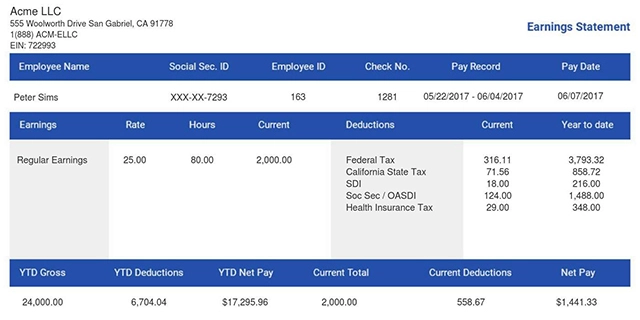
Add a pay change line to your employee evaluation template. When a review leads to a raise, write the new rate and start date on the form. Then update payroll so the next pay stub shows the new hourly rate or salary. If a bonus is paid, it should appear on the pay stub as a separate line so the employee can see it.
Keep the signed form with your payroll records. Federal rules require employers to keep personnel records for at least one year, according to the EEOC recordkeeping requirements. Many employers keep them longer.
Employees benefit too. A strong review plus recent pay stubs makes a solid case when you ask for a raise, apply for a new job, or show steady income to a landlord. If your employer's pay records are hard to get, you can create clean, accurate stubs with our pay stub templates.
Paper Templates vs Performance Review Software
Paper and document templates are free and fast. A performance reviews template in Word or Google Docs works well for teams of up to about 20 people. You can also save it as a PDF performance review form to email and sign.
Review software makes sense as you grow. It sends reminders, keeps old employee review forms in one place, and runs reports. That kind of performance management tool usually costs a monthly fee per user, so compare the price to how many people you review.
Some businesses call these performance appraisal templates, but they work the same way. For most small teams, free performance evaluation template options like the one above are the right place to start.
You Might Also Like
- Payroll Codes Explained
- Employment Verification and Proof of Income Documents
- Pay Period Breakdown
- State Pay Stub Laws
- The Pros and Cons of Being a Business Manager
Conclusion
A simple employee evaluation template keeps reviews fair, quick, and on the record. Pick a type that fits your schedule, use a clear rating scale, and back every score with a real example. Then make sure any raise or bonus shows up in payroll and on the next pay stub.
Need accurate pay records to match? Use our paystub generator to create professional pay stubs in minutes.
- 1. Enter Your Information

- 2. Select Your Favorite Theme

- 3. Download Your Stub!


 By
By