

How Many Sick Days a Year Is Normal? 2026 Data
 By
By
At some point, almost every worker wonders how many sick days a year is normal. You might go all year without calling in sick, or burn through your balance before spring. According to the 2025 Bureau of Labor Statistics National Compensation Survey, full-time private-sector employees receive an average of 7 sick days per year. Government workers average around 11. This guide breaks down what the data shows by worker type, what the law requires, and how employers can use a paystub generator to build a clear sick leave policy in 2026.
Key Takeaways
- Private-sector employees in the US average 7 paid sick days per year; government workers average 11.
- Most Americans use only 2–3 sick days annually, despite having more available.
- About 20 states plus Washington, D.C. mandate paid sick leave; federal law covers only unpaid leave.
- 96% of large employers now offer paid sick leave, making it a standard benefit.
- Employees who work through illness cost US companies roughly $150 billion per year in lost output.
- How Many Sick Days a Year Is Normal?
- How Many Sick Days Do American Workers Get Per Year?
- How Many Sick Days Do Americans Actually Take?
- Is Paid Sick Leave Required By Law?
- How Many Sick Days Should an Employer Offer?
- The Real Cost of Not Taking Sick Days
- Conclusion: How Many Sick Days a Year Is Normal
How Many Sick Days a Year Is Normal?
The US national average is 7–8 sick days per year for full-time private-sector workers, based on BLS 2025 data. Government employees average 11 days. However, most Americans only use 2–3 days annually. Whether that feels "normal" depends on your industry, employer size, and state sick leave laws.
Understanding how many sick days a year is normal starts with some key numbers that put the average in context:
- 7 days: Average sick leave for private-sector full-time employees (BLS 2025)
- 96%: Share of employees at large companies with paid sick leave access (SHRM)
- 47%: US workers who took 3 or fewer sick days last year (Statista)
- 26%: Workers who took zero sick days in the past year
- 11 days: Average for full-time government workers
- $150 billion: Annual economic cost of presenteeism in the US
The gap between sick days offered and sick days actually taken is striking. Most workers have more leave available than they use, yet many still feel they can't afford to take it.
How Many Sick Days Do American Workers Get Per Year?

Full-time private-sector workers in the US average 7 sick days per year, per BLS 2025 data. Government workers get notably more, averaging 11 days. Part-time workers often get 6 days. Access varies by employer size, industry, and union status.
Here's a closer look at how sick leave amounts differ across key worker groups.
Private-Sector Employees
According to BLS data, full-time private-sector workers average 7 sick days per year. Part-time workers average 6 days. Around 80% of private-sector employees have access to paid sick leave. Those in retail and food service have the lowest access rates. Some employers in these fields provide no sick leave at all.
Government Workers
Government employees get notably more sick leave. Full-time federal, state, and local workers average 11 sick days in year one and up to 12 days after that. Part-time government workers average 9 days. About 93% of government employees have paid sick leave access, making it nearly universal in the public sector.
Company Size and Tenure
Sick leave scales with employer size and years of service. Workers at large companies with 500 or more employees often build up 9–10 sick days per year after 5 to 20 years on the job. Employees at small businesses with fewer than 50 workers typically receive 6–7 days. Most sick leave plans add more days at 3, 5, and 10-year service marks.
Union vs. Non-Union Workers
Union members average about 10 sick days per year, compared to 7 days for non-union workers. Collective bargaining agreements lock in sick leave minimums, giving union workers more stability. Non-union workers in similar roles often receive fewer days, with more variation from year to year. Employees who need to show their income and benefit history when changing jobs can find that employment verification documents are just as useful as any union contract.
How Many Sick Days Do Americans Actually Take?
Despite having 7–10 days available, most Americans only use 2–3 sick days per year. About 47% of workers take 3 or fewer days annually, and 26% took zero sick days in the past year, according to Statista. Workplace culture, fear of judgment, and income concerns all drive this gap.
The question of how many sick days a year is normal often comes down to comfort, not policy. Employees frequently use far less than they're allowed, regardless of what's on paper. A LinkedIn and Censuswide survey found that workers average just 2.5 sick days per year, far below what employers provide.
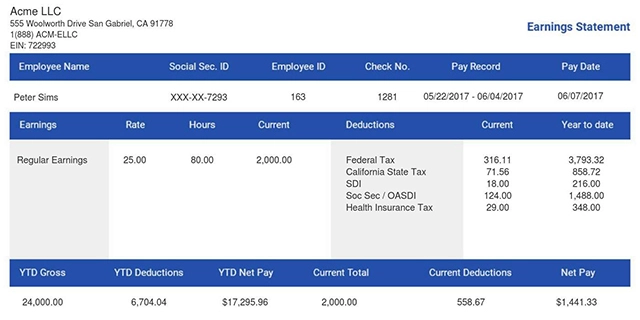
If you're unsure how your usage compares, your pay stub can help. Most payroll systems list accrued and used sick days in the Benefits or PTO section. Check yours before your next annual review to make sure your balance is accurate and you're not leaving paid time on the table.
Post-COVID, awareness around sick leave has grown. More workers today recognize the importance of staying home when truly ill, but cultural norms in many workplaces haven't fully caught up.
Is Paid Sick Leave Required By Law?

There is no federal law requiring paid sick leave in the US. However, about 20 states plus Washington, D.C. have enacted their own mandates, and a few more require paid leave that workers can use for any reason. Exact counts shift as states add or repeal these laws. At the federal level, FMLA provides up to 12 weeks of unpaid, job-protected leave for eligible employees at companies with 50 or more workers.
The Family and Medical Leave Act (FMLA) guarantees up to 12 weeks of unpaid leave per year for eligible employees. Qualifying means working for your employer for at least one year and logging 1,250 hours in the past 12 months. Your workplace must also have 50 or more employees within 75 miles.
State law adds another layer to how many sick days a year is normal. If you live where paid sick leave is mandated, your employer's minimums are set by statute. States including California, Colorado, Connecticut, New York, New Jersey, Oregon, and Washington all require paid sick leave. Since SB 616 took effect in January 2024, California mandates at least 40 hours (5 days) per year for most employees, including part-time and seasonal workers, up from the old 24-hour minimum.
For employers, the legal minimum is a floor, not a ceiling. Offering more than the state-mandated minimum tends to improve retention and reduce absenteeism.
How Many Sick Days Should an Employer Offer?
Industry benchmarks suggest offering at least 7 paid sick days per year for full-time employees, the private-sector average per BLS data. Competitive employers offer 8–10 days. If you're in a state with a sick leave mandate, like California's minimum 5 days, you must meet that threshold at minimum.
The right answer to how many sick days a year is normal for your business also depends on which PTO structure you choose.
Fixed Sick Days
Fixed sick leave is the most common approach; BLS data shows 63% of workers with paid sick leave are on this type of plan. Employees receive a set number of sick days per year, separate from vacation. It's easy to track, works well with state mandates, and gives employees a clear picture of their benefits.
PTO Bank
A combined PTO bank merges sick days, vacation, and personal time into one pool. Employees draw from a single balance for any absence. It simplifies HR admin, but there's a downside. Employees who want to save vacation days may feel pressured to come in sick rather than use their balance.
Unlimited PTO
Only about 7% of employers offer unlimited PTO, primarily in the tech sector. Despite the appeal, studies show employees under unlimited PTO often take less time off than those with fixed allotments. Peer pressure and unclear norms are the main culprits.
Pro tip for business owners: Make sure your payroll system generates pay stubs that clearly show each employee's sick day accrual rate and year-to-date balance. This protects you during compliance audits and builds trust with your team. Setting up payroll codes correctly from the start makes sick leave tracking easier for everyone.
The Real Cost of Not Taking Sick Days
Showing up to work while ill has a name: presenteeism. US businesses lose about $150 billion per year in output because of it, per Harvard Business Review research.
Three main reasons employees skip their sick days:
- Limited access: Workers in low-wage industries often don't have enough paid days to cover their needs.
- Manager pressure: Many feel implicit pressure to appear committed, even when truly ill. It's worth knowing when an employer can actually fire you for taking sick days, because the law may offer more protection than you think.
- Self-imposed guilt: Remote workers and high performers often tie their sense of value to being always available.
Presenteeism backfires. An employee working at 60% while sick typically costs more in errors and slow output than a day off would have.
Pay stubs that clearly show sick day balances make a difference. Once workers can see their accrued leave in writing, the question shifts from how many sick days a year is normal to whether they're actually using what they've already earned. Employees who can see their balance treat it as a real benefit, not a reluctant exception.
You Might Also Like
- How to Calculate Your Hourly, Weekly, and Monthly Income
- How to Calculate W-2 Wages from a Pay Stub
- What Is Paychex?
- Freelancing for Beginners: 1099 vs W-2
- W-2 vs 1099: How Do You File Taxes When You Have Both?
Conclusion: How Many Sick Days a Year Is Normal
Understanding how many sick days a year is normal gives both employees and employers a shared benchmark to work from. Private-sector workers typically receive 7 days per year; government workers average around 11. Most people use far fewer than they're offered, often for cultural rather than medical reasons.
For small business owners building a sick leave policy, or employees who need clear pay records, good record-keeping matters. Create professional, compliant pay stubs with a reliable paystub generator to keep your records accurate and your benefits easy to understand.
- 1. Enter Your Information

- 2. Select Your Favorite Theme

- 3. Download Your Stub!

 By
By