

Payroll Issues: How to Spot, Fix, and Prevent Them (2026)
 By
By
Payroll issues rarely announce themselves on payday. They show up weeks later. Maybe a W-2 doesn't match what someone actually earned. Maybe a lender asks for proof of income and the numbers on a pay stub look wrong. By then the error has usually repeated across several pay periods.
If you're an employee, a payroll mistake hits your bank account. If you run payroll for a small team, it hits your compliance record and your budget. Either way, the fix gets more expensive the longer it sits. This guide covers what goes wrong, what it costs, and who's legally on the hook. You'll also see how to catch and prevent payroll problems before they compound.
Key Takeaways
- Most payroll issues fall into three buckets: calculation errors, compliance errors, and recordkeeping errors.
- Late payroll tax deposits carry IRS penalties of 2% to 15%, and unpaid trust fund taxes can become 100% personal liability.
- The employer stays legally responsible for a payroll error even when an outside provider caused it.
- Checking five fields on every pay stub (hours, rate, gross, deductions, and year-to-date totals) is the fastest way to catch an error before it repeats next period.
What Are Payroll Issues?
Payroll issues are errors in how employee pay is calculated, paid, recorded, or reported. They fall into three groups. Calculation errors cover things like miscalculated overtime. Compliance errors cover misclassifying a contractor or missing a tax deposit. Recordkeeping errors cover incomplete pay stubs. Most surface weeks after payday, not on it.
That grouping matters because each type fails differently. A calculation error is usually visible on a single stub. A compliance error can run quietly for months until a filing deadline exposes it. Recordkeeping errors often aren't noticed until someone needs the paperwork and it isn't there.
The same underlying payroll problems land differently depending on which side you're on. A missed overtime hour is a short paycheck to the employee and a wage claim to the employer.
The Most Common Payroll Mistakes

The most common payroll mistakes aren't exotic. They're the same handful of failures repeating across businesses of every size. Nearly all of them start with bad inputs rather than bad math.
Misclassifying Employees and Contractors
Treating a worker as a 1099 contractor when they function as a W-2 employee is the costliest classification error. If someone works set hours, uses company equipment, and follows your direction on how the work gets done, they're likely an employee. Getting this wrong means unpaid employment taxes plus the back wages and benefits that should have applied.
Overtime and Unrecorded Hours
Under the FLSA, non-exempt employees earn 1.5 times their regular rate for hours worked beyond 40 in a workweek. Time tracking problems create most overtime errors. Think of a shift that ran 20 minutes long, a missed clock-in, or prep work before a store opens. In hourly retail and warehouse settings, workers see those small gaps repeat every week until someone reconciles the timesheet against the schedule.
Outdated Tax Rates and Wrong Forms
Withholding tables, wage bases, and state rates change. Payroll that still runs on last year's numbers under-withholds all year, and the employee discovers it at filing time. The same applies to stale employee information, since an unreported address change can route withholding to the wrong state.
Incomplete Records and Unclear Pay Stubs
A stub that shows only a net amount is a problem waiting to happen. Without a breakdown of hours, rate, and each deduction, nobody can verify the number. The employee also can't use it for a rental application or a loan.
When You Are Your Own Payroll Department
Freelancers and single-member businesses hit a different set of common payroll errors. There's no withholding at all, so quarterly estimated taxes get missed. There's also no automatic paper trail, which becomes a real obstacle when a landlord or lender asks for documented income.
One more source of trouble is pay frequency itself. Biweekly pay means 26 periods a year and semi-monthly means 24. Treat them as the same and you'll get a salary that's slightly wrong in every check.
What Causes Payroll Issues?
Most payroll issues trace back to three process failures. The first is manual data entry between disconnected systems. The second is rules that change faster than the process does. The third is timekeeping that lives apart from payroll. A single mistyped hourly rate or an outdated tax table repeats every pay period until someone catches it.
Data errors are the common thread. Hours live in one system, employee information in an HR system, and payment in a third. Every handoff is a chance to introduce a mistake. Weak data integration turns one bad entry into a recurring one.
Payroll Tax Problems and What They Cost

Payroll tax problems carry the clearest price tag of any error on this list. The IRS publishes exactly what late deposits cost. The failure-to-deposit penalty scales with how late the deposit is:
| How late the deposit is | Penalty |
|---|---|
| 1 to 5 calendar days | 2% |
| 6 to 15 calendar days | 5% |
| More than 15 calendar days | 10% |
| More than 10 days after the first IRS notice | 15% |
These tiers don't stack. A deposit that's 20 days late is penalized at 10%, not 2% plus 5% plus 10%.
The bigger exposure is the Trust Fund Recovery Penalty. Withheld income and FICA taxes are held in trust for the government. If they go unpaid, the IRS can hold a responsible person personally liable for 100% of the unpaid amount. That liability follows the individual, not just the business.
Consequences of Payroll Errors
The consequences of payroll errors split by who absorbs them, and the employee side usually gets left out of the tally.
For the employer, the direct costs are back wages, penalties, and the staff time to unwind and reissue payments. Repeated errors also drive turnover, since employees who can't trust their paycheck start looking. Sloppy records raise your exposure in any audit or wage dispute.
For the employee, the damage is immediate and personal. A short check can trigger an overdraft. A stub showing the wrong income can sink a rental application or delay a loan approval. An error caught late means an amended W-2 and a messier tax filing.
That asymmetry is what makes these costly payroll mistakes worth catching early. The employer sees a line item, while the employee sees a missed rent payment.
Who Is Responsible for Payroll Errors?
The employer is legally responsible for payroll errors, even when a third-party provider caused them. Under the FLSA, employees generally have two years to recover unpaid wages, extended to three years for willful violations. The IRS can also hold a responsible person personally liable for 100% of unpaid trust fund taxes.
There's no single payroll mistakes law in the United States. Federal wage rules come from the FLSA and tax duties from the IRS. Each state then adds its own wage payment laws, with its own deadlines for issuing corrected pay. Those state rules are often stricter than the federal baseline. Check your state's rules rather than assuming the federal window applies.
How to Fix Payroll Errors
Knowing how to fix payroll errors is mostly about sequence. Rushing to cut a correction check before confirming the numbers usually creates a second error.
- Confirm the error against source records. Compare the stub to time cards, the approved schedule, and the employee's agreed rate. Verify before you calculate.
- Calculate the exact difference. Work out gross and net separately, since tax withholding changes with the corrected amount.
- Issue the correction. Underpayments should be paid as soon as possible rather than waiting for the next payroll processing cycle. Confirm the bank data on file before sending.
- Document what changed. Record the original figure, the corrected figure, the reason, and the date.
- Fix the root cause. A correction that doesn't change the process guarantees the same error next period.
Your record duties set the floor here. Under FLSA recordkeeping rules, payroll records must be kept for three years. The time cards and wage math behind them must be kept for two years.
How to Prevent Payroll Issues
Preventing payroll issues comes down to one habit and one system decision.
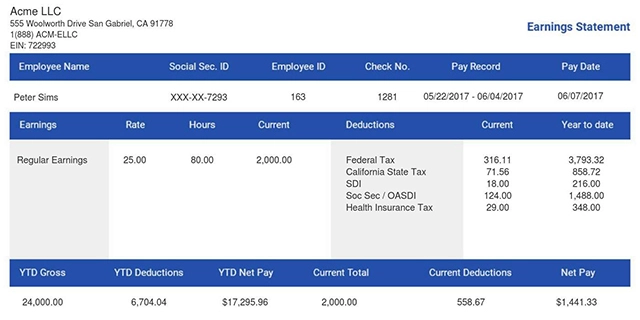
The habit is reconciling every pay stub as it arrives. Five fields do the work:
- Hours: match them to your own record of shifts worked
- Rate: confirm it reflects any raise that's taken effect
- Gross pay: hours times rate, plus overtime at 1.5x
- Deductions: taxes, benefits, and any garnishments, each itemized
- Year-to-date totals: the column that exposes errors a single stub hides
That last field is the one people skip, and it's the most useful. Here's a concrete 2026 check. Once year-to-date wages pass $184,500, Social Security withholding should stop for the rest of the year. Medicare keeps going. If Social Security tax is still coming out above that line, you've found a real over-withholding error.
The system decision is connecting timekeeping and payroll so hours flow in without retyping. Payroll software that integrates with your HR system removes the handoff where most data errors start. Employee self-service tools help too, since employees checking their own stubs catch problems faster than any monthly review.
Need pay records for a rental application, a loan, or your own files? Our pay stub templates make it straightforward.
You Might Also Like
- Payroll Codes Explained
- How Do You Get Your W-2 Online
- Payday, Pay Cycle, and Pay Period: What's the Difference
- Employment Verification and Proof of Income Documents
- Freelancing for Beginners: 1099 vs W-2
Conclusion: Staying Ahead of Payroll Issues
Payroll errors are routine. What separates a minor correction from an expensive one is how long it runs before someone notices. Check a stub every period and you'll catch it first.
If you're running payroll, connect your systems and document every correction. If you're verifying your own pay, keep your stubs and read the year-to-date column. When you need professional pay records that your employer's system can't give you, our paystub generator creates accurate stubs in minutes.
- 1. Enter Your Information

- 2. Select Your Favorite Theme

- 3. Download Your Stub!


 By
By