

Non Qualified Plans: Types, Taxes, and W-2 Box 11 (2026)
 By
By
Have you ever compared a W-2 to a final pay stub and found an amount in box 11 that appears nowhere else? That's a non qualified plan. These arrangements let a company pay selected employees later instead of now. They follow a different rulebook from a 401(k). This guide covers what they are and how they differ from a qualified plan. You'll also see the main types, who can join, when tax is owed, and what that box 11 figure means.
Key Takeaways
- A non qualified plan sits outside ERISA, so it has no IRS contribution cap and can be offered to a chosen few.
- Qualified plans keep your balance in a trust that is safe from company creditors. These plans do not.
- Social Security and Medicare tax apply when the money vests. Income tax applies only when it is paid.
- Box 11 of your W-2 reports nonqualified plan distributions so the Social Security Administration can apply its earnings test.
- What Is a Non Qualified Plan?
- Qualified vs Non Qualified Retirement Plans
- The Main Types of Non Qualified Plans
- Who Is Eligible for a Non Qualified Plan?
- How Taxes Work on Non Qualified Plans
- W-2 Box 11 Nonqualified Plans: What the Number Means
- Risks to Weigh Before You Defer
- Conclusion: The Bottom Line on Non Qualified Plans
What Is a Non Qualified Plan?
A non qualified plan is an employer-sponsored retirement savings plan that sits outside ERISA and the IRS qualified-plan rules. With no annual contribution cap and no discrimination testing, employers can offer it to selected executives only. The trade-off is that the money stays exposed to company creditors.
The name describes what the plan is not. Both kinds are retirement savings plans; the difference is which rulebook they follow. A qualified plan, like a 401(k), satisfies the Employee Retirement Income Security Act (ERISA) and a long list of IRS conditions. In return it earns tax advantages and federal protection. These plans trade that protection for flexibility.
What Is a Non Qualified Account?
A non qualified account usually means an annuity or brokerage account funded with money you already paid tax on. Only the earnings get taxed later. That is different from an employer plan. There, your company holds back pay and promises it to you later.
Qualified vs Non Qualified Retirement Plans

| Feature | Qualified Plan | Non Qualified Plan |
|---|---|---|
| Governed by ERISA | Yes | No |
| 2026 employee deferral limit | $24,500, or $32,500 from age 50 | No IRS limit; the plan sets its own |
| Who can participate | Must be offered broadly, with discrimination testing | Any group the employer chooses |
| Employer tax deduction | In the year of deferral | Only when the money is paid out |
| Protected from company creditors | Yes | No |
| Loans and IRA rollovers | Usually available | Not available |
| Required minimum distributions | Begin at age 73 | Not required by the IRS; plan rules may apply |
The row that matters most in practice is creditor protection. In a qualified plan your balance sits in a trust that belongs to you. In one of these arrangements it's an unsecured promise. If the company fails, you join the queue behind other creditors.
The deferral limit row explains why these plans exist at all. Once a high earner has put away the full $24,500 for 2026, there's often nowhere left to defer inside the qualified system. Deferring on top of that cap is exactly what these arrangements are built for.
The Main Types of Non Qualified Plans
Nonqualified retirement plans come in five common shapes.
Deferred compensation plans. The most common nonqualified plan. You give up part of your salary or bonus now and receive it on a set future date. These are often called NQDCs, and at tax-exempt employers they appear as section 457(b) or 457(f) plans.
Salary continuation plans. Here the employer funds the benefit, not the employee. A supplemental executive retirement plan works this way and behaves much like a non qualified pension plan.
Executive bonus plans. The company buys a life insurance policy for an executive and pays for it. Those premiums count as bonus income to the executive and stay deductible for the employer.
Split-dollar life insurance plans. The employer and the employee share both the cost and the eventual benefit of a permanent life insurance policy.
Group carve-out plans. Group life cover above $50,000 creates imputed income. The employer carves out the excess and replaces it with an individual policy.
Who Is Eligible for a Non Qualified Plan?

Eligibility is set by the employer, not the IRS. Coverage can stop at a handful of executives, because there's no discrimination testing to force it any wider. Typical participants are upper management personnel and other highly compensated employees. Teachers, seasonal staff and high-earning contractors sometimes use deferral arrangements too.
That last group surprises people. A teacher paid across twelve months for ten months of work is using the same deferral logic as an executive. For employers, the appeal is being able to defer compensation for a chosen few without opening the same deal to everyone, which is why these plans cluster where a wide pay gap splits leadership from rank and file employees.
How Taxes Work on Non Qualified Plans
Two separate clocks run on this money. Most explanations skip that part.
The first is the payroll tax clock. Social Security and Medicare tax fall due once the amount vests. Vesting means you can no longer lose it, even though nothing has reached your bank account yet.
The second is the income tax clock. Federal income tax isn't due until the money reaches you. At that point the payment counts as supplemental wages. IRS Publication 15 sets the flat rate at 22 percent on the first $1 million in a calendar year. Anything above that is withheld at 37 percent. Sources still quoting 25 percent have been out of date since the Tax Cuts and Jobs Act.
Employers wait too. A company deducts its contribution only when it pays you, not when you defer.
W-2 Box 11 Nonqualified Plans: What the Number Means
Your W-2 uses the closed-up spelling the IRS prefers. Box 11 is titled Nonqualified plans in the IRS instructions for Form W-2, and it holds one of two things.
The first is a distribution you received during the year from a nonqualified deferred compensation plan or a nongovernmental section 457(b) plan. The second is a prior-year deferral that became taxable for Social Security and Medicare this year. That happens when the substantial risk of forfeiture lapses.
Box 11 exists for the Social Security Administration, not for your tax return. The SSA uses the figure to work out whether part of your box 1 wages was actually earned in an earlier year. That lets it apply the Social Security earnings test correctly.
Two practical points follow. Box 11 isn't a second tax bill. The number will often disagree with box 1, because the two boxes measure different years.
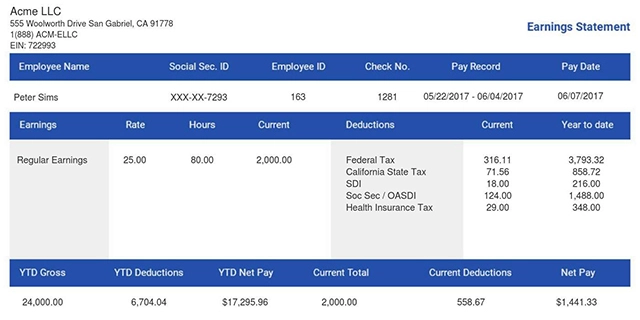
Keep your final paystub of the year. It's the only document showing the deferral and the full gross-to-net path together. That's what makes a box 11 amount readable months later.
Risks to Weigh Before You Defer
Three things deserve a hard look before you sign a deferral election.
Your money stays on the company balance sheet. Some employers set money aside in a Rabbi trust. Creditors can still reach those assets if the company goes bankrupt. The trust is comfort, not protection.
Elections are locked in. You normally choose your deferral about a year ahead, and you can't unwind that choice if your circumstances change.
There's no escape hatch. You can't borrow against the balance, and you can't roll it into an IRA when you leave. Many plans forfeit it entirely if you go before you vest.
You Might Also Like
- W-2 vs 1099: How to File When You Have Both
- What a W-2 Income Statement Looks Like
- How to Calculate Adjusted Gross Income From a W-2
- Understanding Social Security Payments
- How to Get Your W-2 Online
Conclusion: The Bottom Line on Non Qualified Plans
These plans are a useful tool if you have already maxed out a 401(k) and you trust your employer's balance sheet. Know the trade: more room to defer now, far less protection if the company runs into trouble. When box 11 appears on your W-2, treat it as a reporting line for the SSA, not an extra tax.
Accurate pay records make all of this much easier to reconcile at year end. If you need to create or replace one, our pay stub generator produces professional stubs in minutes.
- 1. Enter Your Information

- 2. Select Your Favorite Theme

- 3. Download Your Stub!


 By
By