

60 Hours of PTO Is How Many Days?
 By
By
If your paid time off balance just ticked over to 60 hours, here's the short version. 60 hours of PTO is how many days? That depends on your shift length, and on a standard 8-hour schedule it's 7.5 days. That's a day and a half shy of two full weeks. The catch is that "a day" isn't the same everywhere, and your pay records are where the real balance lives. Below you'll find the conversion chart for every common balance, the formula behind it, how long 60 hours takes to earn, and how to read the number on your stub.
Key Takeaways
- 60 hours of PTO equals 7.5 days on a standard 8-hour workday.
- Divide your hours by your scheduled shift length, not by 24 and not by hours actually worked.
- The same 60 hours covers 5 days on a 12-hour shift and 10 days on a 6-hour shift.
- Your pay stub, not your memory, is the authoritative record of your current balance.
- 60 Hours of PTO Is How Many Days?
- 60 Hours of PTO Is How Many Days on a 10- or 12-Hour Shift?
- PTO Hours to Days Conversion Chart
- How to Convert PTO Hours to Days
- How Long It Takes to Earn 60 Hours of PTO
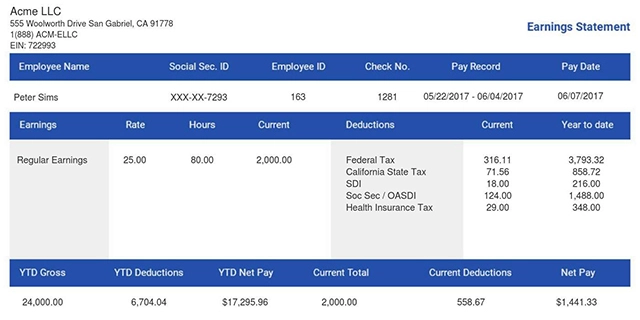
- How 60 Hours of PTO Appears on Your Pay Stub
- Is 60 Hours of PTO Good?
- Common PTO Conversions: 32 to 200 Hours
60 Hours of PTO Is How Many Days?
60 hours of PTO is 7.5 days on a standard 8-hour schedule, because 60 divided by 8 equals 7.5. That works out to a day and a half short of two full work weeks. If your shift runs 10 or 12 hours, the same 60 hours covers only 6 or 5 days.
Asked the other way round, how many days is 60 hours of PTO? Still 7.5 on 8-hour shifts. The answer changes at all only because PTO is banked in hours but spent in shifts: your employer credits hours to the balance, then subtracts however many that particular shift was scheduled for. The same balance stretches further on short shifts and burns faster on long ones.
That 7.5 isn't a rounding artifact. It's 7 full days plus a half day, and most employers let you book exactly that, because tracking in hours is what makes a half day possible. Prefer not to split a shift? Treat 60 hours as 7 days off with 4 hours left in the bank.
60 Hours of PTO Is How Many Days on a 10- or 12-Hour Shift?

Compressed and shift schedules change the answer, and this is where most conversion charts strand people:
| Your Workday | 60 Hours Equals | In Work Weeks |
|---|---|---|
| 6 hours (part-time) | 10 days | 2 weeks |
| 7.5 hours | 8 days | 1.6 weeks |
| 8 hours (standard) | 7.5 days | 1.5 weeks |
| 10 hours (4-day week) | 6 days | 1.5 weeks |
| 12 hours (shift work) | 5 days | 1.25 weeks |
A 12-hour nurse and a 6-hour part-timer with identical 60-hour balances get 5 days versus 10. Same bank, double the time off, purely from shift length.
For employers the table runs in reverse. Promising "a week and a half off" means 60 hours on an 8-hour schedule but only 45 on a 6-hour one, so write policy in hours and avoid the argument later. Building one from scratch? Learn to calculate PTO first.
PTO Hours to Days Conversion Chart
Find your balance in the left column for an instant answer. All rows assume a standard 8-hour workday and a 5-day work week.
| PTO Hours | Days Off | Work Weeks |
|---|---|---|
| 24 hours | 3 days | 0.6 weeks |
| 32 hours | 4 days | 0.8 weeks |
| 40 hours | 5 days | 1 week |
| 48 hours | 6 days | 1.2 weeks |
| 50 hours | 6.25 days | 1.25 weeks |
| 52 hours | 6.5 days | 1.3 weeks |
| 56 hours | 7 days | 1.4 weeks |
| 60 hours | 7.5 days | 1.5 weeks |
| 62 hours | 7.75 days | 1.55 weeks |
| 64 hours | 8 days | 1.6 weeks |
| 70 hours | 8.75 days | 1.75 weeks |
| 72 hours | 9 days | 1.8 weeks |
| 80 hours | 10 days | 2 weeks |
| 88 hours | 11 days | 2.2 weeks |
| 90 hours | 11.25 days | 2.25 weeks |
| 96 hours | 12 days | 2.4 weeks |
| 100 hours | 12.5 days | 2.5 weeks |
| 120 hours | 15 days | 3 weeks |
| 128 hours | 16 days | 3.2 weeks |
| 160 hours | 20 days | 4 weeks |
| 200 hours | 25 days | 5 weeks |
The in-between balances follow the same divisor:
- 24 hours of PTO is how many days? Three.
- 48 hours of PTO is how many days? Six.
- 52 hours of PTO is how many days? Six and a half.
- 70 hours of PTO is how many days? Eight and three quarters.
Not on an 8-hour schedule? Divide column one by your own shift length. Someone on 10-hour days reading the 120-hour row gets 12 days, not 15.
How to Convert PTO Hours to Days

Divide your PTO hours by the length of your normal workday. For a standard 8-hour day, 60 divided by 8 equals 7.5 days. Use your scheduled shift length, not 24, and not the hours you actually worked. A 12-hour shift worker divides by 12 instead.
Three steps cover every case:
- Find your balance in hours. It's on your latest pay stub, usually labeled PTO, vacation, or accrued time.
- Find your work shift length. Use what you're rostered for, not the hours worked. Overtime doesn't change the divisor.
- Divide hours by shift length. The result is days. Multiply days by your workday length to reverse it.
Fractions are normal here:
- 50 hours of PTO is how many days? 6.25.
- 90 hours of PTO is how many days? 11.25.
Payroll systems keep your accrual balance in hours, so that stray quarter stays yours.
A retail associate on 8-hour shifts with 60 hours banked has 7.5 days. Move her to a 10-hour compressed week and the same balance is worth 6 days, without a single hour being added or spent.
Employers start from the other end. A small business owner granting 10 days on 8-hour shifts writes 80 hours into the policy, and any decent PTO calculator hours to days conversion confirms it. Knowing what accrued hours mean makes the rest of payroll math easier.
How Long It Takes to Earn 60 Hours of PTO
Most employers don't hand you 60 hours. You accrue it a slice at a time, and the slice depends on your accrual rate and pay frequency. There's no federal minimum: the Department of Labor leaves paid leave to employer policy, so the rate is whatever your handbook says.
Pay periods per year run 52 weekly, 26 bi-weekly, 24 semi-monthly, and 12 monthly. Once you know yours, divide 60 by your accrual per pay period. Typical accrual rates by tenure:
| Annual PTO | Per Bi-Weekly Period | Periods to Reach 60 Hours | Roughly |
|---|---|---|---|
| 80 hours (10 days) | 3.08 hours | 19.5 periods | 9 months |
| 96 hours (12 days) | 3.69 hours | 16.3 periods | 7.5 months |
| 120 hours (15 days) | 4.62 hours | 13 periods | 6 months |
| 144 hours (18 days) | 5.54 hours | 10.8 periods | 5 months |
| 160 hours (20 days) | 6.15 hours | 9.8 periods | 4.5 months |
Say you earn 4 hours every bi-weekly paycheck. That's 15 pay periods to reach 60 hours, or about 7 months. Start in January and you're cleared for a week off by late July. If your rate bumps at an anniversary, calculate each stretch separately instead of averaging. The mechanics of how PTO is accrued and your pay period breakdown decide when the balance lands.
How 60 Hours of PTO Appears on Your Pay Stub
Your memory of the balance and the official one rarely match, and the official one is on your stub. Most employers print PTO in its own block, separate from earnings and deductions, with three figures: accrued, used, and available. The available line is what matters when you're booking time.
Two details trip people up. The balance reflects the pay period end date, not today, so time off taken this week probably isn't subtracted yet. And some employers print the annual grant rather than the current balance, which makes a 120-hour line look like good news when you've spent half of it.
If the block is hard to find, the abbreviations give it away. Our guide to payroll codes decodes the shorthand, and the anatomy of paycheck stubs shows where each block sits. Employers issuing stubs should surface the available balance every period; it kills the "how much time do I have left" email.
Is 60 Hours of PTO Good?
60 hours, or 7.5 days, sits just below the most common first-year allotment. Bureau of Labor Statistics data shows 31% of private industry workers get 10 to 14 paid vacation days after one year of service, with another 31% landing in the 5 to 9 day range. For a new hire or a part-time role, 60 hours is reasonable. Tenure moves it up sharply: after 10 years, about three quarters of workers are at 15 days or more.
Context matters more than the raw number. If your 60 hours is a combined bank covering vacation, sick days, and personal time, it's thin against the BLS benchmark, which measures vacation alone. Alongside separate sick leave, it's competitive for an entry-level role.
Three policy details decide what the balance is worth. Rollover sets whether unused hours survive the year or expire under use-it-or-lose-it. Caps stop accrual at a ceiling, often 240 hours, so hoarding time can quietly cost you. Payout at separation varies by state. It's worth knowing whether PTO is taxed on payout, since that lump sum rarely lands at your usual rate.
Common PTO Conversions: 32 to 200 Hours
These are the balances people look up most, all on a standard 8-hour workday.
32 Hours of PTO Is How Many Days?
That's 4 days, a common balance for part-time staff or anyone a couple of months into an accrual year.
40 Hours of PTO Is How Many Days?
Five days, exactly one full work week, and the most common starting grant at smaller companies.
72 Hours of PTO Is How Many Days?
That's 9 days, a week and four days, where many entry-level balances peak before the first anniversary bump.
80 Hours of PTO Is How Many Days?
Ten days, two full work weeks, and the classic "two weeks vacation" figure.
100 Hours of PTO Is How Many Days?
That's 12.5 days, two and a half work weeks, and that half day is bookable.
120 Hours of PTO Is How Many Days?
Fifteen days, or three work weeks, common once you're several years into a tenure ladder.
160 Hours of PTO Is How Many Days?
That's 20 days, four full work weeks, and usually a long-tenure or senior-level benefit.
200 Hours of PTO Is How Many Days?
Twenty-five days, five work weeks, sitting at the senior or executive end of most schedules.
You Might Also Like
- What Accrued PTO Actually Means
- Does PTO Count Towards Overtime?
- What Is Unlimited PTO?
- Understanding Unpaid PTO
- Overtime Calculator
Conclusion
So, 60 hours of PTO is how many days? It's 7.5 on a standard 8-hour schedule, 6 days at 10 hours, and 5 at 12. Once you know your shift length the conversion takes seconds, and the chart covers every balance you're likely to see in 2026. Confirm it against your stub before booking, since that's the number your employer will honor. Need clean pay records of your own? Our paystub generator builds accurate stubs in minutes.
- 1. Enter Your Information

- 2. Select Your Favorite Theme

- 3. Download Your Stub!


 By
By