

VTO Meaning: What Does VTO Stand For? (2026 Guide)
 By
James Wilson
By
James Wilson VTO is one of those workplace acronyms with two completely different definitions. Your manager might offer you VTO on a slow Tuesday, or a job listing might advertise it as a benefit. In both cases, the vto meaning is different. This guide breaks down what VTO stands for, how voluntary time off and volunteer time off differ, and what each type means for your paycheck. If you need accurate pay documentation, our pay stub generator at ThePayStubs.com makes it simple.
Understanding the vto meaning can save you a surprise when your next pay stub comes in. By the end, you'll know your rights, your options, and exactly what to say yes or no to.
Key Takeaways
- VTO stands for either "voluntary time off" (unpaid) or "volunteer time off" (paid).
- Voluntary time off is unpaid leave employers offer during slow periods; your job and benefits stay protected.
- Volunteer time off is paid leave for approved charity or community work.
- Taking voluntary time off never reduces your earned PTO balance.
- By 2026, more than 47% of companies offered volunteer programs as an employee benefit.
What Is the VTO Meaning?
VTO stands for two distinct types of leave: voluntary time off and volunteer time off. Voluntary time off is unpaid leave employers offer when staffing exceeds workload — Amazon commonly offers this to warehouse workers. Volunteer time off is paid leave for employees to work with approved nonprofits or charities.
The vto meaning at any given company depends entirely on context. At Amazon fulfillment centers and DoorDash depots, it almost always means voluntary (unpaid) time off. Workers are asked if they'd like to leave early on a slow day without pay. At companies like Salesforce or Johnson & Johnson, VTO refers to volunteer time off: paid hours for community service.
So what does vto mean in practical terms? Many employees wonder: what is vto at work? It usually surfaces when a manager sends a message mid-shift. What is vto time off exactly? The simplest test: if your employer is sending you home early because there's not enough work, that's voluntary time off. If they're compensating you to volunteer at a nonprofit, that's volunteer time off.
What does vto stand for on your offer letter or handbook? Read the surrounding context carefully. The abbreviation is the same, but the two types are practically opposite when it comes to your paycheck.
Voluntary Time Off vs. Volunteer Time Off: What's the Difference?
Voluntary time off is unpaid — employers offer it during slow periods and employees choose to accept. Volunteer time off is paid: employees receive regular wages while volunteering with approved nonprofits. Both types protect your employment status and benefits, but only volunteer time off compensates you for hours away.
Voluntary Time Off (Unpaid)
When more workers are scheduled than needed, employers reach for this option. The voluntary time off meaning is clear: they offer unpaid leave to manage staffing costs when workload drops. An employee who accepts leaves early without pay for that shift. This shows up as fewer hours on your pay stub for that period. Some states have "reporting time pay" laws, which means if you arrive at a shift and your employer sends you home with VTO, they may owe you partial pay for showing up.
Volunteer Time Off (Paid)
This type costs the employer something different: their workers' time, not their money. The volunteer time off meaning centers on community: paid leave for employees to give back. Companies give employees hours to work with nonprofits or community organizations while receiving their regular wages. What is voluntary time off compared to this? One costs you pay; the other doesn't. Employers typically offer 8 to 40 hours of volunteer VTO annually. Employees submit a request, get it approved, and volunteer at an eligible 501(c)(3) organization.
| Type | Paid? | Who Initiates | Purpose |
|---|---|---|---|
| Voluntary (unpaid) | No | Employer (slow periods) | Reduce staffing costs |
| Volunteer (paid) | Yes | Employee (volunteer request) | Community service, CSR |
VTO vs PTO: What's the Difference?
PTO (paid time off) is a paid leave bank employees earn and use for vacation, sick days, or personal time. VTO is separate — voluntary time off is unpaid and never draws from your PTO balance. Volunteer time off is also separate from PTO, reserved for approved charitable or community work.
In the vto vs pto comparison, the key point is your accrued hours. Taking voluntary time off doesn't touch your vacation days. The only thing that changes is your take-home pay for that period.
Benefits and Drawbacks of VTO

Benefits
Done right, VTO is a genuine win on both sides of the employment relationship. Voluntary time off helps employers control staffing costs without layoffs or schedule disruptions. On overstaffed days, sending willing workers home saves wages while preserving morale. For employees, flexibility without losing your job or benefits is genuinely valuable.
Volunteer time off adds a different kind of value. According to SHRM, 47% of companies offered community volunteer programs in 2022. That number has grown through 2026. Employers now recognize that corporate social responsibility directly supports employee retention and recruiting.
Drawbacks
VTO has real downsides. Voluntary time off means less pay that period, which creates financial pressure for hourly workers who count on full shifts. Employers who offer it too frequently risk signaling unstable scheduling to their team.
The most critical pitfall: VTO must stay voluntary. Managers can offer it, but they can't require it or pressure employees to accept. That line, once crossed, becomes a legal liability.
How to Create a VTO Policy (5-Step Checklist)
Companies like Johnson & Johnson (4 paid volunteer days), Rocket Mortgage (8 hours with any 501(c)(3)), and Salesforce (56 hours annually) built successful VTO programs because they started with clear policies. Here's a five-step checklist:
- Define eligibility. Decide if VTO applies to all employees or only full-time staff after a probation period.
- Set annual hours. For volunteer time off, 8 to 40 hours per year is the typical range. Voluntary time off has no standard cap, but track it to prevent overuse.
- Establish the request process. Require at least 7 days' notice for volunteer VTO requests. Voluntary time off is usually offered same-day when staffing needs shift.
- Specify approved activities. For volunteer time off, limit eligible participation to approved 501(c)(3) nonprofits. If your workforce includes independent contractors, review whether they qualify. Decide upfront whether political or religious organizations are in scope.
- Integrate with payroll. When an employee takes voluntary time off, that pay period must reflect fewer hours accurately on their pay stub. Your HR software should track VTO separately from PTO so your employment verification and proof of income records stay clean.
Note: The Family and Medical Leave Act covers mandatory unpaid leave. Voluntary time off is separate and not subject to FMLA requirements. This gives employers more flexibility in how they structure a leave policy.
VTO Meaning for Employees: Paycheck Impact and Rights
The vto meaning matters most when it comes to your paycheck. Here's what to know before you accept.
Can you say no? Yes. VTO is legally required to be voluntary. An employer can't discipline or penalize you for declining. If a manager implies consequences for saying no, raise it with your HR department.
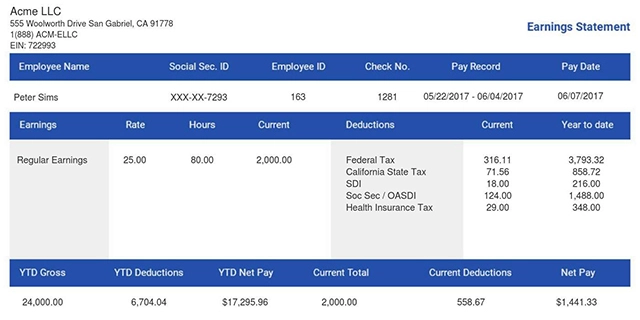
How it affects your paycheck: Voluntary time off is unpaid. If you earn $20 per hour and take two full days of VTO in a biweekly pay period, your gross pay drops by $320 for that stub. That reduced figure appears on your pay documentation for the period.
This matters more than most employees realize. Lenders and landlords often request recent pay stubs, and a VTO week will show lower income than your standard rate. If you need to demonstrate your typical earnings for a rental application or loan, use a paystub generator to create accurate records that reflect your regular pay.
You Might Also Like
- W-2 vs 1099: How to File Taxes When You Have Both
- Self-Employed? Here's How to Show Proof of Income
- How to Calculate W-2 Wages From a Pay Stub
- What Is Annual Income
- How to Calculate Tax on 1099 Misc Income
Conclusion
Whatever the vto meaning at your company, both types protect your employment status and benefits. Unpaid voluntary time off lets you skip a slow shift without job risk. Paid volunteer time off compensates you for community work.
For employers, a clear VTO policy keeps the program fair, legal, and effective. For employees, knowing you can decline, and understanding the paycheck impact, puts you in control.
If a VTO week left you with a lighter stub than usual, create accurate pay documentation with our pay stub generator at ThePayStubs.com.
- 1. Enter Your Information

- 2. Select Your Favorite Theme

- 3. Download Your Stub!


 By
By