


How Many Times Can You Refinance a Car? (2026 Guide)
 By
James Wilson
By
James Wilson How many times can you refinance a car? There's no legal limit. However, refinancing isn't a free pass. Each application triggers a hard credit inquiry.
Lenders impose strict vehicle and income requirements. Also, extending your loan term repeatedly can leave you owing more than the car is worth.
In 2026, auto loan rates have shifted from the highs of recent years. Refinancing is now a real option for more borrowers. Every application requires proof of income. A pay stub generator handles that in minutes.
This guide covers practical limits, lender requirements, when the math works, and when refinancing can hurt you.
Key Takeaways
- There is no legal limit on how many times you can refinance a car loan
- Lenders typically require your vehicle to be 10 years old or newer with fewer than 150,000 miles
- Each refinance triggers a hard credit inquiry; apply with multiple lenders within a 14-day window to count it as one
- Refinancing too often can leave you upside-down, owing more than your car is worth
- Proof of income, usually recent pay stubs, is required for every refinance application
How Many Times Can You Refinance a Car?
There is no legal limit on "How many times can you refinance a car?" In practice, most lenders want at least 6 months of on-time payments before they'll approve a new refinance. Finding a willing lender becomes harder after multiple refinances, as repeated applications can signal financial difficulty.
Some lenders also set a minimum waiting period of 30 to 90 days between applications. Even without a legal ceiling, repeated refinancing works against you. Lenders see frequent applications as a warning sign. This often results in higher rates or outright denial. The real limits are your credit score, vehicle condition, and lender willingness.
If your score needs work, a credit builder loan is worth exploring before your next application.
Refinancing Requirements: What Lenders Look For
Most lenders evaluate the same core criteria before approving a refinance. Meeting these thresholds means better rates and more lenders to choose from.
- Vehicle age: Most lenders cap this at cars 10 years old or newer.
- Mileage: Lenders typically accept vehicles with up to 100,000–150,000 miles, depending on the lender.
- Credit score: A FICO Score of 670 or higher qualifies you for better rates. Some lenders approve lower scores, but expect higher interest rates.
- Loan balance: Most lenders require a minimum remaining balance of $3,000 to $7,500.
- Loan-to-value ratio: Avoid being upside-down. If your car's current market value (check Kelley Blue Book) is less than your loan balance, most lenders will decline.
- Debt-to-income ratio: Keep your total monthly debt payments under 50% of your gross monthly income.
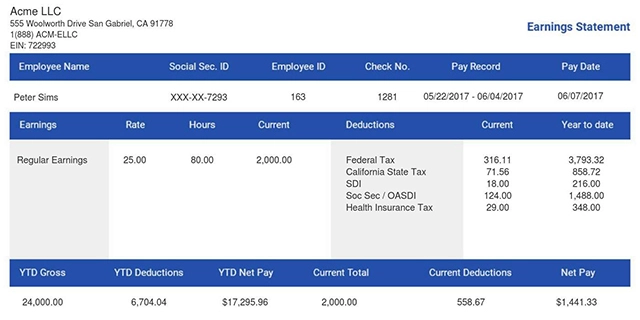
- Proof of income: Lenders ask for your two most recent pay stubs. This verifies that you can handle the new loan. Review what a pay stub for an auto loan looks like to make sure your documents are ready. Adding a co-signer with higher income or credit can also help if your application falls short.
For a complete list of proof of income documents lenders accept, review the six most common scenarios.
When Does It Make Sense To Refinance Your Car Again?
Refinancing again makes sense when your credit has improved, rates have dropped, or your financial situation has changed. Use this break-even formula:
Monthly savings x Months remaining > total fees.
For example, $50/month saved over 36 months = $1,800 in savings. Subtract $600 in fees, and you net $1,200.
Four conditions justify refinancing again:
- Your credit score has improved. A FICO Score gain of 30 or more points puts you in a better rate tier. Expect real monthly savings.
- Interest rates have declined. When the federal funds rate drops, lenders may offer a lower annual percentage rate.
- Your financial situation has changed. Lower monthly payments can become the priority after a job change or a big new bill. Calculating your gross monthly income accurately is the first step in deciding whether refinancing improves your budget.
- You want to pay off faster. A shorter loan term raises monthly payments but cuts total interest paid. Auto loans are front-loaded with interest. Refinancing early saves far more than waiting until the final years.
How Many Times Can You Refinance a Car Before It Backfires?
Refinancing more than once carries real costs that can offset any monthly savings. Here are the main risks:
Prepayment Penalty
Your current loan may charge roughly 2% of the outstanding balance when you pay it off early. On a $15,000 loan, that's a $300 fee to factor into your break-even calculation before you apply.
Stacking Fees
Each refinance may carry origination fees and a title transfer fee, adding $200 to $500 or more per loan.
Negative Equity
Cars depreciate fast. New vehicles lose roughly 20% of their value in the first year, according to Kelley Blue Book. If you extend your loan term each time you refinance, depreciation can outrun your payoff. You'll have an upside-down car loan with no exit options.
Credit Score Impact
Every application adds a hard inquiry to your credit report. This can drop your FICO Score by fewer than 5 points. These inquiries stay on your credit report for up to 2 years. Understanding how banks verify income for an auto loan helps you submit the right documents upfront. To limit the inquiry damage, apply with 3 to 5 lenders within a 14-day window. FICO treats all auto loan inquiries in that window as one hard pull. It only counts against your score once.
Avoid refinancing to a total loan term beyond 84 months from your original purchase date. Past that point, total interest typically outweighs the monthly savings.
Alternatives To Refinancing Your Car
If refinancing doesn't make sense right now, you have options. These include:
- Loan modification: Contact your lender's hardship team directly. Many lenders offer a rate cut or payment pause if you're in a financial bind. Ask about their auto loan hardship program.
- Sell or trade in: If the monthly payment is the main concern, trade down to a less expensive vehicle. This eliminates the loan balance entirely.
- Cash-out auto refinance: Borrow against your vehicle's equity for other financial needs. Use this option carefully since it increases what you owe on the car.
Before applying, use soft-pull tools at multiple lenders to compare rates without triggering a hard inquiry. If you're self-employed, showing proof of income when self-employed requires different documentation than what W-2 employees submit. Knowing what lenders need saves time on every application.
You Might Also Like
- What Do I Need to Finance a Car at a Dealership
- First-Time Car Buyer Programs With No Credit History
- Personal Loans for Uber Drivers
- Pay Stubs for Loan Applications
- What Is Annual Income
Conclusion
No law caps "How many times can you refinance a car?" but the practical limits are real. The core rule is that refinancing is worth it when the monthly savings times months remaining exceeds the total fees paid. Run that math every time before you apply. Protect your credit score along the way. Use soft-pull pre-approval tools to compare rates before committing to a full application. Apply with multiple lenders within a 14-day window. Avoid extending your total loan term past 84 months from your original purchase date.
When you do apply, lenders will ask for proof of income. Create accurate pay stubs in minutes with ThePayStubs.com's pay stub generator.
- 1. Enter Your Information

- 2. Select Your Favorite Theme

- 3. Download Your Stub!


 By
By