

What Does Pay Frequency Mean? Types, Laws & How To Choose (2026)
 By
James Wilson
By
James Wilson Where does a week's pay go? Into an employee's pocket on the same payday every week or every other Friday. Knowing "What does pay frequency mean?" helps employees budget smarter and helps employers stay compliant with state law.
Four basic pay schedules are used in the U.S. today, and this guide covers each one. It also explains the legal requirements around them and how to use a pay stub generator to document any schedule.
Key Takeaways
- Pay frequency refers to how often employees receive paychecks: weekly, biweekly, semi-monthly, or monthly.
- Biweekly is the most common pay frequency in the U.S., used by 43% of businesses (Bureau of Labor Statistics).
- Most states set a minimum pay frequency requirement. Always verify your state's rules before finalizing a schedule.
- Biweekly (26 paychecks/year) and semi-monthly (24/year) differ in overtime tracking and cash flow impact.
- Changing pay frequency requires a compliance review, updated deductions, and advance notice to employees.
- Key Takeaways
- What Does Pay Frequency Mean?
- The 4 Main Pay Frequency Schedules
- What Does Pay Frequency Mean for Your Wallet and Workload?
- State Pay Frequency Laws: What Every Employer Must Know
- How Do You Choose the Right Pay Frequency?
- Can You Change Your Pay Frequency?
- Common Pay Frequency Mistakes To Avoid
- You Might Also Like
- Conclusion
What Does Pay Frequency Mean?
Pay frequency, also called payroll frequency or payment frequency, refers to how often an employer pays employees. The most common options are weekly (52 paychecks/year), biweekly (26), semi-monthly (24), and monthly (12). According to the Bureau of Labor Statistics, 43% of U.S. businesses use biweekly pay. That's "What does pay frequency mean at its core?" It means your employer's payroll cycle.
What is payment frequency in practice? It's the set rhythm that determines when wages transfer from the employer's account to yours. Most businesses lock in one schedule year-round so employees can budget predictably and automate their bill payments.
The 4 Main Pay Frequency Schedules

There are four standard payroll schedules that employers choose from. Each has trade-offs for both the business and the employees. In addition to the regular business schedule, shift work and seasonal work patterns can influence which option fits best.
Weekly Pay Period
Industries with hourly workforces, including construction, manufacturing, food service, and retail, most often operate on this schedule. Workers know exactly when the next paycheck hits, almost always on Friday, which makes the weekly cycle the easiest to budget around.
The trade-off falls on the employer. Running payroll 52 times a year piles on processing fees and admin time, which is why many businesses that could shift to biweekly eventually do so.
Biweekly Pay Period
Biweekly and semi-monthly sound interchangeable, but they aren't. With a biweekly cycle, employees are paid on the same weekday, usually Friday, for a total of 26 paychecks a year. Two of those months bring a third paycheck, a small windfall many workers earmark for savings or a bigger purchase.
Semi-monthly schedules, by contrast, lock onto fixed calendar dates like the 1st and 15th, so the actual weekday drifts. Biweekly is the most widely used schedule in the U.S. and works well for hourly and salaried employees.
Semi-Monthly Pay Period
Twice a month, on fixed calendar dates, such as the 1st and 15th, employees get paid on a semi-monthly schedule. This results in 24 paychecks throughout the year. Salaried staff usually like this rhythm because it lines up with monthly bills, but hourly workers can find it harder to track.
Two-week stretches don't divide evenly into the 7-day workweek, which complicates overtime math. The Fair Labor Standards Act still requires overtime to be calculated on a weekly basis, regardless of how often paychecks are issued, so careful recordkeeping matters.
Monthly Pay Period
Monthly pay is issued once a month for a total of 12 paychecks a year. It's the least common type and the least preferred by employees. The long gap between paydays is particularly difficult for hourly workers and lower-income employees. Monthly pay is typically best for highly compensated salaried employees and 1099 contractors who bill monthly.
Some states do not allow hourly workers to receive a monthly paycheck. Check the specific laws within your state before offering monthly checks.
What Does Pay Frequency Mean for Your Wallet and Workload?
For employers, the impact of pay frequency hits cash flow and processing overhead. More frequent payroll schedules cost more to run. Less frequent schedules reduce overhead but can hurt employee satisfaction and hiring, especially for hourly roles.
For employees, the schedule shapes how they think about money week to week. Many employees think in terms of their pay periods and build budgets around payday. Weekly earners get frequent, smaller checks. Biweekly earners enjoy two "bonus" months per year with three paychecks. Monthly earners face the longest stretch between paydays.
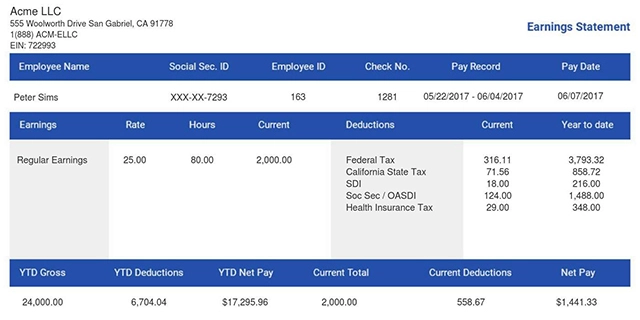
Many people overlook this. Employees are paid a certain number of paystubs per year. Weekly employees receive 52 paystubs; monthly employees receive 12. That gap matters when documenting income for a rental application or loan. For a full breakdown of what you'll need, see our guide on proof of income documentation.
In 2026, earned wage access (EWA) is growing as a supplement to fixed pay schedules. It lets some hourly workers access earned wages between paydays, particularly in retail and food service.
State Pay Frequency Laws: What Every Employer Must Know

The Fair Labor Standards Act does not mandate a specific pay frequency. That's left to the states, and most take it seriously. Here's a quick reference:
- California: At least twice a month for most employees.
- New York: Manual workers paid weekly; most others at least semi-monthly.
- Texas: At least twice a month for all employees.
- Alabama, Florida, and South Carolina: No state pay frequency law; employers set their own schedule.
For a full reference by state, see our breakdown of state pay stub laws.
Understanding "What does pay frequency mean from a legal standpoint?" means knowing your state's minimum requirement. Some states also draw distinctions between exempt employees (salaried, not overtime-eligible) and nonexempt employees (hourly or overtime-eligible).
Requirements can differ between these classifications. When an employer operates in multiple states, check the Department of Labor for each state's specific rules. Employees may always be paid more frequently than required. They should never be paid less frequently.
How Do You Choose the Right Pay Frequency?
Once you understand "What does pay frequency mean for your workforce?," the decision comes down to a few practical factors.
- What are the needs of your hourly employees versus your exempt salaried employees?
- What are the minimum requirements in your state?
- What administrative labor is involved?
- What are your company's cash flow requirements?
Most small businesses with a mix of hourly and salaried employees find biweekly to be a cost-effective solution.
For hourly-heavy teams, weekly or biweekly typically works best. For all-salaried companies, semi-monthly or monthly payroll processing can meaningfully reduce the payroll processing workload.
Can You Change Your Pay Frequency?
Yes, employers can change pay frequency at any time, but must follow three steps:
- Verify the new schedule complies with state law.
- Update all deduction and withholding amounts.
- Give employees advance written notice.
Most states are reasonable in their notice requirements. Some specify a minimum notice period. Typically, wage schedule changes are made at the beginning of the year or at the start of a new quarter.
After the change, make sure employees know how to access their pay stubs from direct deposit records or your payroll system. Keep written records of each notice distributed. If your company is bound by any collective bargaining agreements, you may need to give advance notice to the union before changing an employee's pay schedule.
Common Pay Frequency Mistakes To Avoid
- Skipping state law research: Requirements vary significantly by state. Don't assume what's true in one state applies everywhere.
- Changing schedules without notice: Abrupt changes disrupt employee bill payments and can trigger wage law violations.
- Using semi-monthly for hourly workers: Overtime tracking becomes significantly more complex with this combination.
- Forgetting to update deductions: Benefits, retirement contributions, and garnishments all need to be recalculated after a frequency change.
You Might Also Like
- What Is the Difference Between a Payday, Pay Cycle, and Pay Period?
- Pay Period Breakdown: When Does Your Pay Period End?
- How to Read a W-2 Like a Pro
- Overtime Calculator: How to Calculate Overtime Pay
- What's the Difference Between Payroll and Compensation?
Conclusion
Pay frequency is one of the first payroll decisions a small business makes, and it ripples through hiring, cash flow, and compliance. Biweekly is the U.S. standard for good reason. It balances employee expectations with manageable overhead. Whatever schedule you choose, verify state law first and communicate clearly with your team before any change.
Need to track or document pay stubs for your chosen schedule? Our paystub generator helps employees and business owners create professional pay stubs in minutes, for any pay frequency.
- 1. Enter Your Information

- 2. Select Your Favorite Theme

- 3. Download Your Stub!

 By
By