

Salary Midpoint: What It Is and How To Calculate It
 By
By
The average American stays in a job for just 3.9 years, according to new numbers from the Bureau of Labor Statistics. This means most employees will have at least one salary conversation with their employer. This is to find out where they stand in relation to the midpoint of the salary range for their position.
When you need to document your earnings accurately, our pay stub templates make it easy to create professional records in minutes. This article covers what the salary midpoint is, how to calculate it, how long it will take to get to the midpoint of a range, and how to establish the salary range for a new job.
Key Takeaways
- The salary midpoint is calculated as (minimum salary + maximum salary) divided by 2.
- It represents the expected pay for a fully proficient employee in a role.
- Most employees take 3 to 5 years to reach their midpoint.
- HR teams use it to anchor fair, competitive compensation packages.
- Employees can benchmark their own pay using Payscale or Bureau of Labor Statistics data.
What Is a Salary Midpoint?
The salary midpoint is the middle point of the pay range for a particular role. It is calculated as the average of the minimum salary and the maximum salary of the pay range for that role. An employee who is fully proficient in their role is expected to be compensated at approximately this benchmark. HR departments use it as a tool to set pay ranges for roles within the organization.
Do you know where your job class pay band's midpoint is? That's an internal projection made by your organization for each pay band. The midpoint is used for compensation purposes. For external market benchmark information, the market median reflects 50% of the salaries for comparable work in that job market.
Ideally, your organization's internal midpoint should align with the external market median. If not, you may experience turnover or difficulty filling that position. Understanding the difference between payroll and compensation helps clarify why midpoint belongs on the compensation side. It's not just a payroll processing number.
Your employees want to know where their pay levels sit relative to the midpoint. If an employee is currently below the midpoint and performing above expectations, that's a strong basis for a raise conversation.
Why the Salary Midpoint Matters

This benchmark anchors fair, competitive pay decisions across your organization. From an HR perspective, it is a foundational input to pay equity and supports salary negotiations. It also helps reduce employee turnover when employees feel their compensation is fair relative to market rates.
From an employee perspective, it helps individuals understand whether their current salary is appropriate for their level of experience and when it may be time to request a raise.
For HR teams and small business owners, it delivers several advantages:
- Pay equity: Keeps pay consistent across employees in similar roles, reducing bias and legal exposure
- Competitive compensation: Ensures salary ranges remain attractive in the current labor market
- Pay transparency: Gives managers a defensible benchmark for performance-pay conversations
- Reduced turnover: Employees progressing toward midpoint are less likely to leave
This is a valuable benchmark for managers to monitor. If an employee has been in a role for three or more years and is still paid well below market, it's time for a performance review conversation and a look at future opportunities within the organization.
Understanding payroll codes on your pay stub lets you decode how your pay is calculated and tracked against your salary range. Need to show authentic pay documentation for a loan or apartment application? Employers and lenders often require verified pay records as part of that process.
How To Calculate Salary Midpoint: Formula and Examples
The formula is straightforward. Add the minimum and maximum of the pay range together, then divide by 2.
(Min + Max) divided by 2 equals the midpoint.
For example, a salary range of $60,000 to $80,000 gives a midpoint of $70,000.
Three Worked Examples
- Marketing Manager (salaried): $60,000 + $80,000 = $140,000 divided by 2 = $70,000 midpoint
- Civil Engineer (salaried): $64,000 + $85,000 = $149,000 divided by 2 = $74,500 midpoint
- Warehouse Associate (hourly): $16.00 + $22.00 = $38.00 divided by 2 = $19.00/hr midpoint
The formula works the same for annual salaries and hourly wages. For employees paid on an hourly basis, our guide on how to calculate your hourly, weekly, and monthly income walks through the full process. The key is starting with a clearly defined minimum and maximum for the position.
How Long Does It Take To Reach the Salary Midpoint?

Most employees are 3 to 5 years into their careers before they reach the midpoint. The median employee has been with their current organization an average of 3.9 years, according to the 2024 Bureau of Labor Statistics Employee Tenure report. Performance, role complexity, and organizational factors all affect the timeline.
Five factors that directly influence your progression:
- Starting salary gap: The further below midpoint you start, the longer it takes to reach it.
- Individual performance: Consistently exceeding expectations speeds up merit pay increases.
- Role complexity: Roles requiring specialized certifications tie midpoint to full mastery, not just tenure.
- Pay raise frequency: Annual merit reviews move employees faster than less frequent cycles.
- Labor market conditions: Tight markets push organizations to accelerate pay movement to retain talent.
Check your role's market rate on Payscale or at bls.gov/oes. If you receive pay via direct deposit, knowing how to get a pay stub from direct deposit helps you track your compensation position accurately.
How To Set a Salary Midpoint for a New Position
Getting the midpoint right the first time is crucial for small business owners and HR managers building a pay structure. Here are five steps to help:
- Conduct market research: Use salary surveys, Payscale, and BLS Occupational Employment Statistics data for comparable roles in your region and industry.
- Define the role precisely: Accurate comparisons require a detailed job description with clear responsibilities and required skills.
- Check internal equity: Compare the new role against similar positions in your existing salary structure across job grades.
- Apply the formula: Add your identified minimum and maximum, divide by two, and verify the midpoint aligns with market data.
- Review annually: Market rates shift. Revisit midpoints each year and apply cost-of-living adjustments using Social Security Administration COLA tables.
Once the midpoint is set, employees will receive W-2 forms reflecting their annual compensation. Knowing how to read a W-2 helps both employers and employees confirm the numbers add up correctly.
You Might Also Like
- How to Calculate W-2 Wages from Pay Stub
- Employment Verification and Proof of Income Documents
- Proof of Income if Paid in Cash
- Self-Employed? Here's How to Show Proof of Income
- Pay Period Breakdown
Conclusion
Mastering this compensation benchmark is one of the most practical steps in HR management, giving teams a fair anchor and employees a clear signal about where they stand. The formula is simple. Add the minimum and maximum of the pay range, then divide by two.
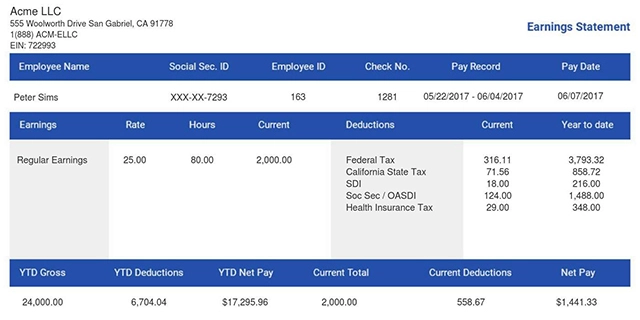
If you need accurate pay documentation to support a loan application, rental verification, or employee records, create professional pay stubs in minutes with our paystub generator.
- 1. Enter Your Information

- 2. Select Your Favorite Theme

- 3. Download Your Stub!


 By
By