

What Is a 1099 SA Form? HSA Distribution Guide (2026)
 By
By
If your HSA provider just sent you a Form 1099-SA this tax season, you're not alone. Millions of Americans get this form every year, yet most aren't sure what it means.
This guide covers "What is 1099 SA?", how to read every box, and what counts as a tax-free payout. You'll learn how to get your copy and how it fits with other income records like pay stubs.
Key Takeaways
- The form reports payouts from an HSA, Archer MSA, or Medicare Advantage MSA to the IRS
- Your HSA trustee (not your employer) sends it by January 31 each year you make withdrawals
- Payouts are tax-free when used for qualified medical costs; other withdrawals trigger income tax plus a 20% penalty
- Report HSA payouts using Form 8889 (or Form 8853 for MSAs), filed with your Form 1040
- No withdrawals in a tax year means no form will be issued
What Is a 1099 SA Form?
Form 1099 SA is an IRS tax form that reports payouts from an HSA, Archer Medical Savings Account (MSA), or Medicare Advantage MSA. You may also see it written as 1099SA. Your HSA trustee (not your employer) sends it to you and the IRS by January 31 to help you complete Form 8889 or 8853.
The IRS calls it "Distributions From an HSA, Archer MSA, or Medicare Advantage MSA." It helps verify what you report on your tax return.
Many filers want to know "What is a 1099SA?" All three are tax-advantaged account types designed to help cover medical savings account costs under a "High Deductible Health Plan (HDHP)". Note that the form covers withdrawals only. You'll get Form 5498-SA separately, which tracks contributions to the account. The 1099 HSA form covers withdrawals, not deposits.
Who Gets a 1099 SA and Why It Matters
Your HSA or MSA trustee (such as Fidelity, HealthEquity, HSA Bank, or Optum Bank) files the form with the IRS and sends you a copy. Some people call it a 1099-HSA, but that's just an informal name. Your employer doesn't file it.
You get this form for any tax year with payouts. If you put money in but made no withdrawals, none is issued. Some filers also search for HSA 1099, which refers to the same document.
These accounts offer a triple tax benefit:
- Deposits are tax-deductible (or pretax if made through payroll)
- Investment earnings within the account grow tax-deferred
- Payouts for qualified medical costs are fully tax-free
HSA eligibility requires HDHP coverage. Archer MSAs are limited to self-employed individuals and firms with 50 or fewer workers. Medicare Advantage MSAs are for Medicare enrollees only.
How To Read the 1099 SA Form: Boxes 1 Through 5

The form has five key boxes. Here's what each one means:
1. Box 1 (Gross Distribution)
The total amount taken out during the tax year. This covers payouts to you or to a medical provider. This is "What is gross distribution?" It is the total amount withdrawn. Cross-check it with your Form 8889 or 8853. The HSA gross distribution meaning is your total withdrawals for the year.
2. Box 2 (Earnings on Excess Contributions)
Earnings on amounts beyond 2026 limits ($4,300 self-only; $8,550 family). Excess amounts trigger a 6% yearly excise tax until removed.
3. Box 3 (Distribution Code)
This explains why the payout was made. The six codes include:
| Code | Type | Tax Impact |
|---|---|---|
| 1 | Normal payout | Tax-free if used for qualified costs |
| 2 | Return of excess amounts | Taxable earnings portion |
| 3 | Disability | Tax-free |
| 4 | Death (estate, year of death) | Reported by the estate |
| 5 | Prohibited transaction | Contact your provider or CPA |
| 6 | Death (non-spouse heir after year of death) | Taxable to heir |
4. Box 4 (FMV on Date of Death)
Fair market value of the account on the date of death. This applies to heirs.
5. Box 5 (Account Type)
A checkbox that confirms whether the payout came from an HSA, Archer MSA, or Medicare Advantage MSA.
Qualified vs. Nonqualified Expenses and Tax Rules
The IRS defines qualified medical expenses as costs to diagnose, cure, treat, or prevent disease for you, your spouse, or dependents. This covers deductibles, copays, prescriptions, dental, vision, and over-the-counter meds. See IRS Publication 502 for the full list. You can't claim these same costs on Schedule A if you paid them from your HSA.
Health insurance premiums are generally not covered. Exceptions include:
- COBRA coverage
- Medicare Part B and Part D premiums
- Employer retiree coverage at 65
Payouts for non-qualified costs are taxed as income plus a 20% penalty. This 1099-SA example shows the real cost. A $500 nonqualified withdrawal in the 22% bracket means $110 in income tax and $100 in penalty. That's $210 on a $500 withdrawal.
2026 HSA limits:
- $4,300 (self-only)
- $8,550 (family)
Staying within these limits keeps Box 2 of your 1099 SA tax form blank.
How Do I Get My 1099-SA Form?

Your HSA provider sends the HSA Form 1099-SA by email or mail by January 31. Log in to your account's Tax Center or Documents section. Most providers post it in early January. If you haven't received it by February 15, contact your provider or call the IRS at 1-800-829-1040.
If you had more than one payout type in the same year, your provider may send separate 1099SA forms. For example, this can happen if you took a normal payout and also returned excess amounts.
How To Report 1099-SA on Your Tax Return
The form you need depends on your account type. The 1099 SA for HSA payouts goes on Form 8889:
- HSA: Complete Form 8889 and attach to Form 1040. Report the Box 1 total. Nonqualified portions go on Schedule 1 "other income" as "HSA."
- Archer MSA or Medicare Advantage MSA: Use Form 8853 instead. The same rules apply for non-qualified payouts.
You don't need to attach the form to your return. Keep it for your records.
For Employers
Report employee HSA deposits in W-2 Box 12 using "Code W". The trustee sends the 1099-SA tax form. Your duties are payroll records and W-2 reporting.
You Might Also Like
- 1099 Tax Deductions for Freelancers
- 1099-MISC vs 1099-NEC: Key Differences
- Using Pay Stubs for Tax Filing
- Reporting Employer Health Insurance on W-2
- ER Health on a Pay Stub: What It Means
Conclusion
Now you know "What is Form 1099 SA?" It's your yearly record of HSA or MSA payouts. It's a simple form once you know what each box means. Use Box 1 to report your total, check Box 3 for the code, and compare everything against your records. Accurate pay records and income verification matter at tax time.
Need professional pay stubs for income verification, proof of employment, or lending? ThePayStubs.com's paystub generator creates accurate, customizable pay stubs in minutes with no subscription required.
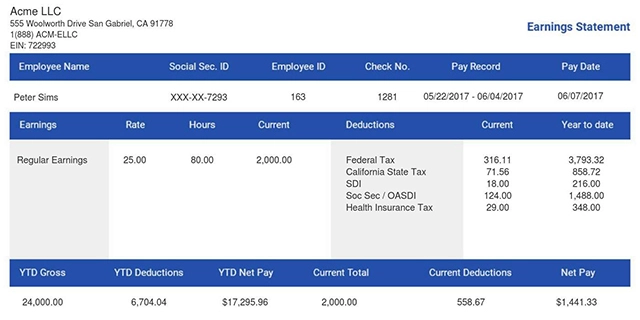
- 1. Enter Your Information

- 2. Select Your Favorite Theme

- 3. Download Your Stub!


 By
By