

What Is Form 1120S? A Complete Guide to S-Corp Tax Returns
 By
James Wilson
By
James Wilson Every S corporation has a tax obligation to the IRS, just not in the way most people expect. Unlike a C corporation that pays taxes at the entity level, an S corporation passes its income to shareholders. However, that doesn't mean the IRS skips the paperwork.
That paperwork is Form 1120S, the U.S. Income Tax Return for an S Corporation. The IRS officially labels it Form 1120-S on its website. From self-employed freelancers to small business owners running payroll, understanding the 1120S tax form is essential. Keeping accurate pay stubs throughout the year also makes 1120S preparation much easier.
This guide explains what the form is, who must file it, what it requires, and how to submit it correctly.
Key Takeaways
- Form 1120S is the annual federal tax return for S corporations, filed with the IRS each year.
- S corporations are pass-through entities. Business income flows to shareholders, not to the corporation, which avoids corporate-level tax.
- The 1120S filing deadline for calendar-year S-corps is March 15 (for tax year 2025, that's March 15, 2026).
- File Form 7004 by March 15 to get a 6-month extension to September 15.
- S-corps with $10 million or more in total assets that file 250+ returns per year must e-file.
- What Is Form 1120S?
- Who Must File Form 1120S?
- Form 1120 vs. 1120S: S-Corp vs. C-Corp Differences
- What Information Does Form 1120S Require?
- Form 1120S Instructions: Schedules Explained
- How To File Form 1120s Online or by Mail
- Form 1120s Due Date and Failure-To-File Penalties
- You Might Also Like
- Conclusion
What Is Form 1120S?
Form 1120S is the U.S. Income Tax Return for an S Corporation, filed each year with the IRS. S corporations are pass-through tax entities. Income flows to shareholders, who report it on their personal tax returns. Every S-corp must file this 1120-S form each year, even if the business had no activity.
What is a 1120S at its core? It's the S-corp's annual tax filing. It tells the IRS what the business earned and what it deducted. It also shows how profits and losses were split among shareholders. Because S-corps are pass-through entities, the business itself doesn't pay federal corporate income tax. Each shareholder reports their share of income on their personal return.
This pass-through taxation is a key benefit of S-corp status. Along with the main 1120S filing, the S corporation prepares a Schedule K-1 (Form 1120S) for every shareholder. The K-1 shows each shareholder's share of income, deductions, and credits. These are the figures they report on their personal returns.
S corporations must meet IRS rules. The business must be a domestic corporation with 100 or fewer shareholders, all of whom are U.S. citizens or residents. S-corp status is not automatic. Businesses elect it by filing Form 2553 with the IRS.
Who Must File Form 1120S?
Any corporation or LLC that elected S-corp tax status by filing Form 2553 must file Form 1120S each year. This is the required form for S corp annual reporting. It applies even if the business had no income. Shareholders and employees don't file the 1120S. They report their share of income from the Schedule K-1 on their personal returns.
If you're self-employed and set up your business as an LLC with S-corp treatment, the same rule applies. Your LLC status doesn't exempt you from the 1120S filing requirement. The tax classification is what matters, not the legal structure. Many freelancers and contractors elect S-corp status to cut self-employment taxes, but don't know about the annual filing obligation.
Once a corporation elects S-corp status, it must file Form 1120S each tax year until that election is revoked or ended. Employees of the S-corp get a W-2 for their wages. Shareholders get a Schedule K-1 for their share of corporate income.
Form 1120 vs. 1120S: S-Corp vs. C-Corp Differences

The difference between 1120 and 1120S comes down to how each entity type handles taxes. So, what is a Form 1120? It's the C-corp return. And 1120S? That's the S-corp version.
Form 1120
This is the corporate tax return used by C corporations. C-corps pay income tax at the corporate level at a flat rate of 21%. When the corporation sends profits to shareholders as dividends, those shareholders pay tax again on those dividends. This is called "double taxation."
Form 1120S
This is for S corporations, which avoid that second layer of tax. Income passes through to shareholders and is taxed once, at their personal tax rate.
Here's an example:
An S-corp earns $100,000 in profit. That amount flows to a shareholder in the 22% tax bracket. The result is roughly $22,000 in personal income tax. A C-corp earning the same $100,000 pays 21% corporate tax ($21,000) first. Then shareholders pay tax on dividends from the remaining $79,000. The S-corp structure cuts that second tax hit.
There's also a timing gap. Form 1120 (C-corp) is due on April 15, while Form 1120S is due on March 15, one month earlier.
| Form 1120 (C-Corp) | Form 1120S (S-Corp) | |
|---|---|---|
| Tax at the entity level | Yes (21%) | No |
| Shareholder limit | Unlimited | 100 max |
| Due date (calendar year) | April 15 | March 15 |
| Double taxation | Yes | No |
What Information Does Form 1120S Require?
This 1120-S tax form requires your corporation's name, address, EIN, business activity code, and date of incorporation. You'll also provide total assets and your S-corp election date. The form covers income (Lines 1–6), deductions (Lines 7–21), and tax payments (Lines 22–27). You'll complete Schedules B, K, L, M-1, and M-2 as well. Each shareholder's ownership stake is reported to generate their K-1.
Before you complete Form 1120 S, gather the following:
-
Business identification: Corporation name, mailing address, Employer Identification Number (EIN), and the date your S-corp election took effect.
-
Business activity code: A six-digit code from the IRS list that describes your primary business.
-
Income (Lines 1–6): Gross receipts and sales, cost of goods sold, gross profit, net gain from asset sales, and any other income.
-
Deductions (Lines 7–21): Officer compensation, salaries and wages, repairs, rent, taxes paid, depreciation, advertising, pension plans, employee benefits, and other deductions.
-
Tax and payments (Lines 22–27): Excess net passive income tax, estimated tax payments, and penalties.
-
Accounting method: Cash or accrual. Most small S-corps use the cash method.
-
Fiscal year: Calendar year (January 1–December 31) or a custom fiscal year.
- Shareholder information: Each shareholder's name, SSN or EIN, and ownership percentage for generating their K-1.
Form 1120S Instructions: Schedules Explained

After completing the main income and deduction pages, Form 1120S includes five schedules. The Form 1120-S instructions for these schedules can seem dense, but here's what each one covers:
-
Schedule B: A series of yes/no questions covering your entity type, accounting method, business activity, and any foreign shareholders or trust arrangements.
-
Schedule K: Summarizes all income, deductions, credits, and other items that will be allocated among shareholders. This is the source data used to generate each individual K-1.
-
Schedule L: The corporation's balance sheet, listing total assets and liabilities. Required if gross receipts or total assets at year-end are $250,000 or more.
-
Schedule M-1: Bridges the gap between your book income and taxable income on the return. These can differ because some expenses are deductible for tax purposes but not for accounting (or the reverse).
- Schedule M-2: Tracks the accumulated adjustments account (AAA), a running balance of S-corp earnings taxed to shareholders but not yet distributed.
Depending on your business, additional forms may be required. Common additions include:
- Form 8825
- Form 1125-A
- Form 4797
- A Schedule K-1 for each shareholder
Use an accountant or tax software if your S-corp has multiple shareholders, real estate, or complex deductions.
How To File Form 1120S Online or by Mail
You have two options for filing: e-file or submit a paper return by mail. Here's where to file 1120S based on your method:
1. E-Filing (Recommended)
You can file 1120S online through the IRS e-file system using software like TaxAct Business or other tax platforms. E-filing is required for S-corps with $10 million or more in total assets that file 250 or more returns per year. For most small S-corps, e-filing is optional but faster.
2. Paper Filing
Not sure where to mail 1120S? Use the table below based on your location:
| Corporation Location | Assets / Schedule M-3 | IRS Mailing Address |
|---|---|---|
| CT, DE, DC, GA, IL, IN, KY, ME, MD, MA, MI, NH, NJ, NY, NC, OH, PA, RI, SC, TN, VT, VA, WV, WI | Under $10M, no Schedule M-3 | Kansas City, MO 64999-0013 |
| Same eastern/midwestern states | $10M+ assets or Schedule M-3 included | Ogden, UT 84201-0013 |
| All other U.S. states | Any | Ogden, UT 84409 |
| Foreign countries or U.S. territories | Any | Ogden, UT 84201-0013 |
Three common mistakes to avoid:
- Filing Form 1120 (C-corp return) instead of Form 1120S. The IRS will reject or misclassify it.
- Forgetting to prepare a Schedule K-1 for every shareholder before filing.
- Missing the March 15 deadline without requesting a Form 7004 extension first.
Form 1120S Due Date and Failure-To-File Penalties
For calendar-year S-corporations, the tax form 1120S is due March 15. That's the 15th day of the third month after the tax year ends. For tax year 2025, the deadline is March 15, 2026. If March 15 falls on a weekend or holiday, the deadline shifts to the next business day.
Need more time? File Form 7004 by March 15 for an automatic six-month extension to September 15, 2026. The extension covers filing only. If the S-corp owes taxes (such as excess net passive income), payment is still due by March 15.
For dissolved S-corps, the final 1120-S form is due on the 15th day of the third month after dissolution.
Failure-to-file penalties are steep. The IRS charges up to $450 per shareholder, per month (for tax year 2025 returns), for up to 12 months. A three-shareholder S-corp that fails to file for 12 months could owe $16,200 in penalties alone, before interest.
You Might Also Like
- What Happens If You Don't File a W-2 Statement
- How to Get Your W-2 Online
- W-2 Form Generator
- How to Read a W-2 Like a Pro
- 1099 Form Generator
Conclusion
Now you know "What is 1120S?" and why it's required. This makes S-corp ownership far less stressful at tax time. Form 1120S is the paper trail that keeps S-corp taxation honest. It reports your business income and deductions to the IRS. It ensures pass-through taxation flows to shareholders as designed. Filing is required no matter your profit level.
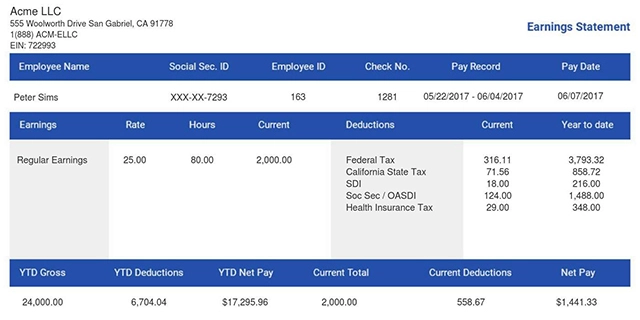
If you're an S-corp owner who pays yourself a salary, accurate pay stubs make 1120S preparation easier when it's March. The wages you pay yourself show up on your W-2 and get deducted on the 1120S. Clean payroll records save time at tax season. Use a reliable pay stub generator to create pay stubs that match your W-2 compensation, for your own salary or your team's payroll.
- 1. Enter Your Information

- 2. Select Your Favorite Theme

- 3. Download Your Stub!

 By
By