How to Start a Painting Business in 2026: Costs and Steps
 By
A painting business is one of the cheapest trades to break into. A ladder, a few good brushes, and a roller can land your first paid job. But most new painting crews don't struggle with the painting. They struggle with pricing, licenses, insurance, and keeping clean pay records.
This guide walks you through the whole path for 2026. You'll see real startup costs, the licenses you may need, the gear to buy first, and how to find clients. It also covers what most guides skip: how to pay yourself, how to pay a crew, and how to show proof of income when a landlord or lender asks for it.
Key Takeaways
- Most solo painters can start for $500 to $2,000 in tools, insurance, and fees.
- Licensing rules vary by state, and homes built before 1978 require EPA lead-safe certification.
- Price every job with a simple formula: labor, materials, overhead, and profit.
- Owners usually pay themselves through an owner's draw and set aside money for taxes.
- Clear pay stubs help you prove income and keep payroll records for your crew.
- Is a Painting Business Profitable?
- How Much Does It Cost to Start a Painting Business?
- Choose Your Niche: Residential, Interior, or Commercial
- How to Start a Painting Business Step by Step
- Do You Need a License to Start a Painting Business?
- What Equipment Do I Need to Start a Painting Business?
- How to Price Painting Jobs
- How to Get Leads for Your Painting Business
- How to Run a Painting Business With a Crew
- Painting Business Owner Salary: How to Pay Yourself
- Pay Stubs and Proof of Income for Painters
- How to Grow My Painting Business After the First Year
Is a Painting Business Profitable?
Yes, it can be, because startup costs are low and demand is steady. The Bureau of Labor Statistics puts the median painter wage at $49,400 (May 2025), and 31% of painters work for themselves. Owners who price jobs carefully and run a small crew can earn more than that median.
The painting industry also has room for new people. The BLS outlook for painters projects 3% job growth from 2025 to 2035, with about 24,900 openings each year. Homeowners repaint before they sell. Landlords repaint between tenants. Offices and stores refresh their walls on a schedule.
So, will it pay off for you? It depends on a few habits:
- Pricing: Bid every job with real numbers, not a guess.
- Steady leads: Keep a pipeline so slow weeks don't drain your savings.
- Low waste: Buy the right amount of paint and protect your tools.
There are trade-offs, too. The work is physical, and exterior jobs slow down in cold months. The upside is real, though. You get to be your own boss, set your hours, and grow at your own pace.
How Much Does It Cost to Start a Painting Business?

Most people can start a solo painting company for $500 to $2,000, covering basic tools, insurance, and a local business license. Upgrading to a sprayer and better ladders pushes that to $2,000 to $5,000. Starting with a crew, a work van, and payroll usually costs $5,000 to $15,000.
Here's how those budgets usually break down. These are typical ranges, so get local quotes before you commit.
| Setup | Typical Budget | What It Covers |
|---|---|---|
| Solo, basic | $500 to $2,000 | Brushes, rollers, ladder, drop cloths, tape, liability coverage, city license |
| Solo, upgraded | $2,000 to $5,000 | Airless sprayer, extension ladder, sander, simple website, business cards |
| Small crew | $5,000 to $15,000 | Extra tool sets, used van, workers' comp, two to four weeks of payroll |
Don't forget working capital. You'll often buy paint before the client pays you. Keeping $1,000 or so in reserve helps you get started without a cash crunch on your first few jobs.
A simple way to stretch a small budget is to ask for a deposit. Many painters collect 30% to 50% up front and use it to buy materials for that job.
Choose Your Niche: Residential, Interior, or Commercial
Your niche shapes your tools, prices, and marketing. Most painters start in one lane and add more later.
- Residential painting: A house painting business works on homes, from single rooms to full exteriors. Jobs are smaller, and word of mouth spreads fast.
- Interior work: An interior painting business can run all year, since weather won't stop you. It's a good fit if you're starting with less gear.
- Commercial painting: A commercial painting business takes on offices, stores, and apartment buildings. Jobs are bigger and pay well, but clients often want more insurance and night or weekend work.
- Specialty work: Cabinets, decks, and murals can set you apart and earn higher rates.
Pick the lane that matches your skills today. You can always grow into the next one.
How to Start a Painting Business Step by Step

These steps cover the setup work. Licensing gets its own section below because rules change so much by state.
Write a Simple Plan
A painting business plan doesn't need to be long. One or two pages can answer the big questions. Who are your clients? What will you charge? How many jobs do you need each month to cover your bills? The Small Business Administration (SBA) offers free plan templates if you want a starting point.
Pick a Name People Remember
Good painting business names are short, easy to spell, and easy to say on the phone. Many owners use their town or last name, like "Maple Street Painting." Before you choose, search your state's business registry and make sure a matching website domain is still available.
Choose a Legal Structure and Get an EIN
Many painters start as a sole proprietor or a single-member LLC. An LLC can help separate your personal assets from business debts. Next, get a free Employer Identification Number (EIN) from the IRS. You'll need it to hire workers and open some bank accounts.
Buy the Right Insurance
Painting business insurance protects you if paint ruins a client's floor or someone trips over your ladder. Start with general liability insurance, since many clients and property managers ask for proof. Once you hire employees, most states require workers' compensation. Commercial auto coverage makes sense if you drive a work vehicle.
Open a Business Bank Account
Mixing job money with grocery money is the fastest way to lose track of your profit. A dedicated business bank account usually needs your EIN and formation papers to open. It makes taxes easier and looks more professional to clients. A handy habit: snap a photo of every receipt and save it in a cloud folder by month. Come tax time, you'll thank yourself.
Do You Need a License to Start a Painting Business?
It depends on your state and city. Some states, such as California and Arizona, license painting contractors, while others only require a local business license. If you paint homes built before 1978, you also need EPA Renovation, Repair, and Painting (RRP) certification for lead-safe work.
To find out what applies where you live, check three places:
- Your state's contractor board: Some states license painters directly. Others license only jobs above a dollar limit.
- Your city or county: Most require a general business license, and some need a local contractor registration.
- The EPA: Lead paint rules apply nationwide for older homes. Your firm and at least one worker need RRP training. The EPA's RRP program page explains how to get certified.
Many painting contractors also carry a surety bond. Some states require one, and some clients ask for it on bigger jobs.
What Equipment Do I Need to Start a Painting Business?
You need brushes, rollers, extension poles, trays, drop cloths, painter's tape, a step ladder and an extension ladder, scrapers, sanding tools, and safety gear like respirators and goggles. An airless sprayer, a shop vacuum, and a reliable vehicle come next. You can rent the bigger items until steady jobs pay for them.
Here's a simple starter checklist:
- Application tools: Angled brushes in two or three sizes, roller frames, roller covers, and poles
- Surface protection: Canvas drop cloths, plastic sheeting, and painter's tape
- Prep tools: Scrapers, putty knives, caulk guns, sanding blocks, and a pole sander
- Access: A 6-foot step ladder and a 24-foot extension ladder
- Safety: Respirators, goggles, gloves, and a first aid kit
Buy quality brushes and rollers first. Cheap ones shed and leave streaks, and redoing a wall costs more than the brush.
Open a contractor account at a paint store like Sherwin-Williams or Benjamin Moore. Pro accounts often come with discounts, job tracking, and faster pickup.
How to Price Painting Jobs
Pricing is where many new owners lose money. Most painters use one of three methods:
- By the hour: Simple, but clients may worry the job will drag on.
- By the square foot: Common for walls and exteriors. Measure carefully.
- By the job: A flat price clients like, built on your own estimate.
Whatever you choose, build each bid with the same formula. Here's an example for a bedroom:
- Labor: 8 hours at $40 per hour = $320
- Materials: 2 gallons of paint plus supplies = $120
- Overhead: Insurance, gas, and tool wear = $60
- Profit: 20% of $500 = $100
That gives you a $600 quote. Track your actual hours on every job. After 10 jobs, your estimates will be far more accurate.
Before you send any quote, walk the job with a short checklist:
- Measure every wall, ceiling, and trim run, and note the number of coats.
- Look for prep work like peeling paint, holes, stains, or old caulk.
- Ask about furniture, pets, and when the rooms are free.
- Put the price, scope, start date, and deposit terms in writing.
A written quote protects you and the client. It also stops small extras from turning into free work.
How to Get Leads for Your Painting Business
Your first clients will likely come from people who already know you. After that, you need a steady system. Here's how to get leads for your painting business without a big budget.
- Google Business Profile: It costs nothing to set up. Add photos of your work, and ask every happy client for a review.
- Nextdoor and social media: Post before and after photos. Local groups love seeing real projects.
- Partners: Real estate agents, property managers, and general contractors often need a painter they trust.
- Yard signs and truck signs: Ask clients if you can leave a sign up for a week. Neighbors notice.
Paid painting business advertising, like Google Local Services Ads, can help once you have reviews. Start small and track which ads get new customers.
Speed matters, too. Many homeowners ask two or three painters for quotes, and the first clear reply often wins. Try to answer every request within one business day.
The best lead source is still a great job. Show up on time, keep the site clean, and follow up a week later. That's how you get new clients through referrals.
How to Run a Painting Business With a Crew
Learning how to run a painting business changes once you hire help. You can bring on workers in two ways.
- Subcontractors: Independent painters you pay per job. For 2026, you generally file Form 1099-NEC for anyone you pay $2,000 or more.
- Employees: Workers you train and direct. You handle payroll taxes and workers' comp.
If you hire employees, follow this checklist:
- Have each new hire fill out Form I-9 and Form W-4.
- Report new hires to your state's new hire registry.
- Withhold income tax and FICA, then match FICA yourself. That's 6.2% for Social Security (on wages up to $184,500 in 2026) and 1.45% for Medicare.
- Buy workers' comp coverage before the first day of work.
- Give each worker a pay stub with every paycheck.
Good tools save you hours each week. Painting business management software can handle estimates, scheduling, time tracking, and invoices. Many owners pair it with QuickBooks and other payroll management tools.
Painting Business Owner Salary: How to Pay Yourself
Your painting business owner salary depends on your profit and your business structure. There's no set number. Many owners start below the $49,400 median and earn more once they run a crew.
How you pay yourself depends on how you're set up:
- Sole proprietor or single-member LLC: You take an owner's draw. You move money from the business account to your personal account. It's not a paycheck, so no taxes come out automatically.
- S corporation: You pay yourself a reasonable salary through payroll, with taxes withheld. You can take extra profit as distributions.
Self-employed painters owe 15.3% self-employment tax on top of income tax. The IRS expects quarterly estimated payments with Form 1040-ES. A safe habit is to move 25% to 30% of every payment into a separate tax savings account.
Pay Stubs and Proof of Income for Painters
Sooner or later, someone will ask you to prove your income. A landlord, a car lender, or a mortgage broker may want recent pay stubs. As a self-employed painter, you don't get those from a boss, so you need your own records.
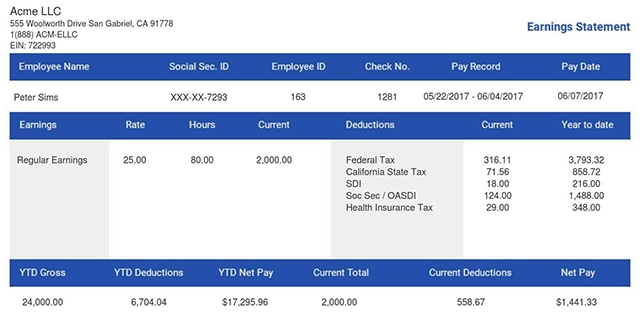
Clean pay stubs show your gross pay, taxes, and net pay for each period. They also help when you hire. Your crew will need pay records for their own rentals and loans. You can create a pay stub for yourself or your workers in a few minutes.
How to Grow My Painting Business After the First Year
Once your calendar fills up, it's time to plan the next stage. Growth usually comes down to four moves:
- Raise prices as your reviews and skills improve.
- Add repeat clients like property managers and landlords.
- Hire a crew lead so jobs run when you're busy bidding.
- Track your numbers each month: revenue, profit per job, and lead sources.
Plan for the slow season before it hits. In cold areas, exterior work drops in winter. Line up interior jobs, cabinet work, and office repaints in the fall. Save part of your summer profit so payroll and bills stay covered when fewer jobs come in.
You Might Also Like
- Create Self Employed Pay Stub
- Self Employed? Here's How to Show Proof of Income
- Freelancing for Beginners: 1099 vs W-2
- State Pay Stub Laws
- How to Pay Myself From My LLC
Conclusion
Your business can start small and grow into a real company. Price every job with a clear formula. Get the right license and insurance for your state. Track your money from day one, and pay yourself on purpose.
When a landlord or lender asks for proof of income, or your crew needs pay records, use our pay stub generator to make accurate pay stubs in minutes.
- 1. Enter Your Information

- 2. Select Your Favorite Theme

- 3. Download Your Stub!

 By