

How to Calculate FTE: Formula, Chart, and ACA Rules (2026)
 By
Seven people on payroll doesn't mean seven people's worth of work. If four of them work part time, your real capacity is smaller. FTE measures that gap.
This guide shows how to calculate FTE with a simple formula, a ready-made chart, and the IRS rules that decide whether your company has to offer health coverage. It's for owners who run payroll with a check stub maker and for workers weighing a 0.8 FTE job offer.
Key Takeaways
- FTE stands for full-time equivalent. It turns everyone's hours into a count of full-time workers.
- The basic formula is total hours worked divided by full-time hours. On a 40-hour week, that is 2,080 hours a year.
- The ACA uses a different, monthly method: part-time hours divided by 120, capped at 120 hours per worker.
- Round only at the end, never person by person.
- Pay stubs and payroll records are the best source for the hours you need.
- What to Know Before You Learn How to Calculate FTE
- How to Calculate FTE in 4 Steps
- FTE Chart: Converting Hours to FTE
- How Many FTE Hours Count as Full Time?
- How to Calculate FTE for the ACA
- FTE Rules for the Small Business Health Care Tax Credit
- FTE vs Headcount
- Mistakes to Avoid When You Calculate FTE
- Using Your FTE Number for Budgets and Pay Stubs
What to Know Before You Learn How to Calculate FTE
FTE is short for full-time equivalent. It's a unit that compares the hours your team works to one full-time schedule. One person working full time is 1.0 FTE. Someone working half those hours is 0.5 FTE.
So what does FTE mean in business? It shows your true workforce capacity, not just how many names are on payroll. That's the FTE meaning business owners care about most. It helps them plan budgets, set pay for part-time roles, and check legal limits.
What is an FTE employee, then? It's a measure, not a job title. Two people who each work 20 hours a week add up to one FTE employee. Our guide to FTE meaning goes deeper on the term.
How to Calculate FTE in 4 Steps

These steps work for any period, from one week to a full year:
- Pick a standard full-time week. Most employers use 40 hours. That gives 2,080 FTE hours per year (40 x 52).
- Add up the total hours worked. Include every employee, full time and part time, for the same pay period.
- Divide. Divide the total hours by the full-time hours for that period.
- Round only at the end. Keep the decimals until you have the final number.
The FTE calculation formula looks like this:
FTE = Total hours worked ÷ Full-time hours in the period
A Worked Example: One Small Bakery
Say a small bakery has three full-time staff at 40 hours a week and four part-time employees. Here is the math for one year:
| Employee group | Weekly hours | Annual hours |
|---|---|---|
| 3 full-time staff | 40 each (120 total) | 6,240 |
| Part-timer A | 25 | 1,300 |
| Part-timer B | 20 | 1,040 |
| Part-timer C | 15 | 780 |
| Part-timer D | 12 | 624 |
| Total | 192 | 9,984 |
Now divide: 9,984 ÷ 2,080 = 4.8 FTE. That's seven people, but only 4.8 full-time workers' worth of hours.
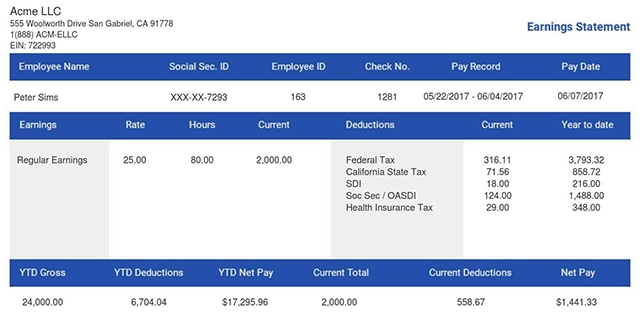
Tip: Don't guess from schedules. Pull real hours from your payroll register or the year-to-date hours on each pay stub. A simple spreadsheet does the rest.
FTE Chart: Converting Hours to FTE
This chart uses a 40-hour week. It's the fastest answer if you want to know how to calculate FTE based on hours for one person: divide the number of hours that employee works each week by 40. The FTE percentage column shows how much of a full-time load each schedule covers.
| Hours per week | Hours per year | FTE | FTE percentage |
|---|---|---|---|
| 40 | 2,080 | 1.0 | 100% |
| 36 | 1,872 | 0.9 | 90% |
| 32 | 1,664 | 0.8 | 80% |
| 30 | 1,560 | 0.75 | 75% |
| 28 | 1,456 | 0.7 | 70% |
| 24 | 1,248 | 0.6 | 60% |
| 20 | 1,040 | 0.5 | 50% |
| 16 | 832 | 0.4 | 40% |
| 10 | 520 | 0.25 | 25% |
How Many FTE Hours Count as Full Time?

Most employers use 40 hours a week as 1.0 FTE, which works out to 2,080 hours a year (40 x 52). Some use 35 or 37.5 hours instead. For Affordable Care Act purposes, the IRS treats anyone averaging 30 hours a week, or 130 hours a month, as full time.
For your own planning, no law sets your FTE hours. See how many hours is full time and part-time hours for the usual choices. Just use the same standard across every team, or your numbers won't compare. Health coverage rules are the exception, since the 30-hour line is set by law.
How to Calculate FTE for the ACA
The Affordable Care Act uses its own FTE count to decide if you're an applicable large employer (ALE). An ALE has 50 or more full-time employees, counting FTEs, and must offer health coverage. It also files Forms 1094-C and 1095-C each year.
The IRS method works month by month:
- Count the number of full-time employees for the month (30 or more hours a week, or 130 hours a month).
- Add the hours of everyone else, but count no more than 120 hours per person.
- Divide those hours by 120 to get the month's FTEs.
- Add full-time and FTE counts for all 12 months, then divide by 12. If it isn't a whole number, round down.
Say a company has 40 full-time employees and 20 part-timers who each work 80 hours a month. Part-time hours are 1,600. That's 13.33 FTEs. Add 40 and you get 53.33 for the month. If every month looks the same, the yearly average rounds down to 53. The company is an ALE.
Your status for 2026 depends on your 2025 numbers, since the rule looks at the prior calendar year.
The Seasonal Worker Exception
You aren't treated as an ALE if you went over 50 for 120 days or fewer in the year, and the extra workers in that stretch were seasonal.
FTE Rules for the Small Business Health Care Tax Credit
This credit uses a third method. You add the hours you paid each worker for the year, but no more than 2,080 per person. Then you divide by 2,080 and round down. To qualify, you need fewer than 25 FTEs.
Owners don't count. That includes sole proprietors, partners, shareholders who own more than 2% of an S corporation or more than 5% of a C corporation, and their family members. You claim the credit on Form 8941.
FTE vs Headcount
Headcount and FTE answer different questions, so most companies track both.
| Headcount | FTE | |
|---|---|---|
| What it counts | Total number of people on payroll | Hours, in full-time units |
| A 20-hour worker counts as | 1 | 0.5 |
| Best used for | HR records, benefits enrollment | Budgets, staffing, ACA tests |
Mistakes to Avoid When You Calculate FTE
- Counting contractors. Independent contractors on a 1099 don't belong in ACA or IRS counts.
- Rounding each person. Round the final total only.
- Mixing standards. Don't use 40 work hours for one team and 35 for another.
- Skipping the 120-hour cap. Under the ACA, extra hours above 120 per part-timer don't count.
- Ignoring related companies. Businesses under common ownership may have to be counted as one employer.
Using Your FTE Number for Budgets and Pay Stubs
Divide labor costs by FTE to see what each full-time slot costs. Divide annual sales by FTE to get revenue per FTE, a quick way to compare this year to last.
What is FTE in healthcare? Hospitals and clinics staff by FTE. A nurse hired at 0.9 FTE on a 40-hour basis works 36 hours a week.
FTE also shows up on paychecks. A 0.8 FTE role with a $60,000 full-time salary pays $48,000. Workers need pay stubs that show those hours and pay when a landlord or lender asks for proof of income. Owners need the same stubs as the hours data behind every FTE check. Need clean records? A ready-made paystub template makes them easy to produce.
You Might Also Like
- How to Calculate Your Hourly, Weekly, and Monthly Income
- Should Independent Contractors Receive a Pay Stub?
- What Is Annual Income?
- Payday vs Pay Cycle vs Pay Period
- Paystub Generator for the Self-Employed
Conclusion
Learning how to calculate FTE comes down to three things: pick a full-time standard, add up real hours, and divide. Use the general formula for budgets, the monthly IRS method for ACA checks, and the 2,080 cap for the tax credit.
Accurate hours start with accurate pay records. Create clear, professional pay stubs for yourself or your team with our paystub generator.
- 1. Enter Your Information

- 2. Select Your Favorite Theme

- 3. Download Your Stub!

 By