

First-Time Car Buyer Programs With No Credit History (2026)
 By
By
Getting your first car loan feels like a classic catch-22. You need credit to build credit. Yet you cannot borrow without a borrowing record.
First-time car buyer programs with no credit history exist to break that cycle. Automakers, credit unions, and dealerships all run them. These programs look at your income and employment, not your borrowing history.
In 2026, the average used car price sits near $25,000. Lenders who focus on thin-file buyers can still get you approved. Income documents matter most. Our pay stub generator makes them fast for gig workers and freelancers. Here is what you need to know.
Key Takeaways
- First-time car buyer programs accept limited or no credit history: income proof matters more than a credit score.
- Chevrolet, Toyota, and many credit unions offer dedicated first-time buyer programs with flexible requirements.
- Bring recent pay stubs (2–3 months), a valid ID, and proof of residence to your loan application.
- A 10–20% down payment greatly improves your approval odds and lowers your interest rate.
- On-time payments build your credit file. They qualify you for better financing later.
- Key Takeaways
- What Are First-Time Car Buyer Programs With No Credit History?
- What Documents Do You Need to Apply?
- Where To Find First-Time Car Buyer Programs
- How To Qualify for First-Time Car Buyer Programs With No Credit History
- Budget and Down Payment Tips for No-Credit Buyers
- You Might Also Like
- Conclusion
What Are First-Time Car Buyer Programs With No Credit History?
First-time car buyer programs with no credit history are auto loans for buyers with a thin file. Automakers like Chevrolet, credit unions, and Buy Here Pay Here dealers all offer them. They weigh your income and employment history instead of a credit score. In 2026, expect rates of 10–15% APR. Some subprime lenders will also take thin-file cases.
A thin file is not the same as bad credit. Lenders know young adults, recent immigrants, and gig workers often start with no borrowing record. Many see this as a blank slate, not a red flag. Loan approval often comes down to proof of steady pay.
Some lenders now accept data through services like Experian Boost. This counts rent, utility bills, and phone payments toward your credit profile. If you have paid bills on time for years, you may have more credit history than you think. The guide on how to show proof of income when self-employed covers what lenders accept.
What Documents Do You Need to Apply?

Most first-time car buyer programs require pay stubs from the last 2–3 months, an official photo ID, proof of residence, and proof of auto insurance. Many lenders also request an employer contact to confirm your employment history. Self-employed applicants can use tax returns or bank statements instead.
Lenders rank income documents in the following order:
- Recent pay stubs (2–3 months): most lenders prefer these for their clarity
- W-2 from the prior year
- Federal tax returns (for self-employed borrowers)
- Bank statements showing consistent deposits
If you're a freelancer, gig worker (Uber, DoorDash, Instacart), or self-employed, you may not receive traditional pay stubs. Use our pay stub generator to create clean income records for your loan application. This takes less than 2 minutes and produces a document lenders can read and verify.
Some programs also request personal references. Audi's first-time buyer program, for example, requires two personal references, including one from a relative.
Where To Find First-Time Car Buyer Programs
First-time car buyer programs with no credit history fall into three main groups. Each has different trade-offs in terms of rate, flexibility, and credit-building.
Automakers
They run some of the most buyer-friendly programs. Chevrolet's First-Time Buyer Program offers up to 105% MSRP financing. It asks for no adverse credit and offers a 90-day payment deferral. Toyota and Hyundai run similar dealership financing programs that offer income-based approvals to qualified buyers.
For all of these, pay stubs for loan applications are the main income document lenders request. Proof of employment and basic financial stability carry more weight than a credit score.
Credit Unions
They offer the lowest interest rates, often a 7–12% annual percentage rate, for first-time buyers. You need to join as a member first. Membership is usually easy to qualify for. Approval criteria are more flexible than at big banks. Online lenders also serve thin-file buyers and can be worth a quote.
Buy Here Pay Here (BHPH) Dealerships
These provide in-house financing with no credit check. Rates can hit 20–25% APR or higher. These dealers often work with subprime lenders. Before signing, confirm they report your payments to the major credit bureaus. Self-employed buyers should know how a 1099 pay stub compares to W-2 documentation when financing a vehicle.
If they do not report, you will not build any credit history from the loan. Ask for a vehicle history report before you commit.
| Source | Typical APR | Credit Check | Reports to Bureaus | Best For |
|---|---|---|---|---|
| Credit Union | 7–12% | Soft/Hard | Yes | Lowest rates |
| Automaker Program | 9–13% | Soft | Yes | New car buyers |
| BHPH Dealership | 15–25%+ | No | Sometimes | Last resort |
How To Qualify for First-Time Car Buyer Programs With No Credit History

Follow these steps before visiting a dealership.
- Pull your credit report. Even with no credit history, check your free report at AnnualCreditReport.com. Confirm there are no errors that could hurt your application.
- Start with prequalification, then a preapproval. Apply with 2–3 lenders before shopping. A loan application with a preapproval offer lasts 30–60 days. It gives you bargaining power at the dealer and speeds up loan approval.
- Prepare your documents. Recent pay stubs, valid ID, proof of income, and proof of insurance are standard in most programs.
- Consider a co-signer. A co-signer with good credit lowers your rate and boosts approval odds. Just know they share legal responsibility for the loan.
- Check the car's background. Use a vehicle history report from Carfax and price the car against Kelley Blue Book and Edmunds before you negotiate.
- Compare offers. Do not accept the first offer. Compare the APR, loan terms, and monthly payments from at least two lenders.
Budget and Down Payment Tips for No-Credit Buyers
These programs often carry higher interest rates for thin-file borrowers. Run the numbers before you visit a lot. At a 12% APR on a $22,000 loan (after a $3,000 down payment), monthly payments on a 60-month term come to about $490. Add insurance, fuel, and maintenance. You are now looking at $700 to $900 per month in total vehicle costs.
Keep total auto expenses under 20% of your gross monthly income. Lenders may request proof of income documents before they finalize the loan. If you earn $4,000 per month, your max auto budget is about $800 per month all-in.
Aim for a down payment of 10–20% of the car's price. On a $25,000 used car, that is $2,500 to $5,000. A bigger down payment lowers your loan amount. It often earns you a better rate even without a credit score. Price the vehicle against Kelley Blue Book and Edmunds first.
You Might Also Like
- How to Calculate W-2 Wages From a Pay Stub
- W-2 vs 1099: How to File Taxes When You Have Both
- Proof of Income for a Mortgage: What Lenders Need
- Employment Verification and Proof of Income Documents
- How to Calculate Tax on 1099 Misc Income
Conclusion
First-time car buyer programs with no credit history give thin-file buyers a real path to vehicle ownership. Chevrolet, Toyota, credit unions, and BHPH dealers all offer options. The difference comes down to rates, credit reporting, and what you can afford each month. Get a preapproval before you visit a dealer. Bring solid proof of income. Compare at least two offers before signing.
Self-employed or a gig worker? Our pay stub generator at ThePayStubs.com creates professional income documents in under two minutes. That is the kind of document lenders want to see.
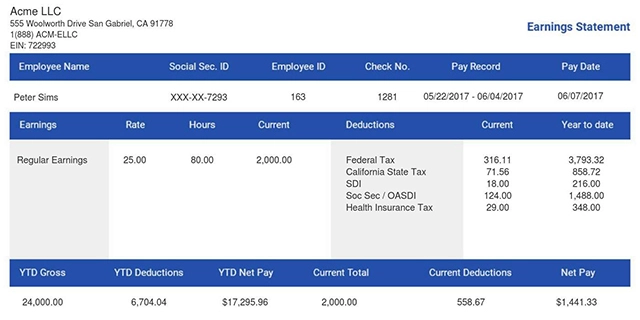
- 1. Enter Your Information

- 2. Select Your Favorite Theme

- 3. Download Your Stub!

 By
By