

What Is Base Pay? Definition, Examples, and 2026 Rules
 By
By
Your offer letter said $22 an hour. Your first paycheck says something smaller, and nothing on the stub matches what you agreed to. That gap is where pay confusion starts.
So what is base pay, exactly? It is the fixed rate underneath everything else on your paycheck. This guide covers the definition, what base pay leaves out, how to calculate it for hourly and salaried workers, where to find it on a pay stub, and why lenders ask about it.
Key Takeaways
- Base pay is the fixed hourly rate or annual salary you agree to, before anything else is added
- Overtime, bonuses, commissions, tips, and benefits sit on top of base pay, not inside it
- Base pay is a pre-tax figure, so your take-home pay will always be lower
- Overtime is calculated from your regular rate, which starts with base pay
- What Is Base Pay?
- What Base Pay Includes and What It Leaves Out
- Base Pay vs Gross Pay vs Net Pay
- How to Calculate Base Pay
- What Is Annual Base Salary?
- Where to Find Base Pay on Your Pay Stub
- Who Receives Base Pay?
- What Is Minimum Base Pay?
- What Determines Your Base Pay
- Why Base Pay Matters for Proof of Income
What Is Base Pay?
Base pay is the fixed amount an employer agrees to pay you for your work, stated as an hourly rate or an annual salary. It is the guaranteed part of your paycheck. Base pay excludes overtime, bonuses, commissions, tips, and benefits, and it is calculated before taxes.
Search for base pay meaning and you will see it called a base rate, base wages, or basic salary. So what does base pay mean day to day? Work your scheduled hours and that amount is owed to you.
What Does Base Salary Mean?
The base salary meaning is the same idea expressed as a yearly figure rather than an hourly one. So what is base salary? It is base pay for someone paid a set amount per year instead of by the hour. Employers use base pay for hourly roles and base salary for salaried ones, but the promise is identical. Loan and rental forms often say base income instead. If you are asking what is base income, it is that same fixed figure. You may also see it written as one word, basepay, on job boards.
What Base Pay Includes and What It Leaves Out

Base pay covers one thing: the hourly rate or annual salary in your agreement. Everything else is additional compensation on top.
What Sits on Top of Base Pay
- Overtime pay for hours worked past 40 in a week
- Bonuses, whether signing, quarterly, or performance based
- Commissions and sales incentives
- Tips and gratuities
- Shift differentials for nights, weekends, or holidays
Base Pay vs Total Compensation
Two offers with identical base pay can be worth thousands apart. Total compensation is the full value of the job: base pay plus everything above, plus employer-paid benefits. Health premiums, a 401(k) match, paid time off, and equity never show up in your base pay figure. The base compensation meaning is the same thing, just phrased more formally.
Base Pay vs Gross Pay vs Net Pay
These three terms describe the same paycheck at three stages.
| Term | What it covers | Example |
|---|---|---|
| Base pay | Your fixed rate only | $880 for a 40-hour week at $22/hour |
| Gross pay | Base pay plus all extra earnings | $1,012 after four hours of overtime |
| Net pay | Gross pay minus taxes and other deductions | Roughly $790 deposited |
Is base pay the same as gross pay? Not quite. Gross pay, or gross salary for salaried roles, includes base pay plus overtime, bonuses, and tips. So it moves from one period to the next. Your base rate stays put. Net pay is what remains after withholding and other deductions.
Is Base Pay Before or After Taxes?
Before taxes. Base pay is always a pre-tax figure, so the $22 an hour or $45,760 a year in your offer letter is what you earn before any withholding. Federal and state income tax, Social Security, Medicare, and benefit premiums come out later. That is why your deposit is smaller.
Another way people ask this: does base pay include taxes? It does not. The same holds for salaried roles, so if you are wondering is base salary before or after taxes, the answer is before.
How to Calculate Base Pay

Hourly Base Pay Formula
Hours worked per week x 52 weeks x hourly rate = annual base pay.
A barista working 25 hours a week at $17 an hour earns $22,100 a year in base pay.
Salaried Base Pay Formula
Annual salary divided by pay periods per year = base pay per paycheck.
A manager on $65,000 paid twice a month receives $2,708.33 each pay period.
Worked Example: One Paycheck, Start to Finish
Take a warehouse associate earning $22 an hour, 40 hours a week.
- Weekly base pay: $22 x 40 = $880
- Annual base pay: $22 x 40 x 52 = $45,760
- Four overtime hours at $33 (1.5 x $22): $132
- Gross pay for that week: $1,012
Note where the overtime rate comes from. Overtime is 1.5 times your regular rate, which starts with base pay but also folds in shift differentials and nondiscretionary bonuses. If that associate earns a $2 an hour night differential, overtime is based on $24, not $22. Treating the two as one number is a common, expensive mistake.
What Is Annual Base Salary?
Annual base salary is your fixed rate expressed as a yearly figure, before bonuses, overtime, or benefits. If you earn $4,000 per pay period and are paid twice a month, your annual base salary is $96,000. It is the number on your offer letter, not what you actually take home.
The annual base salary meaning is straightforward: what you earn for a year of scheduled work, with nothing added. So what is annual base pay? The same figure, phrased for hourly roles. New hires often ask what is a base salary when a listing quotes a range; it is the fixed part, not the top.
Where to Find Base Pay on Your Pay Stub
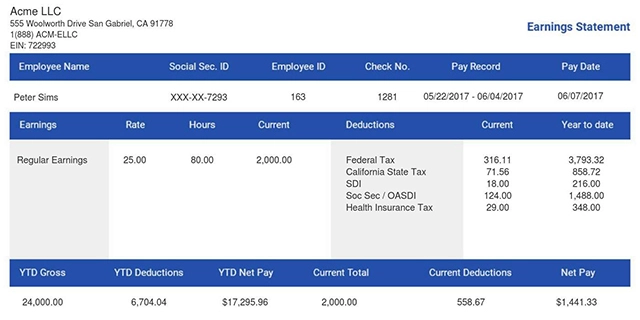
Your pay stub rarely prints the words base pay; it shows the components instead. Look in the earnings block near the top. You will find a line labeled Regular, Reg, or Regular Hours. It has three columns: a rate, the hours worked, and an amount. The rate column is your base pay. Multiply it by the hours column for your base earnings. Overtime, tips, and bonuses appear as separate lines below, and the total of all lines is gross pay.
Stub doesn't match the offer letter? It is almost always one of three things: pre-tax deductions, a partial first pay period, or an annual figure compared to a per-period one. Check the pay period dates before assuming an error.
Who Receives Base Pay?
Almost every employee does. Hourly workers receive base pay as a rate per hour, salaried employees as a fixed annual amount, and part-time, contract, commissioned, and tipped workers all have a base rate too. How it is expressed changes with the role; the guaranteed foundation does not.
One legal line splits the group. Under the Fair Labor Standards Act, non-exempt employees must receive minimum wage plus overtime past 40 hours a week. Exempt employees generally do not. To be exempt, a worker must earn at least $684 a week and do executive, professional, or administrative work. Misclassifying someone to dodge overtime creates back-wage liability.
What Is Minimum Base Pay?
Minimum base pay is the lowest hourly rate or salary an employer can legally pay you. The federal floor is $7.25 an hour in 2026, unchanged since 2009 per the Department of Labor. But many states and cities set higher minimums, and whichever is highest applies. Tipped workers can be paid a $2.13 cash minimum if tips close the gap.
So what does minimum base pay mean for an employer? Checking three floors, not one. A tipped employee can be paid the $2.13 cash minimum only when tips bring total earnings to the full minimum wage for every hour worked; otherwise the employer makes up the difference. Minimums move, so a compliant rate can fall behind.
What Determines Your Base Pay
Employees often ask what is a base pay rate based on. Employers weigh a short list:
- Experience, education, and certifications for the role
- Geographic location and local cost of living
- Market rates for the same work, per Bureau of Labor Statistics data
- The budget approved for that position
- What current employees in similar roles already earn
The Equal Pay Act requires equal pay for equal work, so paying two people differently for the same job needs a documented reason. For an owner, the rule is consistency. The base pay in the offer letter, the payroll record, and the pay stub should match. Those are the documents compared in a dispute.
Why Base Pay Matters for Proof of Income
Base pay stops being abstract the moment someone asks you to prove what you earn.
Landlords and lenders reviewing loan applications ask for income, and applicants usually quote base salary because it is the figure they remember. Underwriters work from documented gross pay across recent pay periods. If you earn overtime or commission, that number is bigger. Quote base pay when a form asks for your guaranteed rate, and supply proof of income documents when it asks for actual earnings.
Some forms use the phrase base income. The base income meaning there is the same: your fixed, documented earnings.
Business owners should expect these requests for their team. Clean, consistent pay stubs answer them in one step, for your own records or an employee's.
You Might Also Like
- How to Calculate Your Hourly, Weekly, and Monthly Income
- How to Calculate W-2 Wages From a Pay Stub
- What Gross Monthly Income Means
- Self-Employed? How to Show Proof of Income
- Employment Verification and Proof of Income Documents
Conclusion
Base pay is the anchor. Everything on a paycheck is built on top of it or subtracted from it, and once you can trace your base rate through gross pay to the deposit, the confusion clears.
For workers, that means knowing which number to quote on a rental or loan application. For owners, it means offer letters, payroll records, and stubs that agree.
Need documentation that reflects all of it? Create accurate pay stubs at ThePayStubs.com in a few minutes, for yourself or your whole team.
- 1. Enter Your Information

- 2. Select Your Favorite Theme

- 3. Download Your Stub!

 By
By