

Contract to Hire: How It Works and How You Get Paid
 By
By
You get an offer, and the title says contract to hire. Is that a real job, or a temp job with a nicer name?
It is a real job with a trial period attached. You work a set number of months, then both sides decide whether to continue.
The part nobody explains is the money. Who signs your paycheck, and which tax form arrives in January. Employers who create pay stubs for new staff ask the same things in reverse.
This guide covers what the arrangement means, how it runs, how you get paid, and what changes the day you convert. The employer side is here too.
Key Takeaways
- A fixed-term job that can turn permanent, usually after three to twelve months.
- A staffing agency is normally your employer during the contract, so it runs payroll and sends your W-2.
- Most of these roles pay hourly, which means overtime past 40 hours in a workweek.
- Benefits, pay basis and your employer name can all change on conversion day, so ask first.
- What Is Contract to Hire?
- How Does Contract to Hire Work?
- Contract to Hire vs Direct Hire vs Contract Work
- How You Get Paid During the Contract
- Turning Your Hourly Rate Into a Salary Number
- How to Prove Your Income While You Are on Contract
- Pros and Cons of Contract to Hire
- What Employers Need to Get Right
- Questions to Ask Before You Accept a Contract to Hire Position
- Conclusion: Making the Call
What Is Contract to Hire?
Contract to hire is a job that starts as a fixed-term contract and can turn into a permanent position if both sides want it. Most run three to twelve months. During the contract, a staffing agency usually employs and pays you, then the company decides whether to bring you on directly.
Job ads call it temp to hire, contract hire, or contract for hire, depending on the agency. Same arrangement, different label.
So what does contract to hire mean for you? It is a chance to test the job before you commit. The contract to hire meaning is the same on both sides: a trial that goes in writing. For an employer, it is a working interview with a clear end date.
How Does Contract to Hire Work?

Contract to hire works in five stages: you agree on an hourly rate and a contract length, you work the assignment, the employer evaluates your performance, the company decides whether to offer a permanent role, and you transition onto its payroll. The staffing agency issues your paychecks until that final stage.
- Agreement. You settle on an hourly rate and a length. A contract to hire staffing agency signs you on, not the company.
- Working phase. You do the job on site. Your hours go to the agency, and the agency pays you.
- Evaluation. The company tracks your work. You judge the team and the culture.
- Decision. Near the end date, the company makes an offer, extends the term, or lets it close.
- Transition. If you accept, you move onto the company payroll.
The contract to hire process is the same whether the assignment runs 90 days or a full year. Only the runway changes.
Contract to Hire vs Direct Hire vs Contract Work
| Contract to Hire | Direct Hire | Contract Work | |
|---|---|---|---|
| Who employs you | A staffing agency | The company | You, or an agency |
| Who pays you | The agency | The company | The client |
| Year-end tax form | W-2 from the agency | W-2 from the company | 1099-NEC if self-employed |
| Benefits | Limited, via the agency | Full, from day one | None |
| Typical length | 3 to 12 months | Ongoing | The project |
| End state | Offer, extension, or close | Permanent employment from day one | Project ends |
Contract work ends when the project ends. Direct hire skips the trial. The middle option is the only one where a permanent role is the stated goal. Listings that say contract temp to hire describe the same thing.
Do not mix these up with independent contractor gigs. Agency workers are employees, so the agency withholds their taxes. Contractors handle their own, and the IRS sets that test. That 1099 versus W-2 line decides who pays which taxes.
How You Get Paid During the Contract

The staffing agency is your employer of record. That is the part most people miss. The company you report to each morning does not run your payroll. The agency pays you, withholds your taxes, and bills the company for your hours plus a markup.
Three things follow:
- You are usually paid hourly. Salaried contract roles exist, but hourly is the norm for these hires.
- Overtime applies. Past 40 hours in a workweek you earn time and a half under federal overtime rules.
- You get a W-2, not a 1099. You are the agency's employee, not a contractor, and filing with both forms is the most common mix-up in contract to hire jobs.
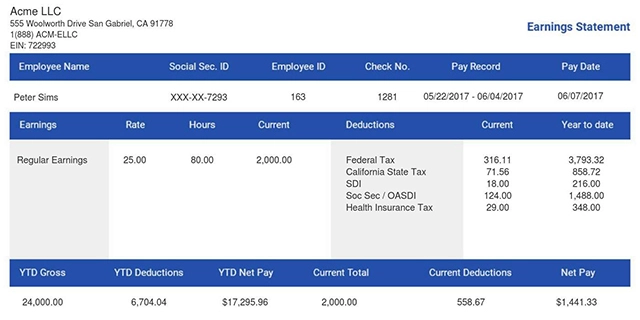
Your pay stub lists the agency as the employer, your hourly rate, regular and overtime hours, and the usual withholding. The benefits block is thinner than a permanent employee's.
What Changes on Your Paycheck When You Convert
Agencies call the switch contract to direct hire, and it reaches further than a new job title. The employer name on your stub switches from the agency to the company. Your pay may move from hourly to salaried. New deduction lines appear for health insurance and retirement. Convert mid-year and you get two W-2s in one tax year, one from each employer.
Read that first stub line by line. First runs after a payroll change are where errors turn up.
Turning Your Hourly Rate Into a Salary Number
Before you accept a permanent offer, run the contract to hire salary conversion yourself.
The math is quick. Multiply your hourly rate by 2,080, the work hours in a standard year. A $35 rate works out to $72,800 a year gross, the same way you calculate annual wages from a pay stub.
Here is the catch. The salary on the table is often lower than that figure, and that is not always a worse deal. Your agency rate carried no health plan, no paid time off and no retirement match. Those cost real money, and they come out of the same budget. So compare total value. Ask what the health premium costs per pay period, how much time off you get, and whether the company matches retirement contributions.
How to Prove Your Income While You Are on Contract
Landlords and lenders want steady income. A short contract period makes that harder to show, even when you earn well.
Four documents do most of the work:
- Recent pay stubs. Usually the last two or three, and the first thing a landlord asks for.
- An employment verification letter. The agency confirms your role, rate and start date.
- Your signed contract. It puts the term and the rate in writing.
- Bank statements. Deposits back up everything above.
Mortgage underwriting is the strict one. A lender may treat a fixed-term assignment as less stable and ask for a longer history, which is why pay stubs matter so much on loan applications.
One habit saves trouble. Save every stub from day one. The agency holds those records after the assignment closes, and copies take time to get.
Pros and Cons of Contract to Hire
Pros
- Both sides get a trial. You learn the job before you commit, and the employer sees real work instead of interview answers.
- You start sooner. Contract roles clear approval faster than permanent headcount, so in 2026 they often reach the job market first.
- It builds your record. Even with no offer, you leave with new skills and references.
- It lowers hiring risk. A poor fit ends at the contract date, not in a firing.
Cons
- No guaranteed offer. Budgets move, and a strong review does not equal a job.
- Thinner benefits. Agency plans are limited, and your months on contract may not count toward accrual.
- Less of a foothold. Contract staff get left out of planning and team decisions.
- Turnover risk. Employers lose good people who keep interviewing during the trial.
What Employers Need to Get Right
If you are working out how to hire contract employees at any scale, most of the risk sits in the paperwork.
The agreement should cover duties, the contract length, the pay rate and benefits, how performance is judged, how either side can end it early, and any confidentiality terms.
At conversion the worker moves onto your payroll, so you need a fresh Form W-4 and a new Form I-9. Their first stub under your name has to be correct, and pay stub rules vary by state.
The expensive mistake is classification. Treating someone as a contractor when they work as an employee can leave you paying back payroll taxes, unemployment taxes, interest and penalties. Have a lawyer review your agreement once, then reuse it.
Questions to Ask Before You Accept a Contract to Hire Position
Ask these before you sign:
- What is the contract to hire conversion rate here, meaning how many contractors get offers?
- How long is the term, and can it be extended?
- Is the permanent salary different from my agency rate?
- Which benefits do I get during the contract, and when do they start?
- Will these months count toward paid time off and retirement vesting?
- What happens if no permanent role opens?
A good recruiter answers all six without hedging. Vague answers are the signal.
You Might Also Like
- Self Employed? Here's How to Show Proof of Income
- Employment Verification and Proof of Income Documents
- Proof of Income Documents: 6 Instances You'll Need a Pay Stub
- How to Create a Self Employed Pay Stub
- What Does a Pay Stub Look Like?
Conclusion: Making the Call
So is contract to hire a good idea? For most people, yes, as long as you go in with the numbers in front of you. Know who employs you, know which tax form is coming, know what the permanent offer is worth, and keep every stub along the way.
Employers get the same advice in reverse. A clear agreement and clean payroll records turn a trial period into a hire instead of a dispute.
Running payroll for contract or permanent staff? ThePayStubs.com builds accurate pay stubs in about two minutes, with the tax math handled.
- 1. Enter Your Information

- 2. Select Your Favorite Theme

- 3. Download Your Stub!

 By
By