

What Is Pay As You Go Workers Comp? 2026 Guide for Small Business Owners
 By
By
Pay as you go workers comp ties your workers' compensation premium to your real payroll. Instead of one big upfront deposit, you pay a small amount on each payroll run. Your premium follows your actual payroll figures, not a guess made months ago. This 2026 guide explains how it works, who it helps, and how to set it up. A paystub generator makes the payroll records your insurance carrier needs easy to produce.
Key Takeaways
- Pay-as-you-go workers comp links your premium to actual payroll each pay period.
- There is no large upfront deposit or lump sum to start coverage.
- Real-time payroll data keeps your year-end audit corrections small.
- NEXT Insurance sells pay as you go billing through payroll providers like Gusto and ADP.
- It is not sold in the four monopolistic states that run their own workers comp funds.
What Is Pay As You Go Workers Comp?
Pay as you go workers comp is a way to pay your workers comp premiums based on real wages. Traditional workers comp asks for a big down payment at the start. That deposit is based on your estimated annual payroll for the year ahead.
Pay as you go works differently. It uses your actual payroll each pay period to set the premium. So there is no large lump sum built on a rough guess. The workers' compensation coverage is the same. Only the billing changes.
Pay-As-You-Go vs. Traditional Workers' Comp

Both options give your business and your workers the same protection. Workers comp covers medical expenses, lost wages, and disability costs after a workplace injury. The difference is how you pay.
| Traditional Workers' Comp | Workers Comp Pay As You Go | |
|---|---|---|
| Premium calculation | Based on estimated annual payroll | Based on actual payroll each period |
| Upfront cost | 25 to 100% deposit at policy start | Usually no large deposit |
| Year-end audit | Required, often with large corrections | Required, with near-zero corrections |
| Billing | One or a few large payments | Small premium payments each payroll |
Pay as you go does not lower your total workers comp insurance cost. It only changes the timing of your premium payments.
Pay-As-You-Go Workers' Comp Benefits
Better cash flow
Skipping the big deposit frees up cash. You keep that money in your business for payroll, hiring, or new equipment. Better cash flow matters most for small business owners with thin margins.
Accurate premiums
Your insurer always has your latest payroll data. So you do not overpay from a high estimate. Your premium tracks your real wages all year long.
Automated payments
Your payroll software can send payroll data to your carrier each cycle. Premiums are then deducted automatically. These automated payments keep you current with no extra work. This payroll data integration removes a real administrative burden. Our pay documentation guide shows how to keep clean records.
Fewer audit surprises
You still get a year-end audit. But because billing tracks your real payroll all year, the end of year audit finds few changes. A pay-as-you-go workers comp audit rarely brings a big bill.
NEXT Workers' Comp Insurance for Small Businesses

NEXT Insurance sells next workers comp insurance to small businesses online. Coverage reaches sole proprietors, freelancers, and firms with up to about 50 employees. You can apply in a few minutes. If you already use a payroll platform like Gusto, ADP, or Homebase, NEXT can sync your payroll data and bill you each cycle. For many owners, next workers comp is the simplest way to start.
Who Should Use Pay As You Go Workers Comp?
This plan fits businesses with changing payroll. Contractors who staff up and down avoid a surprise bill from a fixed annual estimate. Many save 20% or more this way.
Use this rule of thumb. With fewer than 10 employees, pay as you go is usually cheaper. With 25 or more full-time staff, compare a few quotes first. It works well for construction, hospitality, restaurants, food processing, and farming. Firms that hire subcontractors benefit too.
How to Set Up Pay-As-You-Go Workers' Comp
Setting up pay as you go workers compensation insurance takes four steps:
- Ask your insurance carrier if they offer pay as you go billing.
- Check that your payroll system is supported. Most payroll providers, like ADP, Paychex, or QuickBooks, track workers comp hours.
- Share your employee payroll class codes with the carrier.
- Set up automated payments from your account on each payroll run.
Meeting these employer requirements is simple once payroll data integration is live. This billing is not sold everywhere. In a few monopolistic states, workers comp must come from a state fund instead of a private carrier. Check your state workers comp and pay stub laws before you apply.
You Might Also Like
- How to Tell If a Pay Stub Is Real or Fake
- What's the Difference Between Payroll and Compensation?
- Pay Stubs for Employment Verification and Proof of Income
- How to Read Pay Stub Deduction Codes
- Pay Period Breakdown: What It Means and How It Works
Conclusion
Pay as you go workers comp ties your premium to real payroll, not a yearly guess. For small business owners with changing staff, it means better cash flow, fewer audit surprises, and simple billing. Accurate pay records make it all work. Create the stubs your carrier needs with our pay stub generator and stay ready for every payroll run.
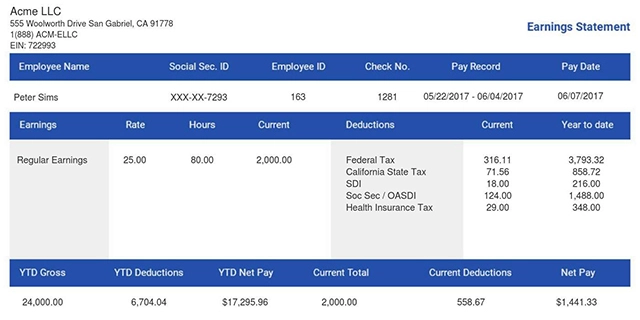
- 1. Enter Your Information

- 2. Select Your Favorite Theme

- 3. Download Your Stub!

 By
By