

Retail Payroll: Complete Guide for Business Owners (2026)
 By
By
Retail payroll is one of the hardest parts of running a store. You deal with variable shifts, tip credits, and high turnover. You also juggle seasonal staff and tax rules in many states. Generic payroll advice rarely fits the sales floor.
This guide makes it simple. We cover labor costs as a share of sales. We explain overtime, tip rules, and compliance. We also show how to create accurate pay stubs for your workers. Your staff can use these stubs to prove income for an apartment, a car loan, or a lease.
Key Takeaways
- Your labor costs should sit between 15% and 30% of total retail revenue. Anything above 35% often signals a scheduling or pay problem.
- The FLSA requires overtime pay at 1.5 times the regular rate for hours worked over 40 per week.
- Misclassifying workers as independent contractors is the most common retail payroll mistake. It can bring heavy penalties.
- Good software updates tax rules for you. It also cuts errors when your staff changes often.
- Use retail pay stubs as proof of income for apartment, car, or lease applications.
What Is Retail Payroll?
Retail payroll is how a store pays its workers the right way. It means you calculate each worker's earnings and take out the correct taxes and withholdings. Then you pay each person on time.
Retail has a mixed workforce. Many workers are hourly or part-time. Some earn tips or sales commissions. A large share are seasonal staff. Most are non-exempt, so they earn overtime. Overtime is 1.5x their normal rate for hours worked over 40 per week.
No two retail establishments look the same. You may have full-time, part-time, and temporary staff. They can work across several stores and several states. Hours change weekly, and turnover is high. This is the reality that makes retail payroll harder than most guides admit.
Types of Retail Payroll Management

Retailers have three main ways to run payroll. You can use in-house software, an outsourced service, or a PEO. Start with a clear plan and pick the option that fits your size.
In-House Payroll Software
With in-house software, you enter each worker's hours and pay rate. The software then does the math for you. It figures gross wages and the federal and state taxes to withhold. It tracks health insurance and other benefit deductions. It also tracks overtime and double-time pay. You can also add direct deposit details for each worker.
This works best for a small store run by hands-on owners. The software costs $25 to $200 per month. You also pay $4 to $10 per worker each month. So, a store with 15 workers might pay $50-$600 per month.
Outsourced Retail Payroll Services
The next option is an outsourced payroll company. Here, a third party runs payroll for you. They calculate taxes, make withholdings, and send direct deposits. This service usually costs $40 to $150 per month as a base fee.
On top of that, you pay $2 to $15 per employee each pay period. It works well for stores with 20 or more workers. It also helps if you run multiple locations.
Professional Employer Organizations (PEOs)
A PEO goes a step further. It handles your full HR workload, not just pay. That includes benefits and risk management. The PEO acts as a co-employer with your store. It then runs payroll, employee relations, and benefits for you.
There are clear upsides. You hand off admin work and focus on selling. There are costs, too. In 2017, NAPEO reported the average PEO cost was $1,395 per employee per year. It also reported an average return on investment of 27.2%. A PEO suits retail executives who would rather not run a back office.
What Should Retail Payroll Cost?
Labor is your highest variable cost, so you need to watch it closely. The key number is your labor-to-sales ratio. The formula is simple. Divide total labor costs by total sales. Then, multiply by 100 to get a percent.
Most retailers land between 15% and 30%. Grocery stores often run lower, around 10% to 15%. Restaurants and food service can hit 25% to 35% or more. A ratio above 35% is a warning sign. It can mean you are overstaffed or paying too much.
Wages are not the only labor cost. Many retailers miss the smaller fees. Year-end W-2 runs can cost $50 to $75. Filing taxes in extra states can add $20 to $30 per state. Each direct deposit can cost $1 to $2. Off-cycle pay runs for terminations add up, too. These hidden fees take a bite out of your budget. Track your costs all year so they do not catch you off guard.
How To Manage Retail Payroll Effectively

Clean payroll records take time, but good habits save you money and stress. Retailers must consistently track hours to stay accurate. Here are five steps that help:
1. Choose Integrated Time Tracking
You need a time system to track hours and labor costs. Link your time clock to your payroll software. Then hours flow in on their own. Modern tools track time through mobile apps and geo-fenced terminals. Geo-fencing only counts time for staff who are on-site. This stops buddy-punching. It also flags overtime before the next pay run.
2. Automate Tax Calculations and Filings
A good payroll system handles federal and state tax withholding. It covers all 50 states. It also tracks your Form 941 returns. These are due April 30, July 31, October 31, and January 31. The system files year-end W-2s with the Social Security Administration by January 31. Late filings bring automatic IRS penalties, so timing matters.
3. Document Your Payroll Policies
Write down clear rules for common pay situations. Cover who is eligible for overtime. Explain how staff report tips. Add steps for direct deposit setup and sales commissions. Include how final checks are delivered to former workers. Put these policies in your new-hire orientation. That way, your whole team follows the same payroll framework.
4. Maintain Compliance Records
The FLSA requires you to keep records for each worker for three years. You can store them on paper or in your software. Check how long your software keeps the data. Good records help you remain compliant and ready for any audit.
5. Pick Software With Strong Security
Payroll files hold sensitive information. This includes Social Security numbers and bank details. So, choose software with robust security. Look for clear security measures, such as encryption and access controls. Strong reporting tools help, too.
They let you watch labor costs and catch errors fast. Good customer support matters when a pay run goes wrong. The right tools boost efficiency and give small stores an edge.
Retail Payroll Compliance: What You Must Know
Worker classification causes the biggest compliance risk. One wrong call can trigger a Department of Labor audit. That audit can then cover your whole staff. So, get classification right from day one.
Overtime and Minimum Wage Rules
All non-exempt workers earn overtime. The FLSA sets it at 1.5x the regular rate for hours over 40 in a week. The federal minimum wage is $7.25 per hour. Some states and cities set a higher rate. When they do, you must pay the higher wage.
Tipped workers follow a special rule. The federal minimum cash wage is $2.13 per hour. Tips must bring their pay up to $7.25 per hour. If they fall short, you must pay the gap. For example, a worker who earns $2.13 in cash needs $5.12 in tips per hour. That brings them to the $7.25 minimum. The Equal Pay Act also applies. It says men and women must earn equal pay for similar work.
FICA, Tax Deductions, and Filing
FICA taxes equal 15.3% of wages. You and the worker split it in half. Each side pays 7.65% for Social Security and Medicare. You also handle federal income tax using the FIT taxable wages (see FIT taxable wages).
FUTA tax is 6% on the first $7,000 of each worker's wages. You pay that one alone. Misclassifying workers to dodge FICA is the most audited issue in retail.
Predictive Scheduling and Record Retention
Some cities and states have predictive scheduling laws. These laws cover variable and on-call shifts. They require you to give staff advance notice of their schedules, often two weeks. These rules apply in Chicago, Philadelphia, San Francisco, Seattle, California, New York, Oregon, and Illinois.
Short notice can bring steep fines. Under the FLSA, you must also keep worker records for at least three years.
Managing Seasonal and Part-Time Retail Staff
Holiday hiring brings a rush of new workers. The same payroll issues show up each year. So, plan ahead before peak season starts.
Set up your onboarding before you hire seasonal staff. Have each worker submit tax forms and bank details. Your time and scheduling software should track their hours. It should also apply to overtime and any shift differentials. The rules are the same for holiday workers and your core team. FLSA protections do not change.
Use your sales data and foot traffic to plan staffing. This shows when you need the most help. Flexible part-time workers let you maintain high quality without overspending. Keep seasonal records for three years, just like regular staff.
Payroll for Retail Employees: Getting Proof of Income
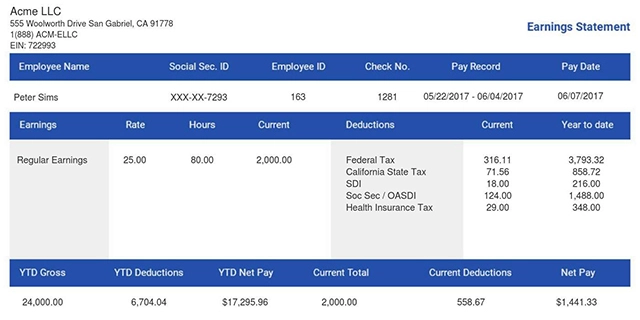
Many retail workers are part-time, hourly, or tipped. Their pay stubs serve as proof of income. They use them for apartments, auto loans, and credit checks. Good payroll for retail makes these stubs easy to reach.
Most retail payroll systems include a self-service portal. Tools like Gusto, ADP, QuickBooks Payroll, and Paychex all offer one. Workers log in and download their own pay stubs as PDFs. Tell your staff to save each stub as the pay period closes. A cloud folder like Dropbox, OneDrive, or Google Drive works well. Then the stubs are ready whenever a landlord or lender requests them.
Sometimes, a worker cannot get a digital stub from an employer. In that case, they should check the list of accepted proof-of-income documents. Other records may serve as a substitute for a pay stub.
You Might Also Like
- How to Get a Pay Stub From Direct Deposit
- How to Calculate Your Hourly, Weekly, and Monthly Income
- Pay Period Breakdown: Types and How They Work
- How to Read Pay Stub Deduction Codes
- How to File Taxes With Your Last Pay Stub
Conclusion
Retail payroll covers many moving parts. You pay wages, handle taxes, and stay within the law. You also track labor costs against sales. That ratio shows where to adjust scheduling or hiring. Strong records protect your store in an audit. They protect your workers as well. The good news is that you do not have to do it alone. The right tools and habits keep you compliant and efficient. Retail executives and retail administrators both win when payroll runs clean.
Need pay documentation fast? A reliable paystub generator helps you create accurate proof-of-income documents in minutes.
- 1. Enter Your Information

- 2. Select Your Favorite Theme

- 3. Download Your Stub!

 By
By