

What Is Social Security Wages on W2? (2026 Guide)
 By
James Wilson
By
James Wilson What is Social Security wages on W2 forms? It's Box 3 on your Form W2. Many people confuse it with Box 1, which is the federal wages.
Employees and small business owners using a pay stub generator often get this wrong. Understanding "What is Social Security wages on W2?" can help you verify payroll accuracy. It also confirms FICA duties and protects future Social Security benefits.
This article explains everything you need to know about Social Security on W2 forms.
Key Takeaways
-
What are Social Security wages on W2? They are earnings subject to the 6.2% Social Security (OASDI) tax under FICA, reported in Box 3
-
Found in Box 3 of your Form W2, which may differ from Box 1 (federal wages)
-
The 2026 wage base limit is $184,500. Earnings above this cap are not taxed.
-
Employers match your 6.2% in FICA taxes, for a combined 12.4% total
-
On your pay stub, the deduction appears as OASDI or OASDI/EE
- What Is Social Security Wages on W2?
- What Counts as Social Security Wages on W2?
- How To Calculate Social Security Wages
- What Is Social Security Wages on W2: Box 3 Explained
- Are Social Security Wages the Same as Gross Income?
- How Social Security Wages Appear on Your Pay Stub (OASDI)
- You Might Also Like
- In Conclusion
What Is Social Security Wages on W2?
What is Social Security wages on W2? These are your earnings subject to the 6.2% OASDI tax. This tax is part of the Federal Insurance Contributions Act (FICA). Your employer reports the total in Box 3 of your Form W2.
What are Social Security wages on W2 from an employer's view? The same idea. It is the gross pay that your company must apply FICA tax withholding to. For 2026, the wage base limit is $184,500. Earnings above this cap are not taxed for Social Security.
Social Security tax is one of the two FICA withholdings. The other is the Medicare tax. Together, they fund retirement, disability, and survivor benefits. The Social Security Administration runs these programs.
What Counts as Social Security Wages on W2?
Most employee pay is included, but not everything qualifies.
Included in Social Security Wages
-
Salaries, hourly wages, bonuses, and commissions
-
Tips exceeding $20 per month
-
Paid time off and sick leave
-
Elective 401(k) contributions (these reduce taxable income, but you still owe Social Security tax)
-
Non-cash pay and payments in-kind
Not Included in Social Security Wages
-
Employer Health Savings Account (HSA) or retirement plan contributions
-
Employer-paid health and accident insurance
-
Reimbursed travel expenses (within IRS limits)
-
Workers compensation benefits
-
Tips under $20 per month
-
Wages paid to family employees under age 18
-
Earnings above the $184,500 wage base
-
Nontaxable fringe benefits (like group life insurance under $50,000)
How To Calculate Social Security Wages

Here's how to calculate Social Security wages from paystub data:
Start with gross pay. Then subtract excluded items like HSA contributions, travel costs, and workers' compensation. Multiply the result by 6.2%.
For example:
$3,700 × 6.2% = $229.40 in tax withholding per paycheck. Your employer matches this amount.
Not sure how to figure Social Security wages for one pay period? Here's an example:
Maria earns $3,500 per month and an additional $200 bonus. Her Social Security wages total $3,700. OASDI withholding is $229.40. To calculate Social Security wages from paystub after the fact, divide the OASDI amount by 0.062.
Small business owners should ensure to check each Form W2 before sending it. Make sure the Box 3 total equals the year's OASDI from all pay stubs in the payroll. This catches errors before you release the forms.
What Is Social Security Wages on W2: Box 3 Explained
Your Social Security wages W2 Box 3 total may differ from Box 1 (federal wages). The most common reason is 401(k) contributions. These are excluded from federal income tax in Box 1. However, they still count as Social Security wages in Box 3. The SSA uses Box 3 to set your future retirement benefits and disability benefits.
If Box 3 is greater than Box 1, this is normal. Pre-tax retirement funds reduce federal taxable income. They do not reduce Social Security taxable wages.
Are Social Security Wages the Same as Gross Income?

Social Security wages and gross income are not the same. Gross income includes all sources of income. These include wages, investments, pensions, and dividends. Social Security wages only cover earned income under FICA. This leaves out HSA funds, retirement plan funds, and workers' compensation.
For example, a software engineer earning $220,000 has Social Security wages capped at $184,500. A freelance designer earning $80,000 owes tax on all of their gross wages.
How Social Security Wages Appear on Your Pay Stub (OASDI)
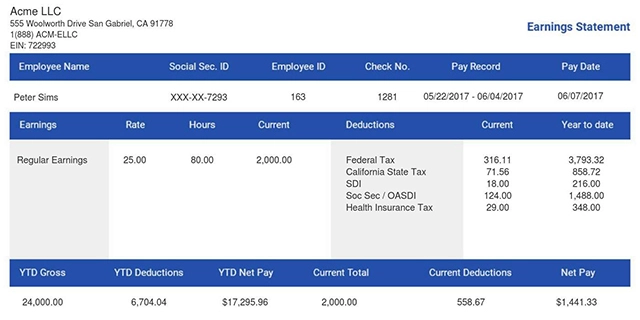
Looking for Social Security wages on pay stub? You won't see that label on your pay stub. Look for OASDI or OASDI/EE instead. OASDI means Old Age, Survivors, and Disability Insurance. It is the formal name for Social Security.
Each pay period, OASDI equals Social Security wages times 6.2%. If the math does not match gross pay times 6.2%, an excluded item likely cut your taxable base. Common exclusions include HSA funds and fringe benefits.
These per-paycheck deductions add up to Box 3 of your W2. See a full list of FICA deductions at ThePayStubs.com.
You Might Also Like
In Conclusion
Understanding "What is Social Security wages on W2?" makes tax filing clearer. Box 3 on Form W2 tracks your FICA earnings. It shapes your future retirement benefits. For self-employed workers, the same rules apply via Schedule SE for self-employment income. If you work abroad, Totalization Agreements may change your FICA taxes. For detailed rules, see IRS Publication 15 (Circular E).
Whether you get a W2 or make pay stubs for your team, correct OASDI tracking prevents surprises. Use a trusted paystub generator to itemize deductions on every pay stub.
- 1. Enter Your Information

- 2. Select Your Favorite Theme

- 3. Download Your Stub!


 By
By