

Can You Add Someone to a Lease? A 2026 Guide
 By
James Wilson
By
James Wilson Life changes fast. A partner moves in, or a roommate joins to split the rent. A family member needs a place to stay. When any of that happens, you'll ask, "Can you add someone to a lease that's already signed?
In most cases, yes. A lease is a legally binding contract. You'll need your landlord's written approval first. A formal document update comes next. The new person must provide pay stubs or other proof of income to be approved. Skipping landlord consent is a lease violation and can lead to eviction.
This guide covers the full process. You'll learn the approval steps, tenant screening rules, income documents, and how to handle a refusal when you want to add to the lease.
Key Takeaways
- Yes, you can add someone to a lease, but only with landlord approval and a signed lease addendum.
- The new person must pass the same tenant screening as the original tenants. That means a credit check, a background check, and income verification.
- Local occupancy limits follow the HUD standard of 2 people per bedroom. Check before you request.
- Joint and several liability means both tenants are liable for the full rent, not just their own share.
- Key Takeaways
- Can You Add Someone to a Lease?
- Why Would You Need To Add Someone to a Lease?
- How Can You Add Someone to a Lease: Step by Step
- What Is a Lease Addendum?
- Can a Landlord Refuse To Add Someone to a Lease?
- Financial Responsibilities When You Add Someone to a Lease
- What Proof of Income Does a New Tenant Need?
- You Might Also Like
- Conclusion
Can You Add Someone to a Lease?
Yes, you can add someone to a lease, but only with your landlord's written approval. The new person must submit a rental application. They must also pass a background check and a credit check. Then all parties sign a lease addendum. You can't add someone on your own.
So, can you add someone to a lease with your existing contract still active? In most states, yes. You need to submit a written request. The new person fills out a rental application and passes tenant screening. If approved, everyone signs an addendum to the existing lease.
Both tenants then share full legal duty for the property. Adding a co-tenant has real legal weight for everyone on the lease.
Why Would You Need To Add Someone to a Lease?

So, when can you add someone to a lease, and why does it come up? Three common situations lead tenants to consider adding tenants to their existing lease.
- A partner or spouse moves in. Formalizing the arrangement gives them legal standing as a co-tenant, not just an occupant. That protects both of you if anything changes.
- A roommate to share costs. A co-tenant shares rent payments and gains the same legal protection as you. It's better than leaving someone as an occupant with no formal standing.
- A family member who needs housing. Being on the lease gives them renters' rights and legal standing in the unit. Landlords often view this in a good light. That's true near lease renewal, when adding someone to a fresh agreement is simpler.
From a landlord's perspective, more tenants often mean greater financial security. There's also more goodwill when you come prepared, with the new tenant's information ready in advance.
How Can You Add Someone to a Lease: Step by Step
The process typically takes 5 to 10 business days from start to finish. Here's what happens at each stage:
Step 1: Submit a Written Request
Put the request in writing to your landlord. Include who the person is. State their relationship to you. List their move-in date. Add a note on their job status. A clear written request sets the right tone. It gives the landlord what they need to make a decision.
Step 2: Verify Local Occupancy Limits
Before submitting, confirm the addition won't exceed your unit's occupancy limit. The HUD standard is 2 people per bedroom. California, Texas, and other states may set their own rules. In New York City, a rent-stabilized apartment comes with extra rules.
If you pay preferential rent, check with your landlord before you add to the lease. Your lease may also set a max number of occupants. If the addition pushes you over the limit, the landlord can legally decline.
Step 3: New Tenant Completes a Rental Application
The new person fills out the same rental application as any new tenant. Have them gather their pay stubs for the rental application in advance to avoid delays. Before going formal, run an informal background check through TransUnion SmartMove to preview the process.
Step 4: Screening
The landlord runs their standard tenant screening process. That means a background check, a credit check, and a rental history review. This takes 2 to 5 business days. Income verification runs concurrently. The new tenant must show recent pay stubs or other documents to prove they meet the income cutoff. Workers paid in cash should review what proof of income works when paid in cash first.
Step 5: Sign the Lease Addendum
Once screening is approved, the landlord or the property management company draws up the paperwork. All parties need to sign. This includes the landlord and every current tenant. In 2026, most landlords use e-signature tools like DocuSign or Avail. The process can happen remotely.
Step 6: Distribute Signed Copies
Each tenant gets a copy. The landlord keeps the original. Store yours somewhere safe. You may need it as proof of residence or in a dispute. Before the new tenant moves in, fill out a move-in checklist that notes the unit's condition.
What Is a Lease Addendum?

A lease addendum is a separate legal document. It changes or adds to an existing lease agreement. It records the new tenant's name, move-in date, and any rent or deposit changes. All parties must sign. That includes the landlord and every current tenant. Without those signatures, it isn't legally binding.
A lease addendum and a lease amendment mean the same thing. Both attach to the original lease. Both carry the same legal weight. An addendum adds new terms without replacing the original. An amendment changes existing terms.
Once signed, it becomes part of the legally binding rental agreement. The new tenant has the same rights and duties as everyone else on the lease.
Can a Landlord Refuse To Add Someone to a Lease?
Yes, landlords can legally refuse to add someone to a lease. They can say no if the applicant fails the screening. They can also say no if the request pushes past the occupancy limit. But they can't refuse based on race, national origin, religion, sex, family status, or disability. These are protected classes under the Fair Housing Act.
Under landlord-tenant law, a landlord's right to approve or deny is broad. It isn't unlimited. In 2026, HUD's familial status rules mean landlords can't refuse to add a family member just because of family size. If you think the denial was unfair, contact your local housing office or a tenant rights group.
Financial Responsibilities When You Add Someone to a Lease
Adding a tenant changes the money picture for everyone involved.
Joint and several liability means each tenant owes the full rent, not just their share. If your new roommate stops paying their $800 portion, you're still on the hook for the full $1,600. That's the risk of rent arrears. When one co-tenant falls behind on rent payments, the other is just as liable. Landlords pursue whoever is easiest to collect from. They don't split the debt.
Your landlord may also ask for a bigger security deposit to cover the new occupant. That's standard when a new tenant joins an existing lease.
Consider drafting a roommate agreement with the new tenant. It doesn't involve the landlord or change the lease. But it records how rent payments and costs are split. If things go wrong, that agreement gives you a legal basis to seek repayment.
Co-signers and guarantors work in a different way. A guarantor or co-signer promises to cover rent if you can't. They don't live in the unit. That means the money risk isn't the same.
What Proof of Income Does a New Tenant Need?
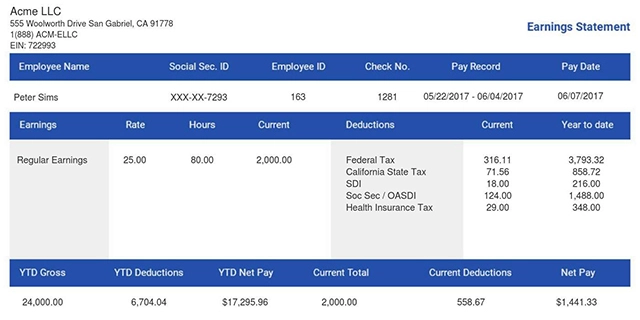
A new tenant needs the last 2 to 3 pay stubs that show a stable monthly income. That income should equal 2.5 to 3 times the monthly rent. A W-2 or 1099 works if applying mid-year. Self-employed applicants and contractors can create pay stubs at ThePayStubs.com. Most landlords accept these as valid proof of income.
Bank statements also serve as a backup when pay stubs aren't available. For example, for a $1,500 unit, the new tenant needs at least $3,750 in monthly gross income to pass income verification. Some landlords also accept an income verification letter for an apartment with pay stubs.
Freelancers, gig workers, and self-employed tenants often get stuck here. They don't get employer-issued pay stubs. See our full guide on how to show proof of income when self-employed for the best docs to use.
You Might Also Like
- Best Rent Reporting Services
- Pay Stubs for Loan Applications
- 1099 Pay Stub Guide for Independent Contractors
- Proof of Income Documents: When You Need a Pay Stub
- How to Tell If a Pay Stub Is Real or Fake
Conclusion
Can you add someone to a lease? Yes, and it's easier than it sounds. Get landlord approval in writing. Have the new tenant fill out a rental application. Pass tenant screening. Sign a lease addendum. Once done, both tenants share full legal duty for the unit going forward.
For the income verification step, your documents matter. Freelancers and contractors can use a paystub generator to show their income. Most landlords accept these pay stubs for non-traditional earners.
- 1. Enter Your Information

- 2. Select Your Favorite Theme

- 3. Download Your Stub!


 By
By