

Benefits Administrator: Duties, Salary & Hiring (2026)
 By
By
Search for what this job pays and you'll get three very different answers: $57,673, $62,000, and $136,380. That last number isn't made up. It just describes a different job, and the mix-up runs through most of what's written on the topic.
A benefits administrator runs the plans your staff use every day: health insurance, retirement, and the yearly open enrollment scramble. Each choice ends up as a deduction line on a pay stub, the same kind you can build with a pay stub generator. This guide covers what the job does, what it really pays in 2026, and how to tell if you need one, plus the payroll connection most articles skip.
Key Takeaways
- This role covers enrollment, eligibility, carrier contact, and compliance for a company's employee benefits programs.
- The Bureau of Labor Statistics reports a median of $77,020 for this level of work. The $136,380 figure often quoted belongs to benefits managers, a separate and better-paid job.
- COBRA obligations begin at 20 employees, and ACA obligations begin at 50 full-time equivalents.
- Every benefit choice becomes a payroll deduction, which is where errors show up first.
- What Is a Benefits Administrator?
- What Does a Benefits Administrator Do?
- Benefits Administrator vs. Benefits Manager vs. Specialist
- Benefits Administrator Salary in 2026
- How Benefit Elections Show Up on Your Paycheck
- Compliance Rules Every Benefits Program Must Meet
- Do You Need to Hire an Employee Benefits Administrator?
What Is a Benefits Administrator?
A benefits administrator is the human resources pro who runs a company's employee benefits programs end to end: enrollment, eligibility, carrier contact, and compliance. They sit inside an HR team or at an outside provider. The title names a person. Benefits administration names the process they run, and the two get confused.
That difference matters more than it sounds. Most pages on this topic are really about benefits administration, the workflow. They swap in the job title as if the two were the same thing. If you're hiring, you're hiring a person. If you're buying software, you're buying support for a process.
In practice, benefits administrators sit in one of three places. At mid-size firms it's a full seat inside human resources. At smaller firms it's a slice of an HR generalist's week. At companies that outsource, it's a named contact at an outside firm, often a professional employer organization (PEO).
Startups rarely staff this early, and they shouldn't. A ten-person company just doesn't have enough enrollment work to fill the job.
What Does a Benefits Administrator Do?

This role manages open enrollment and keeps eligibility records current. It processes life-event changes such as a marriage or new baby. It also coordinates with carriers and answers employee questions about health insurance and retirement plans. Deduction amounts then go to payroll, which is how each election becomes a line on a pay stub.
The year turns on open enrollment, the window when staff pick or change plans. That's when most of the talking happens: explaining what changed, running sessions, and chasing the people who haven't signed up. The rest of the year is quieter but steadier:
- Eligibility tracking. Knowing who qualifies for what, and spotting when a part-time worker becomes full-time.
- Life-event changes. A marriage, birth, or divorce opens a special enrollment window to change plans outside open enrollment.
- Carrier coordination. Sending correct employee data to insurance companies, and fixing it when a feed breaks.
- Claims and billing support. Helping the worker who got a surprise bill, and checking monthly premium invoices.
- Compliance. Keeping the benefits plan and its notices inside federal rules.
Then there's the handoff most job ads bury in one line: telling payroll what to deduct, using the payroll codes that drive each paycheck. That line is where the work becomes visible to staff.
Benefits Administrator vs. Benefits Manager vs. Specialist
Published salaries swing by more than $80,000 because three jobs share similar titles. The Bureau of Labor Statistics tracks them as separate jobs.
| Title | BLS occupation | Scope | Median |
|---|---|---|---|
| Administrator or specialist | Compensation, benefits, and job analysis specialists | Executes the program: enrollment, eligibility, compliance | $77,020 |
| Benefits manager | Compensation and benefits managers | Designs the program, owns budget, selects vendors, supervises staff | $140,360 |
| HR generalist covering benefits | Human resources specialists | Handles benefits alongside hiring, onboarding, and employee relations | Varies by scope |
One runs it, the other decides it. That manager median is worth a second look too: $140,360 is the current May 2024 figure, while the $136,380 quoted all over the web is the older May 2023 number for the same job. So the gap between the two roles is actually wider than the pages confusing them let on.
The split mirrors the difference between payroll and compensation as functions. When a job posting asks for vendor negotiation, budget ownership, and program strategy, that's a manager role wearing an administrator title. It should pay like one. A bachelor's degree in human resources or business is the usual starting point for both.
Benefits Administrator Salary in 2026

The figures disagree because they draw on different sources and different job levels.
| Source | Reported figure | What it actually measures |
|---|---|---|
| Bureau of Labor Statistics (May 2024) | $77,020 median | Compensation, benefits, and job analysis specialists |
| Salary.com (2023) | $57,673 median | Entry-level administrator postings |
| ZipRecruiter (2023) | $62,000 average | Benefit administrator listings |
Trust the federal number first. It comes from wage data employers report, not from job ads. Per the Bureau of Labor Statistics, the lowest paid 10% earn under $48,300. The top 10% clear $128,830.
Demand is steady rather than booming. BLS projects 5% growth from 2024 to 2034, which it rates as faster than average, with roughly 8,500 openings a year. Most of those replace people who retire or move up.
Three things move an offer: the city, how many staff and plans the job covers, and credentials. The one hiring managers know on sight is the CEBS, short for Certified Employee Benefit Specialist.
How Benefit Elections Show Up on Your Paycheck
This is the part almost every guide leaves out, and the part staff actually see. A choice moves through four stages:
- Election. A worker picks a plan during open enrollment or after a life event.
- Carrier feed. The signup goes to the insurance company.
- Payroll code. The per-paycheck amount gets set up in payroll.
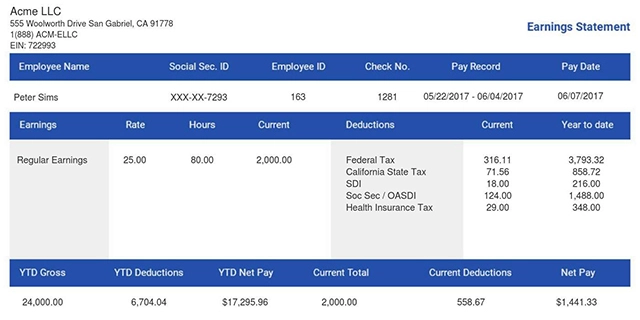
- Pay stub line. The deduction shows up on the stub, usually pre-tax for medical, FSA, and 401(k) money. Employer-paid medical often appears as ER Health on a pay stub.
Stage three is where things break. Say someone adds a spouse in March. The carrier record gets updated, but the payroll code sometimes doesn't. They stay insured, so nobody complains, and the wrong amount comes out of every check until someone reads a stub closely.
Two habits catch it. Staff: check the pay stub deduction codes on your first stub after signup against your confirmation. Owners: match the signup report to the payroll deduction register after open enrollment and after every life event.
One 2026 number worth knowing: the health FSA limit is $3,400, and up to $680 can carry into 2027. Plenty of guides still cite a $500 carryover. That number is years out of date.
Compliance Rules Every Benefits Program Must Meet
Federal rules kick in at set headcounts, so they're easy to check yourself against. Several are counted in full-time equivalents rather than headcount.
| Law | Applies when | Key requirement |
|---|---|---|
| ACA | 50+ full-time equivalents | Offer coverage, file Forms 1094-C and 1095-C |
| COBRA | 20+ employees | Offer continued coverage after qualifying events |
| ERISA | Most employer-sponsored plans | Fiduciary duties, participant disclosures, Form 5500 |
| HIPAA | Plans handling health data | Protect employee health information |
| FMLA | 50+ employees | Job-protected leave with continued group health coverage |
| ADA | 15+ employees | Reasonable accommodations, no disability discrimination |
Most of this is enforced by the Employee Benefits Security Administration, the Department of Labor agency that oversees workplace plans. Pay documentation carries its own layer of state pay stub laws.
Do You Need to Hire an Employee Benefits Administrator?
Below about 25 employees, benefits administration software plus an HR generalist usually costs less than a dedicated hire. Two headcounts force the decision. COBRA continuation coverage applies at 20 employees. At 50 full-time equivalents, the ACA requires coverage plus Forms 1094-C and 1095-C. Past 150 employees, a dedicated in-house hire generally pays for itself.
| Headcount | Usual best fit |
|---|---|
| Under 20 | HR generalist plus benefits administration software |
| 20 to 49 | Generalist plus software, with COBRA support from a broker or third-party administrator |
| 50 to 150 | Part-time dedicated seat, or an outsourced provider |
| 150 and up | Dedicated in-house hire |
The honest math: a full-time hire near the $77,020 median is hard to justify when benefits management takes ten hours a month. Headcount alone isn't what flips the decision. It's complexity. Several plan tiers, staff in multiple states, or an ACA filing you can't get wrong will all push you toward dedicated help sooner.
You Might Also Like
- How to Read a W-2 Like a Pro
- Employment Verification Letter: What to Include
- How to Get a Pay Stub From Direct Deposit
- What Is Paychex?
- How to Calculate Your Hourly, Weekly, and Monthly Income
Conclusion
The role handles enrollment, eligibility, carriers, and compliance. The pay range depends on which job you're actually filling: running a program, or designing one. Check the headcount triggers, 20 for COBRA and 50 for the ACA, before you pick between software, an outside provider, and a dedicated hire.
However you handle it, the result lands in the same place: a deduction line your staff will read. Need clear, accurate pay records that show those deductions properly? Our paystub generator builds them in minutes.
- 1. Enter Your Information

- 2. Select Your Favorite Theme

- 3. Download Your Stub!

 By
By