

Tax Exempt Meaning: What It Is and Who Qualifies (2026)
 By
By
If you have looked at a pay stub or W-4 and wondered what "exempt" signals, you are not alone. The tax exempt meaning depends entirely on context, which is why the term confuses people. Tax exempt can describe income the IRS never taxes, an employee whose paycheck has no federal income tax withheld, or an organization that owes no federal income tax. This guide covers all three, who qualifies, and what changed for 2026.
Key Takeaways
- Tax exempt covers three situations: exempt income, exempt withholding, and exempt organizations.
- Being tax exempt almost never means paying zero tax, because Social Security and Medicare still come out of your paycheck.
- To claim exempt on Form W-4, you must have owed no federal income tax last year and expect none this year.
- Exempt status on a W-4 expires, so you must file a new form by February 15 each year.
What Does Tax Exempt Mean?
Tax exempt means income, a purchase, or an organization is legally excluded from a tax. The term covers three different situations: income the IRS never taxes, an employee who owes no federal income tax and claims exempt on Form W-4, and organizations like churches and charities that pay no federal income tax.
So what is tax exempt? The tax exempt definition: a dollar, transaction, or entity sits outside the reach of a tax.
| What Is Exempt | Applies To | In Practice |
|---|---|---|
| The income | Individuals | Child support and similar money is never taxed |
| The withholding | Employees | No federal income tax leaves your paycheck |
| The organization | Churches, nonprofits | The entity pays no federal income tax |
Personal and dependent exemptions no longer exist, and the One Big Beautiful Bill Act made that elimination permanent. The 2026 standard deduction replaces them: $16,100 single, $32,200 joint.
Tax Exemption vs. Tax Deduction vs. Tax Credit

So what is a tax exemption compared to the other tax breaks? The tax exemption meaning is mechanical: exempt money never enters the calculation, a deduction enters your income and is then subtracted, and a credit cuts your final bill dollar for dollar. At a 22% rate, a $10,000 exemption or deduction saves you $2,200, while a $10,000 credit saves the full $10,000.
Am I Tax Exempt? Who Qualifies
Most individuals are not tax exempt the way nonprofits are. You may still have tax-exempt income, such as child support or municipal bond interest. Separately, you can claim exempt from federal income tax withholding on your W-4 if you owed no federal income tax last year and expect none this year.
What does it mean to be tax exempt as an individual? Usually one of two things: income the tax code excludes, or qualifying to stop federal withholding.
Common Types of Tax-Exempt Income
- Child support payments you receive
- Municipal bond interest, often called tax exempt interest
- Qualified Roth IRA distributions
- Veterans' benefits and most life insurance proceeds
- Workers' compensation paid for a job injury
A tax exemption example: municipal bond interest is tax exempt income federally, though your own state can still tax it if the bond was issued somewhere else.
Tax Exempt Meaning on Your Paycheck and W-4

This is the tax exempt meaning most workers need. Claiming exempt on your W-4 tells your employer to stop withholding federal income tax. It does not cancel the tax you actually owe on that income.
So who is exempt from federal income tax withholding? You must meet both parts:
- You owed no federal income tax last year.
- You expect to owe no federal income tax this year.
That usually means students, part-time workers, and people whose credits erase their liability. Earning less alone does not qualify you.
How to Claim Exempt on Form W-4
Most people get this wrong by skipping the estimator step, which is exactly where the surprise bill in April comes from.
Fill in Steps 1 and 5 of Form W-4, write "Exempt" below Step 4(c), then confirm with the IRS Tax Withholding Estimator. That is the whole of how to be tax exempt on your paycheck. People search how to go tax exempt expecting a bigger paycheck, but filing tax exempt without qualifying creates a balance due plus penalties.
Why Exempt Status Expires Every February 15
Exempt status does not roll over. IRS Topic No. 753 requires a new Form W-4 claiming exempt status by February 15 each year. Miss it and withholding restarts.
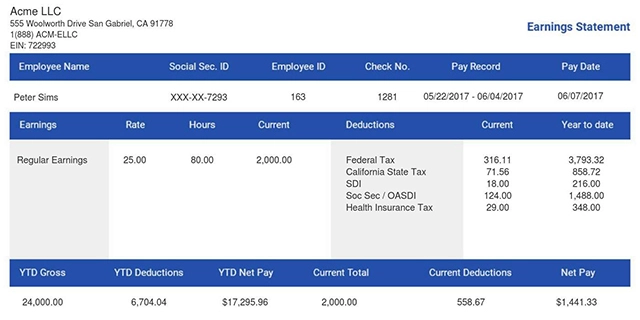
Even when exempt, 7.65% still leaves your check: 6.2% Social Security and 1.45% Medicare. On a stub that is a federal income tax line of $0.00 beside real Social Security and Medicare deductions.
Tax Exempt Meaning for Churches, Nonprofits, and Schools
Churches, charities, private foundations, most nonprofits, and public schools can be tax exempt under Section 501(c) of the tax code. The IRS grants federal tax-exempt status, while states grant nonprofit status separately. Important: if you work for a tax-exempt organization, your own wages are still fully taxable.
Are churches tax exempt? Yes, and they get a shortcut nobody else gets: no application to file and no annual Form 990, the return other exempt organizations send in every year. People ask why are churches tax exempt and expect a modern answer, but the treatment traces back to the Revenue Act of 1913 and has survived every rewrite of the code since. Nonprofits get no such automatic pass, so if you have wondered are non profits tax exempt the day you incorporate, the answer is no: groups asking how to get tax exemption file Form 1023 with the IRS and wait on a determination letter. Are schools tax exempt? Public ones generally are, because they count as government units.
State and Local Tax Exemptions
The tax exempt meaning shifts again at the state and local level. A property tax exemption lowers the taxable value of a home for seniors, veterans, or homesteads. A sales tax exemption lets qualifying buyers skip sales tax at checkout. What is a tax exempt certificate? It is the document proving a purchase qualifies. Rules vary by state.
Is Overtime Tax Exempt in 2026?
No. Overtime is not tax exempt. For tax years 2025 through 2028, the One Big Beautiful Bill Act created a deduction of up to $12,500 ($25,000 for joint filers) on qualified overtime pay. You claim it on your tax return, and it does not stop withholding from your paycheck.
The overtime tax exemption people describe is really a deduction, and tips follow a similar rule capped at $25,000.
Conclusion
Which tax exempt meaning applies depends on your question. For most workers it is withholding on a W-4. For organizations it is federal income tax status. Either way, exempt rarely means tax free.
Need a clear record of what is actually being withheld? Create a professional pay stub with ThePayStubs.com and see every federal, Social Security, and Medicare line itemized.
You Might Also Like
- 1. Enter Your Information

- 2. Select Your Favorite Theme

- 3. Download Your Stub!

 By
By