


Bronze vs Gold Health Insurance: How to Choose (2026)
 By
By
Two plans can cover the exact same doctors, the same prescriptions, and the same hospital, and still leave you thousands of dollars apart at the end of the year. That's the bronze vs gold question in a nutshell. The metal name on a Marketplace plan doesn't describe quality of care at all. It describes who absorbs the cost when you actually use the coverage. Bronze plans pay about 60% of covered costs. Gold plans pay about 80%. Everything else follows from that gap, including the premium line a pay stub generator itemizes on every paycheck. Below, we'll walk through what each tier really costs, the break-even math that tells you which one wins, a 2026 rule change that made bronze far more attractive, and what your choice does to your paycheck.
Key Takeaways
- Bronze plans pay about 60% of covered costs and gold plans pay about 80%, so bronze means lower premiums and higher bills at the doctor.
- The right pick depends on how much care you expect to use, not on which plan sounds better.
- As of January 1, 2026, bronze plans work with a health savings account.
- Health premiums usually come out of your pay pre-tax, which quietly narrows the real cost gap.
- What Does Bronze vs Gold Mean on a Health Plan?
- Bronze vs Gold: The Real Cost Difference
- How Does Actuarial Value Work?
- Premiums vs Out-of-Pocket Costs
- Where Silver, Platinum, and Catastrophic Plans Fit
- Bronze vs Gold and the 2026 HSA Rule Change
- Bronze vs Gold on Your Pay Stub
- How Do You Choose Between Bronze vs Gold?
What Does Bronze vs Gold Mean on a Health Plan?
Bronze vs gold describes two Marketplace metal tiers that split costs differently. A bronze plan pays about 60% of covered health care costs and you pay about 40%. A gold plan pays about 80% and you pay about 20%. Both cover the same 10 essential health benefits.
That last point trips people up constantly. Moving up a tier doesn't buy you extra services. Every plan sold on the Health Insurance Marketplace, from bronze through platinum, has to cover the same 10 essential health benefits, including preventive care, emergency services, prescriptions, and mental health care. A gold health insurance plan isn't a better plan in a medical sense. It's a plan where the insurer picks up a bigger share of the tab.
The metal level also has nothing to do with the star rating you'll see next to each plan. Marketplace plans carry a separate quality rating on a 1 to 5 scale, and a bronze plan from a strong carrier can easily out-rate a gold plan from a weak one.
So what actually changes between plan tiers? Three things: your monthly premium, how much you pay before coverage kicks in, and how much you pay each time you get care. Bronze shifts money toward the second and third. Gold shifts it toward the first. Once you know which of the three you care about most, you can predict what the plan will pay before you enroll.
Bronze vs Gold: The Real Cost Difference

Here's how all five categories compare on cost sharing:
| Plan Category | Plan Pays | You Pay | Deductible |
|---|---|---|---|
| Bronze | 60% | 40% | High |
| Silver | 70% | 30% | Moderate |
| Silver with extra savings | 73% to 96% | 6% to 27% | Low |
| Gold | 80% | 20% | Low |
| Platinum | 90% | 10% | Low |
The percentages are estimates of how costs split across a typical group of enrollees, and your actual costs vary by plan.
Now the part almost nobody spells out: the break-even. Say a bronze plan runs $120 a month less than a comparable gold plan. That's $1,440 a year you keep up front. If the bronze deductible is $6,000 and the gold deductible is $1,500, you're carrying $4,500 more exposure before coverage takes over. In a year where you barely see a doctor, bronze wins by roughly $1,440. In a year where you hit both deductibles, gold wins by about $3,060.
The honest answer is that you're placing a bet on your own health, and the size of the bet is the premium gap multiplied by 12. Run that number before anything else. If you're comparing bronze vs silver vs gold health insurance side by side on the same site, do the same arithmetic for each one rather than trusting the tier label.
One more wrinkle worth knowing: the gap narrows at the top. Once you hit your out-of-pocket maximum, every plan pays 100% of covered in-network care. A catastrophic year costs you roughly the same on either tier, because both stop at a capped ceiling. Bronze just makes you climb further to reach it.
How Does Actuarial Value Work?
Actuarial value is the percentage of covered medical costs a plan pays for a standard population, which is how tiers get their 60%, 70%, 80%, and 90% labels. It is an average across many enrollees, not a guarantee about your own bill. Your actual share depends on the care you use.
This distinction matters more than it sounds. A 60% actuarial value doesn't mean the plan pays 60% of your bills. It means that across a large pool of people using a standard mix of services, the plan covers about 60% of the total. A healthy enrollee might see the plan pay almost nothing all year. Someone with a hospitalization might see it pay far more than 60%.
It also explains why two gold plans can feel completely different. Carriers hit the same 80% target through different combinations of deductible, copays, and coinsurance. One might use a low deductible with higher copays; another flips it. Same tier, same actuarial value, very different experience at the pharmacy counter.
Premiums vs Out-of-Pocket Costs

Four numbers drive what you actually spend. Your premium is the fixed monthly charge you pay whether or not you use care. Your deductible is what you cover yourself before the plan starts paying. Copays and coinsurance are your share once the deductible is met. And your out-of-pocket maximum is the ceiling.
For the 2026 plan year, a Marketplace plan's out-of-pocket limit can't exceed $10,600 for an individual or $21,200 for a family. Once you reach it, the plan covers 100% of covered in-network benefits for the rest of the year. That cap applies to bronze and gold alike, which is why the worst-case scenarios sit closer together than the premiums suggest.
Gold plan health insurance costs more every month because the insurer is absorbing more of that middle range, the zone between your first doctor visit and the out-of-pocket ceiling. Bronze leaves more of that middle range with you. Neither one changes the ceiling itself. If your coverage comes through work, that premium lands as one of several deduction codes on your pay stub.
Where Silver, Platinum, and Catastrophic Plans Fit
Bronze and gold are the two ends of the everyday trade-off, but they aren't the only options.
Bronze Silver Gold Platinum Health Plans at a Glance
The four standard tiers run 60%, 70%, 80%, and 90% actuarial value, with silver and gold occupying the crowded middle where most shoppers land. Platinum sits at the top with the highest premiums and the lowest costs at the point of care, though it isn't sold everywhere and many regions offer no platinum option at all.
Silver and Cost-Sharing Reductions
There's one tier that unlocks savings the other four can't touch, and skipping past it is the most expensive mistake in this whole comparison. If your income qualifies you for cost-sharing reductions, a silver plan can be boosted to cover between 73% and 96% of your costs, which can beat gold at a lower premium. Those savings apply only if you enroll in silver. Comparing silver vs bronze health plans without checking your subsidy eligibility first is how people leave real money behind. For many households, a bronze vs silver health plan comparison is genuinely the more useful one.
Catastrophic Plans
A fifth category exists for people under 30 and for those who qualify for a hardship or affordability exemption. Catastrophic plans carry very low premiums and very high deductibles.
Bronze vs Gold and the 2026 HSA Rule Change
Something changed this year that reshuffles the math above, and most comparison guides haven't caught up.
As of January 1, 2026, bronze and catastrophic plans available through an Exchange count as HSA-compatible, regardless of whether they meet the general definition of a high-deductible health plan. The IRS guidance also clarifies that these plans don't have to be purchased through an Exchange to qualify.
That's a meaningful shift. Bronze enrollees generally couldn't fund HSAs before unless their plan happened to satisfy the HDHP rules. Now they can. For 2026, you can put up to $4,400 into an HSA with self-only coverage or $8,750 with family coverage, and those dollars go in untaxed. If you contribute through work, that money leaves your paycheck under its own payroll code.
Run it through the break-even from earlier. If bronze saves you $1,440 in premiums and you route that into an HSA, you're not just saving the premium, you're sheltering it from tax and keeping it available for the deductible you might have to meet. The tier that used to look like pure risk now comes with a tax-advantaged cushion attached.
Bronze vs Gold on Your Pay Stub
If you get coverage through work, this decision shows up on your paycheck long before it shows up at a doctor's office, and it doesn't show up the way most people expect.
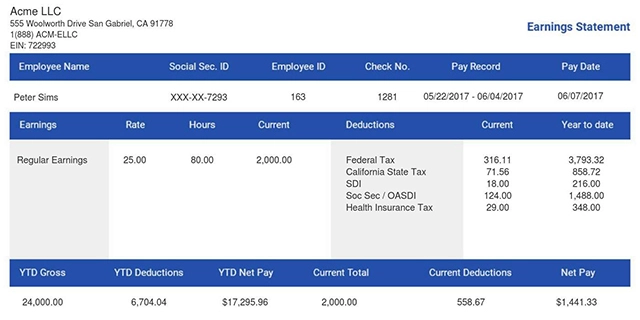
Employer health premiums are usually withheld under a Section 125 cafeteria plan, which means they come out of your pay before taxes are calculated. On your pay stub, that's a separate deduction line sitting between your gross pay and your net pay, often carrying a label like ER Health. Pick gold and that line gets bigger. Pick bronze and it shrinks.
Here's the part that surprises people: because those premiums are pre-tax, they reduce your taxable wages. A bigger gold premium lowers the wages reported in Box 1 of your W-2 and usually your Social Security and Medicare wages too. So gold's higher sticker price is partly offset by a smaller tax bill. The real gap between the two tiers is narrower than the premium difference alone suggests.
The same logic applies to health savings account contributions made through payroll. They're pre-tax as well, which is exactly why the 2026 bronze change lands on your paycheck and not only at the pharmacy.
For employers, this cuts both ways. The plan you offer sets the deduction line on every employee's stub, changes their withholding, and becomes part of the payroll records you're expected to keep and produce. Employees will ask you why their take-home moved after open enrollment, and the answer is on the stub.
How Do You Choose Between Bronze vs Gold?
Choosing between bronze vs gold comes down to cash flow. Bronze suits people who are generally healthy, want the lowest premium, and can absorb a large deductible. Gold suits people with regular prescriptions, ongoing treatment, or planned procedures. Check your subsidy eligibility first, because cost-sharing reductions apply only to silver plans.
Work through it in this order:
- Check for subsidies. Premium tax credits apply to any tier, but cost-sharing reductions only work with silver. Find out where you land before comparing anything else.
- Add up last year's care. Count your visits, prescriptions, and procedures. Last year is the best predictor you have.
- Do the break-even. Multiply the monthly premium gap by 12, then compare it to the deductible gap.
- Look at the worst case. Compare out-of-pocket maximums, not just deductibles. That's your real downside.
- Factor in the HSA. If bronze now lets you contribute pre-tax dollars, count that as part of its value.
For a small business owner, add one more question: what can your team actually absorb? A bronze offer with a low payroll deduction looks generous on payday and painful in an emergency room. Employees on maintenance medication tend to feel a bronze deductible immediately, while healthy younger staff often prefer the bigger paycheck. Either way, you'll want records clean enough to calculate W-2 wages from a pay stub when January arrives.
Need clear pay documentation for a lease, a loan, or your own files? Our pay stub templates itemize every deduction line.
You Might Also Like
- How to Read a W-2 Like a Pro
- W-2 vs Paystub: What Each Document Shows
- Pay Stubs for Loan Applications
- Proof of Income Documents: 6 Times You'll Need a Pay Stub
- How to Get a Pay Stub From Direct Deposit
Conclusion
The bronze vs gold choice isn't about which plan is better. Both cover the same essential benefits, both stop at a capped out-of-pocket maximum, and neither guarantees a wider network. What you're really deciding is when you'd rather pay: steadily every month, or unpredictably when you need care. Check your subsidy eligibility, run the break-even on the premium gap, and remember that bronze now carries an HSA advantage it didn't have before 2026.
Keeping accurate records of what comes out of your paycheck makes all of this easier to track at tax time. Use a reliable paystub generator to create professional pay stubs with every deduction itemized.
- 1. Enter Your Information

- 2. Select Your Favorite Theme

- 3. Download Your Stub!


 By
By