

PTO Policy Template Free: Download and Customize (2026)
 By
By
A clear time-off policy doesn't have to be hard to build. A PTO policy template free gives you a ready-made starting point. You fill in a few details, and you're done.
Most companies get this wrong. They either skip the policy or grab a PTO policy template free and never finish it. Both choices cause confusion later. Some even create legal risk.
This guide fixes that. We built it alongside the payroll tools at ThePayStubs.com. You'll learn what to include, the three main policy types, real examples with numbers, and the state rules that changed in 2026. Whether you're writing the policy or reviewing the one your employer gave you, you'll leave knowing what to do.
Key Takeaways
- A PTO policy must spell out five things: eligibility, accrual rate, request process, carryover rules, and payout at termination.
- The most common accrual rate for new employees is one hour of PTO for every 30 hours worked. That's about 8.7 days per year.
- Several states, including Illinois, California, Colorado, and Montana, treat unused PTO as earned wages. You must pay it out when an employee leaves.
- You can set up a working policy in about 30 minutes by filling in four fields.
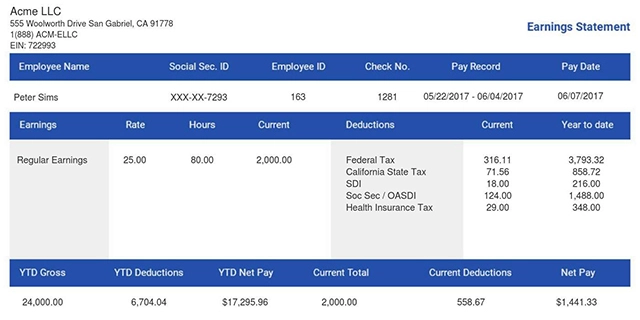
- Pay stubs should list PTO accruals and payouts as separate lines. Good records protect both the worker and the company.
- What Is a PTO Policy Template Free (and Why You Need One)?
- Free PTO Policy Template Free (Download and Customize)
- 3 Types of PTO Policy Template Free Formats for 2026
- Real-World Examples of a PTO Policy Template Free
- PTO Laws and State Compliance in 2026
- How to Create Your PTO Policy in 30 Minutes
- Best Practices for Your PTO Policy Template Free
- You Might Also Like
- FAQ
- Conclusion
What Is a PTO Policy Template Free (and Why You Need One)?
A PTO policy is a document that defines how employees earn and use time off. Some people call it a paid Time Off Policy. Most PTO Policies cover several leave types at once. Some companies keep vacation and sick time separate. Others combine every type of leave into one bank. More businesses now use the single-bank model. It rolls vacation, sick leave, and personal days into one pool.
A written policy is a basic need for any business with staff. A PTO policy template free makes the job faster. You start from a proven structure instead of a blank page.
Here are three reasons a written policy matters.
- Legal protection. Some states treat unused PTO as earned wages. Examples include Colorado, Montana, and California. Without a written policy, you may owe more than you planned. Labor laws set the floor, so clear terms keep you safe.
- Dispute prevention. A good policy ends arguments over whether time off was approved. Everyone reads the same rules.
- Professional credibility. Strong candidates compare employee benefits before they accept an offer. A clear policy signals a well-run company. It also supports work-life balance, which top talent values.
For employees, the takeaway is simple. Review your company's policy so you can plan ahead. You'll also know your rights and your final payout when you leave. Your employment verification and proof of income documents will show your accrued and paid-out PTO.
Free PTO Policy Template Free (Download and Customize)

Below is a sample you can copy and fill in. You can use these templates free of charge. To set it up, just edit Section 1 with the leave types you offer. Keep your PTO policy template free simple, so your team actually reads it.
[COMPANY NAME] Paid Time Off (PTO) Policy
Effective Date: [DATE]
Scope: This policy applies to all full-time, part-time, and temporary employees in [STATE(S)].
Eligibility
Full-time employees who work 30 or more hours per week can earn and use PTO. Part-time employees who work 20 to 29 hours per week earn PTO on a pro-rata basis. That means 50% of the full-time rate. Independent contractors and temporary workers don't qualify for Employee PTO under this policy. For contractor pay records, see our guide on 1099 pay stubs for independent contractors.
How PTO Is Accrued
You can track PTO two ways. The first is an accrual method. The second is a lump-sum grant.
Accrual method. Employees earn PTO each pay period. The table below shows common rates.
| Years of Service | Accrual Rate | Annual Hours | Annual Days |
|---|---|---|---|
| Year 1 | 1 hr per 30 hrs worked | ~87 hrs | ~10.9 days |
| Years 1–3 | 4.62 hrs per bi-weekly period | 120 hrs | 15 days |
| Years 4–9 | 6.15 hrs per bi-weekly period | 160 hrs | 20 days |
| 10+ years | 7.69 hrs per bi-weekly period | 200 hrs | 25 days |
PTO is added each pay period and shows on the pay stub. Balances are capped at [X] days. Once you hit the cap, accrual pauses until you use some time.
Lump-sum method. Each employee gets a fixed number of days on a set date, such as January 1. The full grant is available right away. It does not accrue through the year.
How to Request Time Off
Employees should submit a time off request at least [X] days in advance. That gives the manager time to arrange coverage. Use PTO request form templates so every request looks the same.
- Managers approve or deny each request.
- Blackout dates may apply during busy periods, such as late December. Submit blackout requests on a first-come basis.
- For illness or emergencies, tell your manager on the first day you're out.
PTO Usage and Carryover
Employees can use accrued PTO for vacation, illness, appointments, or family needs. You can take it in small blocks, such as one hour or one full day.
Carryover rules give you three options.
- Option A. Up to [X] days roll over to the next year. They expire on December 31.
- Option B. All unused PTO rolls over with no cap. Check your state law first. Some states ban "use it or lose it" rules.
- Option C. No carryover. Unused PTO is paid out or lost at year-end, where state law allows.
Employees can't use PTO they haven't earned yet. Balances can't go negative without written approval.
PTO Payout at Separation
Unused, earned PTO is paid in the final paycheck. The payout uses the employee's current base pay rate. For salaried staff, convert the salary to an hourly rate for the math. State law may override this section, so check your state's rules.
3 Types of PTO Policy Template Free Formats for 2026
Not every business needs the same setup. Most PTO policy templates come in one of three formats. Choose the PTO policy template free that fits your team.
1. Accrual-based. Employees earn PTO as they work. Each pay period adds hours to their balance. This accrual-based PTO model fits hourly and shift workers. Think restaurants, retail, warehouses, and healthcare.
2. Fixed bank. Employees get a set number of days at the start of the year. They use the days as they wish. This setup is easier to track than accrual. It suits small agencies, creative firms, and startups with salaried staff. If someone leaves mid-year, you pay out only the unused days.
3. Unlimited PTO. Employees take leave as needed, with manager approval. This model is popular in tech and remote teams. It carries a paradox, though. People with unlimited leave often take less time off, not more. A strong performance culture keeps it healthy. One upside for employers: there is no accrued balance to pay out when someone leaves.
There is also a hybrid format. You grant a set block of sick days and add unlimited vacation on top. Mid-sized companies like this mix. It meets state sick-leave rules while still offering flexibility.
Real-World Examples of a PTO Policy Template Free

Templates give you a starting point. Real examples show how the parts fit together. Here are three.
Example 1: Restaurant with 8 hourly staff. Workers earn one hour of PTO for every 40 hours worked. A server on 30 hours a week earns about 3.9 days a year. Five blackout dates cover Thanksgiving through New Year's. Requests need 14 days' notice. PTO is capped at 40 hours, and anything above that expires at year-end.
Example 2: Marketing agency with 5 salaried staff. Each person gets 15 days on their first day. All of it is available right away. Up to 5 days roll into January. Anything over 5 days is forfeited. HR doesn't track accrual, so the rules stay simple.
Example 3: Warehouse company with 25 employees. This regional firm runs 8 locations. It uses a tenure-based accrual schedule for the first four years. At year-end, workers can cash out up to 80 hours. Any remaining balance is forfeited at separation.
If you use PTO records as proof of income documents for a rental, or as pay stubs for loan applications, keep the lines clear. Your final pay stub should list regular wages and accrued time separately. Lenders and landlords read those lines closely. Blended figures can slow approvals.
PTO Laws and State Compliance in 2026
Federal law doesn't require paid time off. The Fair Labor Standards Act (FLSA) sets wage and hour rules, but it doesn't mandate PTO. Most states don't require it either. Still, some states and cities have their own rules. Build state rules into your PTO policy template free from day one. Here is what changed for 2026.
State payout rules:
- California. Accrued PTO is earned wages. You must pay it in full at termination. "Use it or lose it" vacation rules are illegal here.
- Colorado. State law treats accrued PTO as wages. You must pay it to departing employees.
- Montana. PTO starts accruing on day one and can't be forfeited. You must pay the full balance when employment ends.
- Illinois. The Wage Payment and Collection Act requires payout of accrued vacation. The Paid Leave for All Workers Act, effective January 1, 2024, adds 40 hours of paid leave per year.
- Most other states. Your written policy sets the rules. Apply it consistently, and it defines what departing employees can cash out.
Paid sick leave. More than 15 states and Washington, D.C. now require paid sick leave. If your single PTO bank includes sick time, the total must meet the state minimum. Check your state Department of Labor for current limits.
FMLA overlap. The Family and Medical Leave Act (FMLA) gives eligible workers up to 12 weeks of unpaid, job-protected leave. Paid leave often runs at the same time as FMLA leave. FMLA covers W-2 employees, not contractors on a 1099. Your policy should say who qualifies. For the difference between the two, see W-2 vs 1099 employee classifications.
How to Create Your PTO Policy in 30 Minutes
A PTO policy template is a free, customizable document that defines how employees earn and use paid time off. It covers vacation, sick leave, and personal days. It sets accrual rates, carryover limits, notice rules, and payout terms. You can find a free pto template in Word and Google Docs format.
Start with the template and fill in four fields. These four choices shape the whole policy.
- Accrual rate or day grant. Decide how employees earn time. Use an hourly accrual rate or an annual grant of days. A common start is 10 days per year, with more added for tenure.
- Rollover cap. Set how many unused days carry over. Common limits are 0, 5 days, 40 hours, or unlimited. Check your state law to confirm.
- Notice requirement. Decide how much warning you need. Many policies ask for 5 to 14 days for planned leave, and "as soon as possible" for emergencies.
- Payout at separation. Decide if you pay out unused time when someone leaves. In states like California, payout is required by law.
Then add your company name and the effective date. List any blackout dates. Share the finished policy in the employee handbook or as a signed PDF. Once it's in place, you can calculate W-2 wages from a pay stub and check PTO accruals with ease. Most small businesses finish the whole job in 20 to 30 minutes.
Best Practices for Your PTO Policy Template Free
A policy only works if you use it well. A PTO policy template free gives you the structure. These habits make it stick.
1. Put it in writing. A policy on paper isn't enough on its own. Have employees sign an acknowledgment. The signed copy sets the effective date and proves they were informed. It also lets you enforce the rules the same way for everyone.
2. Be specific on the four key fields. Blank fields get read against you. Fill in carryover, notice, payout, and accrual. Clear terms prevent disputes.
3. Apply it consistently. Treat employees of the same status the same way. Salaried managers might get 20 days while hourly staff get 10. That's fine if your policy says so. Random exceptions look like discrimination and invite lawsuits. HR software, tracking templates, or a simple spreadsheet help you track balances and catch errors early.
4. Review it every year. State laws change often. Check your state Department of Labor each January. Illinois, for example, added a major paid-leave law that affects most employers.
5. Avoid common mistakes.
- No payout rule. The most common error is leaving the termination payout blank. Rules vary by state and range from 0% to 100%. States such as Montana, Illinois, California, and Colorado require a full payout. A blank field defaults to state law, which can cost you.
- No blackout dates. Staff will resent surprise denials during the holidays. List blackout periods in writing up front.
- Wrong contractor treatment. Leave policies usually don't cover contractors. If your policy says "all workers," you may be misclassifying people.
6. Connect the policy to your pay stubs. Your PTO policy template free and your pay stubs describe the same thing. So every pay stub should show accrued PTO, used PTO, and any payout owed. Workers rely on these stubs to prove income for rentals and loans. A reliable generator like ThePayStubs.com makes clean, professional stubs. Each one can show accrued time, used time, and earned wages side by side.
You Might Also Like
- Self-Employed? Here's How to Show Proof of Income
- What Is Gross Monthly Income
- Proof of Income If Paid in Cash
- What Is Annual Income
- How to Calculate Tax on 1099 Misc Income
FAQ
What Should a PTO Policy Include?
A complete policy covers six parts. First, define who's eligible. Second, explain how PTO accrues. Third, set the request and approval process. Fourth, add usage rules, like a minimum block of time. Fifth, state the carryover rules. Sixth, spell out the payout at separation. A good PTO policy template free includes all six by default.
Is an Employer Required to Have a PTO Policy?
No federal law requires private employers to offer PTO. Some states do require it, though. A few even require time to accrue. If your plan bundles sick leave, it must meet the state sick-leave minimum. You can change the policy as needed, as long as you give employees clear notice first.
Can an Employer Take Away Accrued PTO?
It depends on the state. In states that treat PTO as earned wages, you can't take it back. You must pay it at separation. Examples include Montana, California, Colorado, and Illinois. In other states, your written policy controls the payout. Never cut earned PTO retroactively. That invites claims from employees who weren't warned.
PTO Policy vs. Vacation Policy: What's the Difference?
A PTO policy template free covers all paid time off in one bank. That includes vacation, sick, and personal days. A vacation policy template free covers vacation time only. Many companies prefer the single bank because it's easier to track.
What Happens to Unused PTO When an Employee Leaves?
It depends on your state and your policy. In states like California, Colorado, Montana, and Illinois, you must pay all accrued PTO at the current pay rate. This applies no matter why the person leaves. In other states, your written policy decides. If the policy requires payout, you must pay. If it doesn't, you don't.
Conclusion
A clear policy keeps you and your team on the same page. It prevents conflicts before they start. It also shows clients and staff that you run a professional shop. A PTO policy template free gets you there in about 30 minutes.
Once your policy is set, make sure your pay stubs match it. List PTO accruals, used time, and payouts as separate lines. Use ThePayStubs.com to create clean, accurate pay stubs. Good records protect everyone, whether you're paying out time at separation or just keeping clear books.
- 1. Enter Your Information

- 2. Select Your Favorite Theme

- 3. Download Your Stub!

 By
By