

Employee Data Management: A 2026 Guide to Employee Records
 By
By
It's 4:30 on a Friday when the message lands. An employee needs their recent pay stubs and two years of W-2s by Monday for a mortgage application. If you can pull those in five minutes, your employee data management is working. If it means digging through a shared drive, two spreadsheets, and a payroll login nobody has used since March, it isn't. When a record is genuinely gone, a pay stub generator can rebuild it, though the goal is never to need one.
Here's what this guide covers: which records you're required to hold, and how long each federal agency says to keep them. You'll also get a five step setup process, plus the signs that a spreadsheet has stopped being enough.
Key Takeaways
- Employee data management covers the full life cycle of employee information, from job application through secure disposal.
- Five record groups matter most: personal and contact details, employment and role information, payroll and earnings records, medical or protected information, and eligibility documents such as Form I-9.
- Federal retention clocks differ. Payroll records run three years, employment tax records four years, and personnel records one year.
- Medical records, Form I-9, and investigation files belong in separate files, never in the main personnel folder.
- When two retention rules cover the same document, keep it for the longer period.
What Is Employee Data Management?
Employee data management is the practice of collecting, storing, securing, and disposing of employee information. It spans the full life cycle, from job application through post-termination retention. Covered records include personal details, employment history, payroll and earnings records, medical files, and eligibility documents such as Form I-9. Access rules for each are part of the practice.
The important word there is life cycle. Most people picture a filing cabinet or an HR dashboard. But employee data management is the set of decisions around the data, not the container holding it. Who collects it. Where it lives. Who's allowed to look. When it gets deleted.
That's why a four person bakery and a four hundred person logistics firm are both doing this. Most don't call it anything. The bakery owner keeping W-4s in a locked drawer and pay history in a payroll app is running a system. It's just an informal one. Informal systems fail at the worst possible moment, usually during an audit or a records request.
Types of Employee Data You Need to Manage

Employee information falls into five groups, and they don't get treated the same way. Mixing them together in one folder is the single most common mistake small employers make.
Personal and Contact Information
Legal name, home address, phone number, Social Security number, date of birth, emergency contact, and bank details for direct deposit. This is the data that changes most often and the data employees most expect you to get right.
Employment and Role Information
Job title, hire date, employment status, pay rate, classification as exempt or non-exempt, department, and reporting manager. Every one of these feeds payroll, so an error here becomes a paycheck error within one cycle.
Payroll and Earnings Records
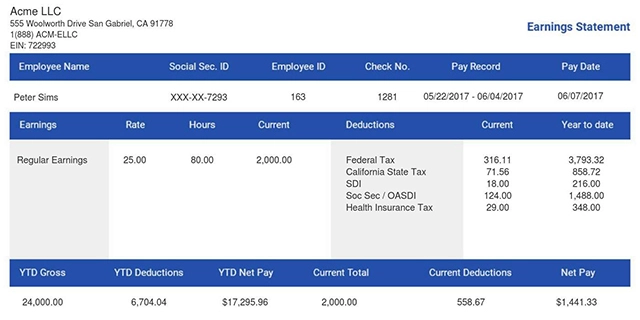
This group deserves its own handling rules. It includes pay stubs, timesheets, Form W-4 withholding certificates, W-2 wage statements, records of tips and bonuses, and direct deposit authorizations. The IRS list of employment tax records goes further. It also covers dates of employment, the amounts and dates of all wage payments, and copies of returns filed.
Two things make payroll information different from everything else. This group carries the longest retention clocks of any employee data. It's also the record your employees actually ask for, usually with a deadline attached.
Medical and Protected Information
Health plan enrollment, disability accommodation records, doctor's notes, workers' compensation claims, and protected-class demographics such as race, gender, age, and veteran status.
Here's a correction worth making, because plenty of HR articles get it backwards: HIPAA doesn't protect employment records. The Department of Health and Human Services is explicit on this point. The HIPAA Privacy Rule doesn't cover records an employer holds in its role as employer. Your actual obligation comes from the ADA and similar laws, and it's a storage rule. Medical information stays in a separate file with tighter access than the personnel folder.
Eligibility and Compliance Documents
Form I-9, supporting work authorization documents, background check results where permitted, and signed acknowledgements of policies. These are the documents an inspector asks for first.
Why Employee Data Management Matters
Go back to that mortgage request. The employee doesn't care about your data governance policy. They care that the underwriter wants a current pay stub and two years of W-2s, and that closing is Tuesday.
That's the honest case for all of this. Employee records exist to be produced, usually at short notice. Someone needs them as proof of income for a mortgage, an apartment application, an auto loan, or a benefits determination. A system that can't produce a clean earnings record in minutes has failed at the moment it was supposed to work.
The compliance case runs parallel. If a wage claim or a discrimination charge arrives, you have a limited window to produce records. "We couldn't find them" carries the same practical weight as "we didn't keep them."
Then there's accuracy. A stale address means a W-2 goes to the wrong mailbox. An unrecorded pay rate change means underpayment, a correction, and an amended return. And once your data is clean, workforce planning gets easier, because headcount, turnover, and labor cost stop being guesses.
Need pay documentation fast? Our pay stub templates let you produce clean, professional earnings records without waiting on anyone.
How to Build an Employee Data Management Process

You don't need software to start. You need decisions. Work through these five in order, because each one depends on the last.
- Inventory what you already hold. List every place employee information currently lives. Check the payroll app, a shared drive, an email folder, a physical cabinet, and a manager's personal spreadsheet. This step is uncomfortable, and it always turns up more locations than expected.
- Pick one system of record. Choose the single place that wins when two sources disagree. Everything else becomes a copy, and copies get retired on a schedule.
- Standardize collection and storage at intake. Build one onboarding checklist that captures every required field the first time. Data collection is cheapest at hire and most expensive to chase down eighteen months later.
- Assign a named owner and set permissions. Not "HR" as a concept, a person. That owner approves changes, runs the audit, and owns the deletion calendar.
- Set the disposal clock. Attach a retention period to every record type the moment you create it. Not years later, when you're trying to clear a cabinet. The next section gives you the numbers.
Write these five decisions down. A one page document beats an unwritten employee data management process that lives in one person's memory and leaves when they do.
How Long Should You Keep Employee Records?
Retention periods vary by record type. The Department of Labor requires payroll records for at least three years. Wage-computation records such as time cards run two years. Employment tax records must be kept at least four years under IRS rules. The EEOC requires personnel records for one year. When rules overlap, keep to the longest period.
Here are the federal clocks, current as of 2026:
| Record type | Minimum retention | Agency |
|---|---|---|
| Payroll records | 3 years | Department of Labor (FLSA) |
| Time cards and wage-computation records | 2 years | Department of Labor (FLSA) |
| Employment tax records | 4 years after filing Q4 for the year | IRS |
| Qualified sick and family leave wage records, ERC wage records | 6 years | IRS |
| Personnel and employment records | 1 year, or 1 year from termination date if involuntary | EEOC |
| Payroll records under the ADEA | 3 years | EEOC |
| Form I-9 | 3 years after hire, or 1 year after employment ends, whichever is later | USCIS |
The Department of Labor's recordkeeping fact sheet spells out the FLSA rows above, including the fourteen basic records every covered employer has to maintain.
These clocks keep running after someone leaves, which is why former employees can still request a W-2 from a previous employer years later.
Two practical notes. First, these are federal floors. Your state can set longer clocks, and state privacy regulations may add handling rules of their own, so check before you shred anything. Second, when clocks conflict on the same document, the longest one governs. A pay record touched by both FLSA and IRS rules gets kept four years, not three.
Employee Data Management Best Practices
Building the system is one job. Running it well is another. These four habits separate a system that stays accurate from one that quietly rots.
Keep One Source of Truth
Every field should be entered once, in one place, and flow outward from there. When an employee moves, that address gets updated in the system of record and nowhere else. Data accuracy problems are almost always duplication problems wearing a disguise. They surface when someone tries to calculate W-2 wages from a pay stub and the totals don't line up.
Decide Who Can See What
"Restrict access" is advice nobody can act on. Here's a model you can implement this week, using three tiers:
- Managers see role, schedule, performance notes, and contact details for their own reports. Nothing else.
- HR sees personnel files, employment history, and disciplinary records across the organization.
- Payroll and finance see compensation, tax withholding, and banking details, but not performance or medical files.
Nobody needs everything. Limiting who can reach what is the core of practical data security. The owner from step four is the only person who should be able to change permissions.
Keep Certain Files Separate
Three categories never belong in the main personnel folder:
- Medical and disability records, including accommodation requests and doctor's notes.
- Form I-9. USCIS specifically recommends storing I-9s apart from personnel records so an inspection doesn't expose unrelated files.
- Investigation and complaint records, which should stay restricted while a matter is open.
This takes about ten minutes to fix. It's the single highest value change most small employers can make to their data privacy.
Audit on a Schedule
Once a quarter, sample ten employee files and check four things. Does the address match what payroll has? Is the pay rate current? Are the medical and I-9 files still separate? Has anything passed its disposal date? Fix what you find that day, and check that pay stub deduction codes still map to the right categories. A quarterly habit catches drift that an annual review lets compound for eleven months.
Choosing an Employee Database Management System
Most businesses move through three stages. A spreadsheet plus a payroll tool works fine at five employees. Somewhere around fifteen or twenty, document storage and payroll start drifting apart and you begin re-entering the same information twice. That's the real signal, not headcount by itself.
When you're ready to consolidate, an employee database management system should give you:
- Field level permissions, so payroll sees bank details and managers don't.
- Data management payroll sync, meaning a pay rate or address change reaches payroll without a second manual entry.
- An audit trail showing who changed what and when.
- Retention and export tooling, so disposal dates can be enforced rather than remembered.
- Employee self-service, letting people pull their own stubs and tax forms without an email to you.
That last one quietly removes most of the requests that land on a Friday afternoon. Skip anything you won't use. A six person business doesn't need enterprise software. Paying for it usually means worse adoption, not better records.
You Might Also Like
- How Do You Get Your W-2 Online
- Do 1099 Employees Get Pay Stubs: Full Guide
- Employment Verification and Proof of Income Documents
- Self-Employed? Here's How to Show Proof of Income
- Change My Direct Deposit Information With the IRS
Conclusion
Good employee data management comes down to three decisions. Pick one system of record and make everything else a copy. Attach a retention clock to every document the day you create it, and keep to the longest applicable rule. Restrict access by role, and keep medical files and I-9s out of the main personnel folder.
Get those right and the Friday afternoon records request stops being a scramble. If you need to produce clean, professional earnings records on demand, our paystub generator creates accurate pay stubs in minutes.
- 1. Enter Your Information

- 2. Select Your Favorite Theme

- 3. Download Your Stub!

 By
By