

IRS Stimulus Check 2024
 By
By
If you searched for a stimulus check today, you want one clear answer. Not a wall of speculation. Here it is. There is no new federal stimulus check in 2026. And the payments people still call the IRS stimulus check 2024 were never a fourth round at all. They were a cleanup of an old credit. Knowing that changes what you should do next. ThePayStubs exists for the part that comes after: proving your income when no government payment is coming. This guide covers the verified 2026 federal position and what the three real rounds paid. It also covers why the claim windows have closed and how to check what you were paid. Then it looks at the tariff rebate proposals, the state programs that are genuinely paying, and how to spot the scams.
Key Takeaways
- There is no fourth federal stimulus check in 2026. The IRS has issued all three rounds and has announced no new payment.
- The three real rounds paid $1,200 (2020), $600 (late 2020) and $1,400 (2021) per eligible individual.
- The December 2024 payments were not new money. They were the 2021 Recovery Rebate Credit paid automatically to about one million people who left it blank.
- Both claim windows are now closed: May 17, 2024 for the 2020 credit and April 15, 2025 for the 2021 credit.
- Tariff rebate bills exist in Congress, but all six are still only introduced. None is law, so no payment follows from them.
- Get My Payment is retired. Your IRS Online Account is now the way to see what you were paid.
- Several states are paying rebates in 2026, and those are real money you may need to check separately.
- The IRS makes first contact by mail. A text or DM about a stimulus check is a scam.
- Is There an IRS Stimulus Check in 2026?
- What Is a Stimulus Check, and How Many Have There Been?
- What the IRS Stimulus Check 2024 Actually Was
- Who Qualified for the $1,400 IRS Stimulus Check 2024 Payment
- Can You Still Claim a Missed Stimulus Payment?
- How to Check Your Stimulus Check Status in 2026
- How the Payments Were Delivered
- The $2,000 Tariff Dividend and the Trump Stimulus Check Talk
- Viral Stimulus Amounts That Are Not Real
- Quick Answers to the Stimulus Questions People Search Most
- State Rebates Are the Closest Thing to a 2026 Stimulus Check
- Stimulus Payments, SSI, SSDI and VA Benefits
- How to Spot a Stimulus Check Scam
- Proving Your Income When No Check Is Coming
- Conclusion: What to Do With This in 2026
Is There an IRS Stimulus Check in 2026?
No. As of August 2026 there is no fourth federal stimulus check. The IRS states it "has issued all first, second and third Economic Impact Payments," and no IRS news release in 2026 announces a new payment. Several tariff rebate bills sit in Congress, but every one of them is still only introduced, not law.
That answer holds up under checking. It matters, because this topic attracts more invented news than almost any other tax subject. Three things have to happen before money reaches anyone. Congress has to pass a law. The President has to sign it. Then the Treasury and the IRS have to build the payment machinery. In 2026 none of those three has happened. The IRS newsroom releases this month cover Free File, e-filing changes, quarterly interest rates and some deduction rules. Not one of them mentions a stimulus payment, a rebate, or a direct payment of any kind.
It is worth being precise here. What does "no stimulus check" actually mean? It does not mean nothing is happening federally. It does not mean you have no money coming. Tax credits still exist. Refunds still get issued. Several states are running their own rebate programs right now. What it means is narrow. There is no new nationwide payment from the IRS to households. There is no application to file, no portal to check, and no eligibility to confirm.
For anyone running a small business, this question turns up in a predictable way. An employee asks whether a stimulus check is coming, usually after seeing something on social media. The follow up is often whether payroll needs to do anything about it. The answer to both is no. No employer action is needed for a payment that does not exist. And no stimulus payment has ever run through payroll.
What Is a Stimulus Check, and How Many Have There Been?

A stimulus check, officially an Economic Impact Payment, is a direct federal payment sent to households during an economic emergency. There have been exactly three. The CARES Act paid $1,200 per adult in 2020. A second round paid $600 in late 2020. The American Rescue Plan Act paid $1,400 in 2021. No fourth round exists.
Each round had its own law, its own amount and its own dependent rules. That is a large part of why people lose track of what they received. Here is the whole history in one place.
| Round | When it went out | Amount per eligible individual | Per qualifying child or dependent | Authorizing law |
|---|---|---|---|---|
| First | Spring 2020 | $1,200 ($2,400 married filing jointly) | $500 per qualifying child | CARES Act |
| Second | Late Dec 2020, official date Jan 4, 2021 | $600 ($1,200 married filing jointly) | $600 per qualifying child | Coronavirus Response and Relief Supplemental Appropriations Act, 2021 |
| Third | From March 2021 | $1,400 ($2,800 married filing jointly) | $1,400 per qualifying dependent | American Rescue Plan Act of 2021 |
Two details in that table explain most of the confusion. The first is that the third round was more generous about dependents. Rounds one and two paid less, and only for qualifying children. The third round paid the full $1,400 for each qualifying dependent. That included adult dependents, such as a college student or an elderly relative. The second is that the third round was legally structured as an advance payment of the 2021 Recovery Rebate Credit, not as a standalone benefit. That structure is why the story did not end in 2021. It is the direct cause of the 2024 payments people still search for.
What the IRS Stimulus Check 2024 Actually Was
The IRS stimulus check 2024 was not a fourth round, and it was not new money approved by Congress. In December 2024 the IRS announced a finding. Roughly one million taxpayers had filed a 2021 return but left the Recovery Rebate Credit field blank or entered $0, when they actually qualified. Rather than make those people file amended returns, the agency simply paid them.
The scale was specific. The maximum was $1,400 per individual. The total was about $2.4 billion. Payments went out automatically from December 2024. In most cases they arrived by late January 2025. Nobody had to apply. Nobody had to do anything at all. If you were owed one, it appeared, and the IRS mailed a letter confirming the amount.
This is why the 2024 stimulus check search results feel unsatisfying. People find headlines about a $1,400 payment and assume a new program launched. Then they cannot find a way to sign up. There was never a way to sign up. It was a correction to a 2021 credit. The IRS paid a defined list of people it had already found in returns it held.
The 2024 stimulus check payment also had a companion deadline that mattered far more to everyone else, and that deadline is the subject of the section below. If you had never filed a 2021 return at all, you were not on the IRS list and no automatic payment was coming to you. Your route was to file, and that route is now closed.
For the record, there was no 2022 stimulus check and no 2023 stimulus check at the federal level either. Those years produced plenty of state level rebates, which is almost certainly where the memory comes from. The federal government issued nothing new in either year.
Who Qualified for the $1,400 IRS Stimulus Check 2024 Payment

The third round ran on your 2021 tax year figures, and the 2024 catch up payments used the same ones. The payment phased out as income rose. It vanished above a hard ceiling set by filing status.
| Filing status | Full payment up to | Payment fully phased out at |
|---|---|---|
| Single | $75,000 | $80,000 |
| Head of household | $112,500 | $120,000 |
| Married filing jointly | $150,000 | $160,000 |
The phase out on the third round was unusually steep. Between the lower and upper figures the payment shrank fast rather than tapering gently. A small difference in 2021 income could mean a full $1,400 or nothing at all. That is one reason so many people were unsure whether they qualified. It is why a million of them left the field blank.
Stimulus check eligibility also carried two conditions that had nothing to do with income. You needed a valid Social Security number, and you could not be claimed as a dependent on someone else's return. Qualifying dependents each added another $1,400 to the household total, with no cap on how many dependents could count.
If you want to know what your own 2021 figures were, you do not have to reconstruct them from memory. Your adjusted gross income sits on your filed 2021 return. If your income that year came from wages, the detail behind it is on your pay records and your W-2. Anyone who has rebuilt a year of income from scattered paperwork knows the value of clean records of taxable wages. It is a small effort at the time.
Can You Still Claim a Missed Stimulus Payment?
No. Both claim windows have closed. The deadline to claim the 2020 Recovery Rebate Credit was May 17, 2024, and the deadline for the 2021 credit was April 15, 2025. Federal law allows a refund claim only within three years of the return's due date, and both of those windows have now expired.
This is the most important fact on this page. It is also the one most sites still get wrong. Most IRS pages on the Recovery Rebate Credit are archived documents, written while the credit was still claimable. So they read as though the door is open. It is not. On its current guidance the IRS states plainly that "the time to file an amended 2020 tax return to claim these payments has passed."
The three year rule is worth understanding. It is not arbitrary, and it is not negotiable. A return claiming a refund must be filed within three years of its due date. After that, the refund statute stops the IRS from issuing the money at all. The 2020 deadline landed on May 17 rather than April 15 for one reason. COVID pushed the 2020 filing season back to May 17, and that moved the three year window with it.
So what can you do now? For the stimulus credits, the honest answer is nothing. But the current tax year is not closed to you. This is where people mix up two different things. Refunds and credits for recent tax years are still claimable. If you skipped filing for a year that sits inside the three year window, that money is still reachable. The Earned Income Tax Credit and its 2026 refund timing is the obvious one to check. And if you need breathing room to file, learn the deadline for filing an income tax extension. That beats missing the date and repeating the same mistake.
How to Check Your Stimulus Check Status in 2026
The Get My Payment tool is retired. To see what you were paid, sign in to your IRS Online Account and open the Tax Records page, which lists all three Economic Impact Payment amounts. IRS Notices 1444, 1444-B and 1444-C, plus Letter 6475, confirm the same totals on paper.
Many people still search for how to track a stimulus check by Social Security number. That phrasing is worth addressing directly, because it is a scam magnet. There has never been a public tool where you enter a Social Security number and see a payment. Get My Payment required identity verification and, in any case, it no longer works. The IRS says so in the same words on several of its pages. You can no longer use the Get My Payment application to check your payment status. Any site offering to look up your stimulus check from your Social Security number is either harvesting your data or worse.
What genuinely works in 2026 comes down to three routes.
- IRS Online Account. Sign in at IRS.gov and open Tax Records. It shows the totals of your first, second and third Economic Impact Payments. This is the fastest and most authoritative option.
- The notices the IRS mailed you. Notice 1444 covered the first payment, Notice 1444-B the second, and Notice 1444-C the third. Letter 6475, sent through March 2022, confirmed the third payment total including any plus up amounts.
- Your account transcript. If your Online Account access is a problem, a tax account transcript shows the same information and can be requested from the IRS directly.
Since these payments are historic now, the practical reason to look them up has changed. It is usually not about claiming anything. It is about answering a lender, a benefits caseworker, or an accountant reconciling an old year. For that, a screenshot from your Online Account is the document that settles it.
How the Payments Were Delivered
Payments moved in one of three ways. Which one you got came down to the information the IRS already held, not anything you chose at the time.
Direct deposit was the default and the fastest. If the IRS had current bank details, the money landed there. Paper checks went to everyone else, mailed to the address on record. People who had moved waited longest. Some of the earlier rounds went out as prepaid EIP debit cards. They arrived in plain envelopes and were thrown out as junk mail often enough that the IRS had to warn people about it.
Stale information was the recurring failure point across all three rounds. A closed bank account or an old address turned a two day deposit into a months long wait. That is a general lesson, not a stimulus specific one. It is worth knowing how to change your direct deposit information with the IRS before you are waiting on a refund, not after.
The $2,000 Tariff Dividend and the Trump Stimulus Check Talk
Talk of a $2,000 stimulus check funded by tariffs is a real story, reported badly. Proposals exist. A payment does not.
Six tariff rebate bills have been introduced in Congress. Seen together, the pattern tells you everything.
| Bill | Title | Introduced | Status |
|---|---|---|---|
| S.2475 | American Worker Rebate Act of 2025 | July 28, 2025 | Introduced |
| H.R.6781 | Trump Tariff Rebate Act | Dec 17, 2025 | Introduced |
| H.R.7822 | Tariff Relief for Consumers Act | March 5, 2026 | Introduced |
| H.R.7865 | American Consumer Tariff Rebate Act of 2026 | March 9, 2026 | Introduced |
| S.4093 | Tariff Refunds for Working Families Act | March 12, 2026 | Introduced |
| H.R.9768 | Tariff Refund Act of 2026 | July 16, 2026 | Introduced |
Every single one is still at the same stage. Not one has passed a chamber.
"Introduced" is the first of five steps, and it means less than most people assume. A bill that has been introduced has been formally filed and handed to a committee, and that is all. It has not been marked up, not voted on in committee, not passed by the House or the Senate, not sent to the President and not signed. The two oldest bills have zero cosponsors between them. S.2475 has sat in the Senate Finance Committee for thirteen months with no action. Most introduced bills die there quietly.
The practical consequence is the part worth internalising. Because no law authorizes a tariff dividend, there is no agency with the power to pay one. There is no eligibility rule, because eligibility is created by statute and no statute exists. There is no application, no portal and no payment date. So apply one test to every headline you see. Has a bill actually become law? Right now, for every one of these, the answer is no.
None of this means the idea is dead or that it could not change. It means that as of today, a proposal is being discussed, and a proposal is not money. If that changes, it will change through a recorded vote and a signature, and the IRS will publish guidance about it on its own site. That is the only signal worth acting on.
Viral Stimulus Amounts That Are Not Real
Search for stimulus checks and you will run into a rotating cast of oddly specific dollar figures. Most of them trace back to something real that has been stripped of its context. Here is what the most persistent ones actually are.
| Amount you saw | What it actually is | Is it a federal stimulus check? |
|---|---|---|
| $1,702 | The 2024 Alaska Permanent Fund Dividend | No. Alaska residents only, and it is oil revenue, not stimulus |
| $1,312 | The 2023 Alaska Permanent Fund Dividend | No. Same program, an earlier year |
| $1,000 | The 2025 Alaska Permanent Fund Dividend | No. Same program, most recent announced amount |
| $2,000 | The figure in proposed tariff rebate bills | No. No bill has become law |
| $1,400 | Genuinely real, but historic: the 2021 third round and the December 2024 catch up payments | It was real. The claim window has closed |
| $800, $1,300, $1,600 | No enacted federal law or IRS release corresponds to these | No |
The Alaska Permanent Fund Dividend is the single biggest source of this confusion, and it is easy to see why. It is a large, real, government issued payment that arrives by direct deposit or check. The amount changes every year, which generates fresh headlines. It is also not a stimulus payment in any sense. It is a share of Alaska's oil and mineral royalties paid to Alaska residents who meet residency requirements and apply between January 1 and March 31. If you do not live in Alaska, no version of it has ever been available to you.
The $2,000 figure is the one to watch most carefully, because it is attached to live proposals rather than to a closed historical program. That makes it feel imminent in a way the others do not. It is not. As covered above, it exists in bills that have gone nowhere.
Quick Answers to the Stimulus Questions People Search Most
Most of the confusion here comes from half remembered headlines. So here are direct answers to the searches that bring people to this page. Every answer below reflects the verified position as of August 2026.
| What people search | The verified answer |
|---|---|
| "Are we getting a stimulus check" | No. There is no federal payment in 2026. |
| "When is the next stimulus check" | There is no date, because no law authorizes a next one. |
| "Who gets a stimulus check" | Federally, nobody in 2026. The last eligible group was paid by January 2025. |
| "How to get a stimulus check" | There is no route left. Both Recovery Rebate Credit windows have closed. |
| "Apply for stimulus check" | There was never an application. All three rounds were issued automatically. |
| "Track my stimulus check" | No public tracker exists now. Use your IRS Online Account instead. |
| "Track my stimulus check by social security number" | No such tool has ever existed. Sites offering it are harvesting your data. |
| "Fourth stimulus check" | Never authorized. Only three rounds were ever passed into law. |
| "Stimulus check update" | The only official updates appear in the IRS newsroom on IRS.gov. |
| "2000 stimulus check" and "$2000 stimulus check" | A figure in proposed tariff bills. None has become law. |
| "$1702 stimulus check" | The 2024 Alaska Permanent Fund Dividend, for Alaska residents only. |
| "1400 stimulus check 2024" | The December 2024 Recovery Rebate Credit catch up payments. |
| "irs stimulus checks get my payment 2024" | Get My Payment is retired and no longer returns a status. |
| "SSI SSDI VA stimulus check" | No new payment. Past rounds never counted as income for benefits. |
| "2023 stimulus checks" | There were no federal 2023 stimulus checks. Several states ran rebates that year. |
If your question is not on that list, the reliable test is simple: check whether the IRS itself has published anything about it. If the agency is not talking about a payment on its own site, the payment does not exist.
State Rebates Are the Closest Thing to a 2026 Stimulus Check
Here is the part most coverage buries: while there is no federal payment, several states are genuinely sending money to residents in 2026. If you are hunting for a stimulus check, this is where actual money is.
| State | Program | Amount | Who qualifies | Status |
|---|---|---|---|---|
| Georgia | Surplus Tax Refund | Up to $250 single, $375 head of household, $500 joint | Full-year resident in both 2024 and 2025 who filed both returns on time and had a 2024 tax liability | Paying now, automatic, no application |
| Maine | Affordability Payment | $300 per person | Full-year resident, 2025 AGI under $50,000 single, $75,000 head of household, $100,000 joint | Checks mailing since late July 2026 |
| Pennsylvania | Property Tax or Rent Rebate | $380 to $1,000, up to $1,500 with the supplement | Age 65 and over, widows and widowers 50 and over, or people with disabilities 18 and over, household income $48,110 or less | Paying since July 1, 2026, apply by December 31, 2026 |
| New Jersey | ANCHOR | Homeowners $1,000 to $1,500, renters $450 or $700 if 65 and over | Homeowners and renters within the income limits | Payments start September 15, 2026, deadline November 2, 2026 |
| Colorado | TABOR sales tax refund | $19 to $59 single, $38 to $118 joint, by income tier | Full-year residents who file a 2025 Colorado return | Claimed by checking the box on your return |
| Alaska | Permanent Fund Dividend | 2025 paid $1,000, the 2026 amount is not yet announced | Alaska residents meeting the residency rules | Mass 2026 payments expected October 2026 |
Three things about that table are worth calling out, because they are where people go wrong.
First, these are almost all tied to filing a state return. Georgia's refund is automatic but only if you filed both years on time. Colorado's requires you to tick a box that is easy to miss. Maine's needs a 2025 return on file. The rebate follows the paperwork, so the filing is the thing that matters.
Second, married couples are treated inconsistently between programs. Maine sends two separate $300 checks to a married couple filing jointly rather than one $600 check, which catches people out when only one envelope arrives first.
Third, and most importantly, several widely reported state rebates have ended and are still being written about as though they are live. New York's inflation refund checks were mailed in October and November of 2025 and that program is over. Virginia's rebate closed to filers on November 3, 2025. California's Middle Class Tax Refund debit card accounts expired on April 30, 2026. And the Virginia rebate for 2026 that circulates on aggregator sites was a proposed budget amendment. It did not become law, so no Virginia payment is coming from it. Check your own state revenue department directly rather than a roundup article, including ours. For the year by year federal picture, our breakdown of what happened with stimulus checks in 2025 covers the gap between the last real payment and today.
Stimulus Payments, SSI, SSDI and VA Benefits
People on SSI, SSDI or VA benefits were hit hardest by stimulus confusion. The rules genuinely were different for them, and the rumors are relentless.
Two things were true of all three rounds. Economic Impact Payments did not count as income for federal benefit determinations, so they never reduced an SSI payment, SNAP eligibility or similar means tested benefits. And they were never taxable income, so they never had to be reported on a return.
Beneficiaries who did not normally file a tax return were usually paid automatically. The Social Security Administration or the VA already held their payment details. That is why most people in this group got all three rounds without doing anything. The gap cases were dependents. If you had qualifying dependents and did not file, the extra amount for them often did not go out automatically, and claiming it required filing a return. That route is closed now, along with everything else.
The current relevance is simply that no new payment is coming through these agencies either. If you receive benefits, skip the next stimulus rumor. Our guide to how Social Security payments work is a better use of your time.
How to Spot a Stimulus Check Scam
Every stimulus rumor produces a wave of fraud, and 2026 is no exception. The good news is that the scams are formulaic, and one rule catches most of them.
The IRS generally makes first contact by mail. It does not send unexpected text messages, it does not initiate contact by email or social media, and it does not send direct messages about a payment. The IRS describes exactly this pattern in its 2026 scam warnings. Scammers send emails, direct messages and texts that look like they come from the IRS. They often use alarming language and QR codes that lead to fake IRS sites, asking you to verify an account or claim a refund. The agency reported over 600 social media impersonators in fiscal year 2025 alone.
There is also a tell that is specific to this topic and has been since the very first round. Back in 2020 the IRS pointed out that scammers emphasise the words "stimulus check" or "stimulus payment," because the official term is economic impact payment. Six years later that signal still works. Official communications use the formal term. Fraudulent ones use the popular one, because that is what people search for.
Treat these as automatic red flags:
- Any text, DM or email saying you qualify for a stimulus check and need to click to claim it.
- A request for your Social Security number or bank details to "verify" or "release" a payment.
- A fee, a processing charge or a gift card requested to unlock a payment. Government payments never cost money.
- A site promising to track your stimulus check by Social Security number. No such tool exists.
- Pressure and deadlines. Real IRS correspondence gives you time and a written notice number.
If something reaches you, forward suspected phishing emails and messages to phishing@irs.gov, and report suspected tax fraud through IRS.gov/SubmitATip. Do not engage with the sender, and do not click to "unsubscribe."
For employers, this is worth a brief word to staff. Stimulus scams spike whenever a rumor trends. Employees sometimes bring these messages to payroll or HR, assuming they are real because they mention wages or tax records. A short reminder that no stimulus payment exists in 2026, and that no payment would ever arrive by text, prevents a lot of harm.
Proving Your Income When No Check Is Coming
The practical reality behind most stimulus searches is not curiosity. It is a gap between what someone earns and what they need to cover. Often the obstacle is not the money itself but proving the money.
That is where this topic quietly turns into a documentation problem. Landlords ask for recent pay stubs before approving an application. Lenders want consistent income evidence across several months. Benefits caseworkers ask for verification at redetermination. None of those requests are satisfied by a stimulus payment that does not exist, and all of them are satisfied by clean, consistent income records.
For individuals, that means keeping pay records you can produce on demand rather than reconstructing them under time pressure. If you are self employed or work contract to contract, this is harder and matters more, because there is no employer to call for a verification letter. Knowing how to write a proof of income letter for a rental application is genuinely worth the twenty minutes it takes to learn.
For small employers, the same problem arrives from the other direction. Employees ask for documentation at exactly the moments that matter to them, usually a rental application or a loan, and usually with a deadline. Being able to produce accurate pay stubs quickly is a small operational thing that removes a real source of stress for your team.
Conclusion: What to Do With This in 2026
The honest summary is short. There is no IRS stimulus check in 2026. Both Recovery Rebate Credit windows closed, in 2024 and 2025. The tariff rebate bills in Congress are proposals, not payments. Anyone telling you otherwise is either out of date or trying to take something from you.
Three things are worth your time instead. Check your IRS Online Account if you need to confirm what you were paid. Check your own state revenue department for a rebate you may qualify for. And file any tax year still inside the three year window, because those refunds are still reachable.
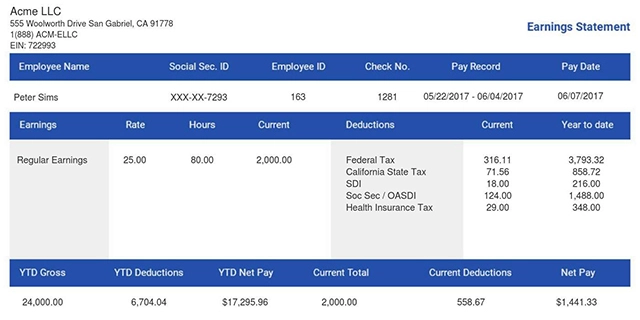
And for the underlying problem, which is usually proving income rather than waiting on a payment, get your documentation in order before someone asks for it. Create a professional pay stub with ThePayStubs in a couple of minutes. It works whether you are documenting your own income for a rental application or producing records for your staff.
You Might Also Like
- 1. Enter Your Information

- 2. Select Your Favorite Theme

- 3. Download Your Stub!


 By
By