

Good Standing: What It Means and How to Prove It (2026)
 By
By
A bank asks for proof that your LLC is in good standing, and you've got a week to send it. Don't panic. This proof is a simple state document, and most owners can get it online in minutes. It matters to you too if you're self-employed and use a pay stub template to prove income for a loan or a lease. It also matters if you run a small team and plan to hire in a new state.
This guide explains what the term means, what the certificate shows, when you need it, and how to order one. It also covers what to do if your status has lapsed.
Key Takeaways
- Good standing means your business is current on state reports, fees, and taxes.
- A certificate of good standing is official proof of that status on a given date.
- Most states issue it online for $0 to $50, often in minutes.
- Sole proprietors can't get one, so they prove their business in other ways.
- What Does Good Standing Mean?
- What Is a Certificate of Good Standing for a Business?
- Which Businesses Can Get One
- What Does a Certificate of Good Standing Look Like?
- Is a Certificate of Good Standing Required?
- How to Get a Certificate of Good Standing
- What Happens If You Lose Good Standing?
- Proof of Business Without a State Certificate
What Does Good Standing Mean?
Good standing means your business is active in state records and up to date on its state duties. That usually covers filing annual reports, paying state fees and franchise taxes, and keeping a registered agent on file. Lose any of those, and the state can change your status to delinquent, suspended, or dissolved.
In short, the good standing meaning comes down to one thing. You've done what the state asked of you.
The phrase shows up outside business filings, too. An employee in good standing has no open discipline issues, which can matter for rehire, a transfer, or an employment verification letter. A member in good standing has paid their dues. A nurse or lawyer in good standing holds an active license with no sanctions.
For companies, though, the certificate of good standing meaning is narrow. It's a snapshot of your record with the state that formed you, and nothing more.
What Is a Certificate of Good Standing for a Business?

It's an official state document that confirms your company exists and has met its filing duties as of the issue date. The secretary of state, or a similar agency, issues it. Banks, lenders, buyers, and other states ask for one as quick proof that your business is legitimate and active.
States don't all use the same name for it. Here's what a few of them call it:
| State | Official Name |
|---|---|
| New York, California, Florida | Certificate of Status |
| Oregon | Certificate of Existence |
| Pennsylvania | Certificate of Subsistence |
| Texas | Certificate of Fact, Status |
| Delaware | Certificate of Good Standing or Certificate of Status |
Some states also issue a certificate of authorization. That one covers a company formed elsewhere that's allowed to work in their state.
What Is a Letter of Good Standing?
Usually it's just the state certificate, called by a looser name. People say "good standing letter" all the time when a bank really wants the official state document. Some colleges, churches, and licensing boards also issue their own letters. Those confirm a person's status, not a company's.
What Is a Certificate of Status for an LLC?
It's the name New York, California, and Florida use for the good standing document. It shows whether your LLC is active, suspended, or dissolved. Oregon calls its version an LLC certificate of existence, and it proves the same thing.
Which Businesses Can Get One
Only businesses that register with the state can get this certificate. The state can't vouch for a company it doesn't track.
| Business Type | Can It Get a Certificate? |
|---|---|
| Limited liability company | Yes |
| Corporation | Yes |
| Limited partnership (LP) or LLP | Yes, if registered with the state |
| General partnership | Only in states that require registration |
| Sole proprietorship | No |
If you own an LLC, ask your state for an LLC certificate of good standing. You'll order it from the same office that approved your formation papers. A corporation orders a corporate certificate of good standing from the same office. The steps and fees are usually the same for both. That holds for a single-owner or multi-member LLC too.
Buyers and banks sometimes call any of these papers a company certificate of good standing. They're all asking for one proof: that your entity is active. Corporate certificates like these are public records, so anyone can order a copy of yours.
What Does a Certificate of Good Standing Look Like?

Most are a one-page PDF or printed letter with the state seal. They list your legal business name, entity type, formation date, file number, a status line such as "active" or "in good standing," the issue date, and a signature or verification code that others can check online.
A certificate of good standing New York sample from the Department of State follows this layout. It costs $25 and carries the title Certificate of Status. An Oregon certificate of good standing is officially a Certificate of Existence. It costs $10 online and arrives in minutes.
Some states offer two versions. Delaware charges $50 for a short form certificate that shows your name and status. Its long form certificate of good standing costs $175 and also lists every document you've filed.
Keep one limit in mind. Most of these certificates don't prove you've paid your payroll or income taxes. Texas splits the two, with a separate certificate of account status from its Comptroller.
Before you send yours, compare the certificate of good standing company name to the name on your bank or loan application. They should match exactly. Even a missing "LLC" can slow down a review.
Is a Certificate of Good Standing Required?
No. You don't need one to run your business day to day, and no state makes you keep one on file. You'll need one when a third party asks for proof, such as a bank opening an account, a lender approving a loan, or another state approving a foreign registration.
Here are the most common times someone will ask:
- Opening a business bank account
- Applying for a loan, line of credit, or business credit card
- Setting up card payment processing
- Selling your business or bringing in investors
- Renewing some business licenses and permits
- Registering to do business in other states
That last one catches growing teams. Say you hire a remote worker in another state and run payroll there. You'll usually need to register there first, and that state wants a recent certificate from your home state.
How to Get a Certificate of Good Standing
Getting one takes four steps, and you can do most of them online. You won't need a lawyer or a filing service. Here's how to obtain a certificate of good standing without paying a middleman:
- Check your status first. Look up your business name in your state's online business search. It should read "active" or "good standing."
- Fix any problems. If you owe a fee or a late report, clear it before you request the certificate. The state won't issue one until you do.
- Order from the right office. You'll get an SOS certificate of good standing in most states. The office name varies, so a quick web search helps. Try searching "certificate of good standing secretary of state" plus your state's name to find the order page.
- Download or wait for mail. Online orders often arrive as a PDF right away. Mailed copies can take a week or two.
Most owners get a certificate of good standing from secretary of state websites in one sitting. A few states use a different office, such as a corporations division or a state tax agency.
Stuck on how to get certificate of good standing paperwork for your state? Go back to step one. A quick status search often shows the problem (like a missed annual report) before you pay anything.
Fees and Turnaround in Sample States
| State | Fee | How Fast |
|---|---|---|
| Colorado | Free | Print from the state site |
| Oregon | $10 | Minutes, online |
| New York | $25 | Varies by request method |
| Delaware | $50 short form, $175 long form | Varies by request method |
Watch out for letters that offer to get your certificate for a fee. Colorado and Oregon both warn owners about these mailings. The official version is often cheaper or free, so order straight from the state records office.
What Happens If You Lose Good Standing?
The state flags your business as delinquent or suspended and won't issue a certificate. Late fees pile up, and some states dissolve the entity after a grace period. You can also lose liability protection and the right to sue in state courts until you file the missing reports and pay what you owe.
The usual causes are simple to spot. Owners miss an annual report, let a registered agent lapse, or skip a franchise tax payment.
To restore your LLC good standing, most states ask you to:
- File every overdue annual report.
- Pay back fees, taxes, and penalties.
- Name a registered agent if yours lapsed.
- Submit a reinstatement form if your entity was dissolved.
Once the record shows "active" again, you can order a new certificate.
Proof of Business Without a State Certificate
Sole proprietors can't get this certificate, so they need other ways to show the business is real. A landlord, lender, or client will usually accept a mix of these:
- A DBA filing or local business license
- Your IRS letter that confirms your EIN
- Business bank statements
- 1099 forms from your clients
- Pay stubs that show your income
That last item helps freelancers and gig workers most. If you pay yourself from your business, a paystub generator for the self-employed creates stubs that show steady income.
You Might Also Like
- Pay Stubs for Loan Applications
- Employment Verification and Proof of Income Documents
- Proof of Income Documents: 6 Times You'll Need a Pay Stub
- Self-Employed? Here's How to Show Proof of Income
- How to Find Your EIN Number
Conclusion
Good standing is a simple idea: your business has kept its promises to the state. File your reports on time, pay your fees, and keep a registered agent. Then a certificate is only a quick order away when a bank or buyer asks.
Your state certificate proves your business exists, but lenders and landlords often want proof of income too. Use our paystub generator to create clear, accurate pay stubs in minutes.
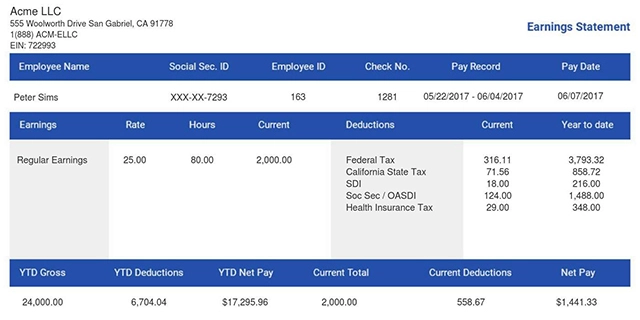
- 1. Enter Your Information

- 2. Select Your Favorite Theme

- 3. Download Your Stub!

 By
By