

Benefits Administration Software: 2026 Buyer's Guide
 By
By
Open enrollment ends, and someone in HR has to type 40 plan choices into payroll by hand. One wrong digit, and a worker pays for family coverage they never picked. Benefits administration software exists to stop that from happening. It takes the forms, the carrier emails, and the payroll updates and puts them in one system. If you run payroll in-house, a check stub maker keeps each deduction visible on every stub.
This guide explains what these tools do, the main types of platforms, and what they cost in 2026. You'll also see how plan choices turn into lines on a pay stub. Then we cover when a small team needs a tool and how to pick one without a sales pitch.
Key Takeaways
- Benefits administration software handles enrollment, eligibility, carrier data, and payroll deductions in one place.
- Most vendors charge per employee per month, but setup and add-on fees change the real cost.
- Small teams with one plan can often use their payroll system's benefits tools instead.
- Always test deductions with a parallel payroll run before you go live.
- Employees should compare their first pay stub of the plan year with their enrollment choices.
- What Is Benefits Administration Software?
- Key Features of Benefits Administration Software
- Why Businesses Move Benefits Out of Spreadsheets
- Types of Employee Benefits Platforms
- How Benefits Administration Software Connects to Payroll and Pay Stubs
- Does a Small Business Need Benefits Admin Software?
- Compliance Rules Your Benefits Platform Should Track in 2026
- How to Choose Benefits Administration Software
- How Much Does Benefits Administration Software Cost?
- How to Roll Out a New Benefits Platform
What Is Benefits Administration Software?
Benefits administration software is a tool that runs your company's benefits in one place. Workers pick health, dental, and retirement plans online. The system checks who qualifies, sends each choice to the insurance carrier, and passes the right deduction to payroll. It replaces paper forms, email chains, and spreadsheets.
Think of it as the hub between three groups. HR sets up the plans and rules. Employees log in to enroll, add a spouse, or report a new baby. Carriers and payroll get clean data without anyone typing it twice.
Demand is steady because benefits are a big part of pay. According to the Bureau of Labor Statistics, 72% of private industry workers had access to medical care plans in March 2025. For full-time workers, that figure was 87%. Every one of those plans needs someone, or something, to manage it.
You'll also hear this tool called employee benefit software, a benefits portal, or "ben admin." The names differ, but the job is the same.
Key Features of Benefits Administration Software

Most tools share the same key features. The depth of each one is what sets them apart.
Open Enrollment Tools
Good open enrollment software walks each worker through their choices step by step. It shows plan costs per paycheck, flags deadlines, and sends reminders to anyone who hasn't finished. HR can see who's done and who still needs a nudge. This makes benefits enrollment faster for new hires too.
Eligibility Rules and Life Events
The system applies your rules on its own. For example, it can make a new hire eligible after a 60-day waiting period. It also handles life events, such as a marriage or a birth. Each one opens a short window to change plans.
Employee Self-Service and Decision Support
Late-night questions like "is my daughter still on my dental plan?" shouldn't need an HR ticket. With employee self-service, workers check coverage, update dependents, and grab plan documents whenever they want. Many tools add decision support, like side-by-side plan comparisons or cost estimates based on expected doctor visits.
Payroll Sync and Carrier Connections
This is where most benefits errors start, so it's worth a close look in any demo. A two-way sync maps each plan to the right payroll code. Carrier connections, often called EDI feeds, send enrollment changes straight to insurers. That means no more emailing spreadsheets to each carrier.
Compliance Support and Reporting
Missed notices and deadlines are where fines come from. Most vendors sell built-in compliance support that tracks ACA hours, triggers COBRA notices, and stores signed forms. Reports show plan costs, participation rates, and who waived coverage.
Why Businesses Move Benefits Out of Spreadsheets
Spreadsheets work until they don't. Each new plan, location, or life event adds another tab, and the data entry never stops. Worse, the same numbers get typed into payroll and sent to carriers, with no payroll integration to catch errors. One mistake spreads to three places.
Benefit management software fixes this at the source. Data is entered once and shared everywhere. HR spends less time answering "what plan am I on?" emails. Owners get a clear view of benefits management costs. Employees get answers without waiting for someone to check a file.
For a 25-person shop, that can mean hours back each week during open enrollment. For a 200-person company, it can mean avoiding costly billing errors with carriers.
Types of Employee Benefits Platforms

There's no single "right" employee benefits platform. The best fit depends on your size and the systems you already use. Here are the five main types.
| Platform Type | Best For | How It's Usually Priced | Watch Out For |
|---|---|---|---|
| Standalone ben admin tool | Mid-size and large employers with many plans | Per employee per month | Needs integrations with payroll and HR systems |
| HR or HCM suite module | Companies that want one login for HR, payroll, and benefits | Bundled or per module | Benefits features may be lighter than a standalone tool |
| Payroll add-on | Small businesses already using a payroll provider | Add-on fee per employee | Limited plan choices and carrier connections |
| PEO | Small teams that want large-group health plans | Percent of payroll or per employee fee | You share employer duties and may lose plan control |
| Broker or carrier portal | Very small groups with one or two plans | Often included with the plan | Only works with that broker's or carrier's plans |
A fully integrated HCM suite is the simplest setup, since HR, payroll, and benefits share one database. Many companies pick HR benefits administration software for that reason alone. BambooHR benefits administration is one example: it runs as a module inside that vendor's HR platform, so enrollment data sits next to employee records. A standalone tool usually offers deeper administration capabilities, such as complex eligibility rules or multi-state plans.
Broker portals and benefits enrollment platforms from carriers are a good starting point for tiny teams. You can move to a larger system later as you grow.
How Benefits Administration Software Connects to Payroll and Pay Stubs
Here's the part most guides skip. Every plan choice has to become a deduction on a paycheck. Benefits administration software is what makes that link.
The flow looks like this:
- An employee picks a plan and coverage level during enrollment.
- The system assigns a deduction code and a per-paycheck amount.
- That data syncs to payroll before the next pay run.
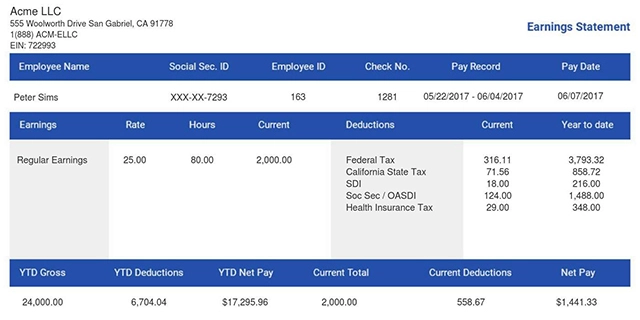
- The deduction appears as its own line on the employee's pay stub.
Some deductions come out pre-tax. Health, dental, and vision premiums under a Section 125 cafeteria plan usually lower taxable wages. So do health FSA and HSA contributions. Others come out after tax, such as Roth 401(k) deferrals. Employer contributions often show as memo lines, so the worker can see what the company pays.
When the sync fails, the error lands on the paycheck. A missed update can mean a worker keeps paying for a plan they dropped.
What Employees Should Check
Most benefit enrollment platforms send a confirmation when you finish. Save it. When the new plan year starts, open your first pay stub and match each line to your choices. Keep your own records? Our pay stub templates make it easy to show deductions clearly.
Does a Small Business Need Benefits Admin Software?
Not always. A business with fewer than 10 workers and one health plan can often use its payroll system's benefits tools or a broker's portal. Dedicated benefits admin software starts to pay off at around 20 to 50 workers, when COBRA and ACA rules apply and plan choices multiply.
Picture two businesses. A 12-person landscaping company offers one health plan and a simple retirement plan. Its payroll provider's add-on handles everything, and the owner reviews it once a month.
Now picture a restaurant group with 60 employees across three locations. It has part-time staff with shifting hours, several plans, and high turnover. Under IRS rules, an employer with at least 50 full-time employees, including full-time equivalents, is an applicable large employer. That group must track hours and offer coverage, and a spreadsheet won't keep up.
Compliance Rules Your Benefits Platform Should Track in 2026
Good benefits software doesn't make you an expert in benefits law. It does keep the key rules in front of you. Here's what to confirm your tool covers this year:
- ACA: Applicable large employers must offer affordable coverage. For 2026, coverage is affordable if the worker's share is no more than 9.96% of household income. These employers also file Forms 1094-C and 1095-C.
- COBRA: Federal COBRA applies to employers with 20 or more employees. The tool should flag qualifying events and send notices on time.
- HIPAA: Health data must stay private, so look for strong access controls.
- ERISA: Most employer plans need plan documents and summaries that employees can access.
- 2026 limits: The health FSA limit is $3,400. The dependent care FSA limit rose to $7,500. HSA limits are $4,400 for self-only and $8,750 for family coverage.
A common mistake is forgetting to update limits in January. If the old caps stay in the system, workers can over-contribute without anyone noticing.
How to Choose Benefits Administration Software
Start with a list of must-haves before you book demos. Then use the questions below to test each vendor. The goal is to see how the tool handles your real problems, not a scripted tour.
| What to Check | Question to Ask in the Demo | Red Flag |
|---|---|---|
| Payroll and HR integration | Does data sync both ways, and how often? | Only one-way file exports |
| Employee experience | Can we test enrollment as an employee? | No demo login for staff |
| Compliance automation | How do you handle ACA reporting and COBRA? | Extra fees for every form |
| Security | Do you offer role-based access and two-step login? | Vague answers about data storage |
| Pricing | What's the full cost over three years? | Setup fees revealed late |
| Customer support | Who helps us during open enrollment? | Shared ticket queue only |
Ask each vendor to walk through one mid-year life event from start to finish. Watch how many clicks it takes, and check that the deduction change reaches payroll. That single test tells you more about the employee experience than any feature list.
Talk to your benefits broker as well. Brokers often know which systems connect well with your carriers, and some help with setup at no extra charge.
How Much Does Benefits Administration Software Cost?
Most vendors charge a fee per employee per month (PEPM). Others sell an annual contract or bundle benefits into a payroll or HR suite. The monthly fee is only part of the bill. Setup fees, carrier data feeds, ACA reporting, and COBRA add-ons can raise the total, so compare three-year costs.
When you get a quote, ask for each of these line items:
- One-time setup or implementation fee
- Monthly per-employee fee and any minimum
- Charges for each carrier connection
- ACA reporting and COBRA administration fees
- Fees for extra modules, like leave or retirement tracking
Put every quote on the same three-year sheet. A tool with a lower monthly rate can cost more once add-ons are counted.
How to Roll Out a New Benefits Platform
Most rollouts take four to eight weeks. Start at least two months before open enrollment so you have room to fix problems.
- Audit your data. Clean up employee records, dependents, and current elections first. Bad data in means bad deductions out.
- Set up plans and rules. Enter each plan, its costs, and its eligibility rules with the vendor.
- Connect payroll and carriers. Test every deduction code and carrier feed.
- Run payroll in parallel. Process one pay period in both the old and new systems, then compare every deduction line. This catches most errors before workers see them.
- Tell employees early. Send a short notice two to three weeks before launch that explains what's changing and where to log in.
- Plan for your first open enrollment. Make sure the vendor's support team is on call during that window.
After launch, review enrollment rates and support tickets. The benefits platform should cut questions, not create them.
You Might Also Like
- Payroll Management Tools for Small Businesses
- Voluntary Deductions on Your Paycheck
- State Pay Stub Laws
- Benefits of an Automated Payroll System
- What Is a Post-Tax Deduction?
Conclusion
Benefits administration software earns its cost when it ends double entry. It also keeps you on the right side of ACA and COBRA rules. Most of all, it gets each deduction right the first time. Match the platform type to your size. Test it with a real life event, and compare three-year costs before you sign.
Clean pay records matter just as much once those deductions start. Use our paystub generator to create clear, accurate pay stubs that show every benefit line.
- 1. Enter Your Information

- 2. Select Your Favorite Theme

- 3. Download Your Stub!

 By
By