


Succession Planning Definition: Process and Benefits (2026)
 By
By
Ask two people what succession planning means and you get two different answers. An HR manager pictures a leadership bench. A business owner pictures handing over the keys. Both are right, and that is exactly why the succession planning definition trips people up. The term covers one idea but two very different jobs.
This guide sorts it out: the plain definition, the four stages, how the term shifts for owners versus HR teams, and the pay records a plan depends on. A pay stub generator covers that last part.
Key Takeaways
- Succession planning names the roles a business cannot run without, then prepares people to fill them.
- The process runs in four stages: identify roles, assess people, develop them, then review.
- Owners use the term for transferring the company. HR teams use it for covering roles.
- Every plan leans on documented pay records for the jobs it covers.
- The Succession Planning Definition, Explained
- Succession Planning Definition vs. Succession Management
- Why Is Succession Planning Important?
- The Benefits of Succession Planning for Employers and Employees
- The Succession Planning Process: 4 Stages
- Business Succession Planning vs. Leadership Succession Planning
- Succession Planning Best Practices
- The Payroll Records Your Succession Plan Depends On
The Succession Planning Definition, Explained
The succession planning definition is simple. It is the process of naming the roles a business cannot run without, then preparing internal candidates to fill them before they open up. It covers leadership roles and hard to replace specialists, and it runs year round rather than starting the week someone quits.
So what is succession planning once you strip the jargon? It is a written answer to one question. If this person left tomorrow, who covers the job, and what would they need first?
A succession planning model covers two groups. The first is leadership roles, from a shift supervisor up to the owner. The second is the quiet specialist nobody thinks about until they are gone. Think of the one bookkeeper who knows how payroll actually runs.
It helps to say what the term does not mean. This is not a job ad written the day someone quits. It is not a promise of promotion either. The plan names candidates and gaps. It does not hand anyone the key roles it describes.
Succession Planning Definition vs. Succession Management
A succession plan is the document. It names a specific role, the people who could take it, and what each still needs. Succession management is the ongoing program that keeps those documents accurate as people are promoted or leave. The plan is the snapshot. The management is the habit of updating it.
The succession plan meaning is narrow on purpose. One role, one page, a short list of names.
Now ask a second question: what is succession management? That one points at the wider program. It means the review calendar, the development budget, and the person who owns the whole thing.
For a business with no HR department, the difference is practical. Write the plan first. The management part is just a note in your calendar. Reread the plan twice a year, because successors change faster than job descriptions do.
Why Is Succession Planning Important?
Succession planning matters because most businesses are not ready. SHRM benchmarking puts formal plans at just 16% of smaller firms, against 44% of the largest. Without one, an exit costs months of stalled work. It also costs knowledge that walks out the door and a rushed hire.
The importance of succession planning shows up only after someone leaves. A departure does not just remove a person. It removes context.
Leadership transitions stall projects that were already in flight. Pricing logic, client history, and the reason a process works all leave with the person who built it. Business continuity is the blunt version of the argument. A growth plan assumes the people who built the business are still around to run it.
Nobody argues with the succession planning definition in a meeting. Acting on it before you need it is the hard part.
The Benefits of Succession Planning for Employers and Employees

The upside splits cleanly by who you are.
Benefits for the Business
Internal succession planning is cheaper than the alternative. You are not paying a recruiter to find someone who needs six months to learn the building. It also sharpens the difference between payroll and compensation: you are budgeting a career path, not a single hire. Coverage is faster because the candidate already knows the customers, the systems, and the quirks.
Pairing leadership development and succession planning also lifts the quality of the bench over time. Talent development stops being a perk and becomes a staffing decision. Firms that run real development programs usually end up with more future leaders than they strictly need.
Benefits for Employees
The succession planning benefits on the employee side are simpler and often underrated. People stay where they can see what comes next.
Career succession planning gives team members a named target instead of a vague hope that good work gets noticed. It also removes a quiet anxiety. Being prepared for a role is very different from being handed it in a crisis. Anyone weighing that step should read the pros and cons of being a business manager.
The Succession Planning Process: 4 Stages
Most versions of the succession planning process run in four stages. Here is how they look in a 12 person contracting firm whose only estimator retires next year.
1. Identify Your Critical Roles
Start with the jobs that stop revenue when they sit empty, not the jobs highest on the org chart. For the contracting firm, that is the estimator, not the office manager. Most small businesses land on three or four critical roles, not thirty. Counting by full time equivalent headcount helps when a job is split across two part time people.
2. Assess Who Could Step Up
Name real people against each role and be honest about how ready they are. A 9 box succession planning grid is the usual tool here, plotting performance against potential. A sticky note works too. This is where succession planning and talent management meet, because the reviews you already run answer most of the question.
3. Build Development Plans
Readiness gaps are specific, so the fixes should be too. The estimator's likely successor can read blueprints but has never priced a job over $200,000. Development plans work best when they name the gap, the way to close it, and a date.
4. Review and Update the Plan
Calendars beat good intentions here. A plan written once is wrong within a year. Set a fixed date to revisit it, and revisit it again after any big change. Most succession planning examples fail at this stage rather than the first one. There is a reason the succession planning definition includes the word planning. It is an activity, not a document you file.
Business Succession Planning vs. Leadership Succession Planning
Two readers can use the same phrase and mean completely different things. What the succession planning definition points at shifts depending on whether you own the company or staff it.
Business Succession Planning for Owners
Business succession planning is about ownership, not org charts. It answers who ends up holding the company when you retire, sell, or cannot work. It also covers how that transfer gets funded and taxed.
CEO succession planning sits right at the overlap, because the chief executive is both a role to fill and often a shareholder. Board succession planning follows the same logic for directors. Key positions in a small firm are often held by the owner alone. That is why the two meanings blur.
Family Business Succession Planning
The hardest version of this problem shows up at the dinner table. Ownership, jobs, and relatives all land in one decision. The successor gets picked for family reasons as much as skill.
Family business succession planning is also where the odds are worst. Roughly 30% of family businesses survive through the second generation, and 10% to 15% make it to the third. Writing it down early, while everyone is still on speaking terms, is what separates the firms that make the jump.
Succession Planning Best Practices

A short list beats a thick binder. The succession planning best practices that survive contact with a small business are the cheap ones.
Start with one page per critical role. Knowing how to calculate hourly, weekly, and monthly income makes that first line easy. A usable succession planning template needs only four lines:
- What the role pays
- Who could cover it within 90 days
- What that person still needs
- Where the role's records live
Name a second candidate for every role, because your first choice may leave first. Tell people they are on the list. A succession planning strategy kept secret motivates nobody and surprises everyone.
Then measure it. The succession planning key metrics worth tracking are simple. What share of openings did you fill from inside? How many critical roles have a ready successor? How long does readiness actually take? Effective succession planning shows up in that first number climbing. Leadership talent you grew is cheaper and stays longer than leadership talent you bought. Move those numbers and the succession planning definition has earned its keep.
The Payroll Records Your Succession Plan Depends On
Here is the part the guides leave out. A plan stalls on paperwork more often than it stalls on people.
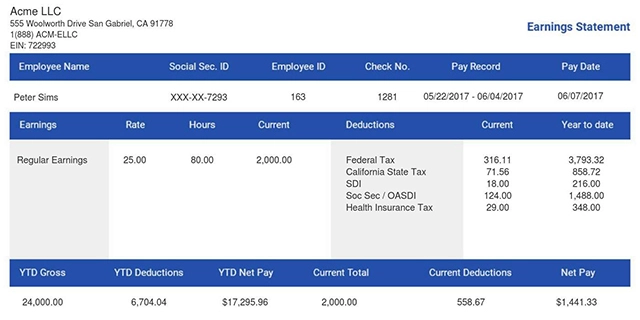
Picture it. The successor is named, the role opens, and the offer stops dead. Nobody wrote down what the job actually paid. Not just the base rate: overtime patterns, shift differentials, and how bonuses were worked out.
Four records make the handoff work:
- Pay history for the role, so the offer is anchored to reality instead of memory. State pay stub laws set how long you have to keep it.
- A pay band for the position, so an internal promotion is not priced by whoever asks loudest.
- Contractor records, including 1099s, when a critical job sits outside payroll. Here is whether independent contractors should receive a pay stub.
- Clean pay stubs for the successor's own file, which matter the moment a promotion turns into a mortgage application.
None of this is exotic. Nothing in the succession planning definition mentions payroll, which is exactly why this step gets skipped.
You Might Also Like
- Employment Verification Letter
- Pay Period Breakdown
- Shift Differential
- How to Acquire an Earnings Statement
- What Is Paychex
Conclusion
You could fit the succession planning definition on a napkin. Know which roles you cannot afford to lose, and know who is being prepared to take them. The work lives in the four stages and the annual review, not in the wording.
Run HR for 200 people or own a shop with six: the first step is the same. Start with the roles that would hurt most. Write one page each. Then make sure the pay records behind those roles are clean and current. Need documents for a promotion, a new hire, or your own files? A paystub generator makes accurate stubs in about two minutes.
- 1. Enter Your Information

- 2. Select Your Favorite Theme

- 3. Download Your Stub!

 By
By