PTO Meaning Work: What Paid Time Off Is and How It Works
 By
Your pay stub shows a line called "PTO" and a balance next to it, whether it came from payroll software or a check stub maker. If you searched "PTO meaning work," the answer is simple: PTO is paid time off. It's the hours your employer pays you for when you're not on the job. The rules behind it are less simple. How you earn it, when you can take off, and whether you get paid for unused days all depend on your employer and your state.
This PTO meaning work guide is for both sides of the paycheck. Workers will learn how PTO is earned, used, and paid out. Small business owners will see how to set up a fair PTO policy and record it on pay stubs.
Key Takeaways
- PTO means paid time off: hours you're paid for while you're off work.
- Federal law doesn't require private employers to offer PTO.
- Most plans use separate buckets, one PTO bank, or unlimited PTO.
- Payout of unused PTO depends on state law and company policy.
- PTO is taxed like regular wages and shows up on your pay stub.
PTO Meaning Work: What Is PTO?
PTO stands for paid time off. At work, it's the hours your employer pays you for even though you aren't working, such as vacation, sick days, and personal days. Federal law doesn't require private employers to offer it, so each company sets its own amount, accrual rate, and rules in a written PTO policy.
That's the core PTO meaning work teams use every day. It covers time away from the job that still shows up in your paycheck. Spanish speakers often search "PTO que es," and the answer is the same: tiempo libre pagado.
So what is PTO in practice? It's a benefit, not a legal right. The Fair Labor Standards Act doesn't require payment for time not worked, like vacations, sick leave, or holidays. These benefits are a deal between you and your employer.
Paid time off can also mean different things in other settings. At a school, PTO is a parent-teacher group. On a tractor, it's a power take-off shaft. This article covers the work meaning only.
For employee PTO, the details live in your handbook or offer letter. Look for how many hours you get, how you earn them, and what happens to unused time.
How Does PTO Work? Three Common Systems

Most employers use one of three systems. A traditional plan splits time into separate vacation, sick, and personal buckets. A PTO bank puts all paid hours into one pool you can use for any reason. Unlimited PTO sets no fixed cap, but a manager still approves each request based on workload.
Traditional Plan (Separate Buckets)
You get set amounts for each type of leave. For example, you might get 10 vacation days, 5 sick days, and 2 personal days. Sick time can only cover illness. This setup gives you less choice, but it protects time for when you're sick.
PTO Bank (One Pool)
All your paid hours go into one bank. You might get 120 hours a year and use them for any reason. A beach trip, a sick child, or a car repair all come from the same balance. Workers like the freedom. Employers like that there's only one number to track.
Unlimited PTO
Here, nothing builds up in a balance at all. You take days off when your work is covered and your manager signs off. There's usually nothing to pay out when you leave, since no hours build up. Our guide to open-ended time off plans covers the fine print.
You may also see "FTO." When people compare FTO vs PTO, FTO means flexible time off. It works a lot like the open-ended plan above.
| System | How Time Is Tracked | Best For |
|---|---|---|
| Traditional | Separate vacation, sick, and personal buckets | Employers that want to protect sick time |
| PTO bank | One pool of hours for any reason | Hourly teams and growing small businesses |
| Unlimited PTO | No balance, manager approval | Salaried teams judged on results |
Types of Employee PTO
This benefit can cover many kinds of leave. Some are offered by choice. Others are required by state or local law. Here are the most common types.
| Type | What It Covers | Paid by Law? |
|---|---|---|
| Vacation time | Rest, travel, or a day off for any reason | No federal rule |
| Sick leave | Your illness or caring for a sick family member | Required in some states and cities |
| Personal days | Errands, appointments, or personal time | No |
| Paid holidays | Set days like July 4 or Thanksgiving | No federal rule |
| Floating holidays | A holiday you pick yourself | No |
| Bereavement leave | Time off after a death in the family | A few states require leave, often unpaid |
| Parental leave | Time after birth or adoption, including maternity leave | Paid only in some states |
| Jury duty | Serving on a jury | Job protection in most states, pay varies |
Paid sick leave is the type most often required by law. A growing number of states and cities make employers offer it. Bereavement leave rules vary even more by state. Medical leave under the federal Family and Medical Leave Act is unpaid, but many companies let you use your PTO so you still get a paycheck.
What about PTO vs vacation? Vacation is one kind of PTO. PTO is the wider term that also covers sick days and personal leave. The same logic applies to floating holiday vs PTO. A floating holiday is usually a single extra day you choose, while PTO is your full bank of paid hours.
How PTO Accrual Works

Accrual means you earn paid time off bit by bit as you work. It's the part of the PTO meaning work handbooks spell out in the most detail. A common rate is 1 hour of PTO for every 30 or 40 hours worked.
Here's a quick example. Say you earn 1 hour for every 40 hours worked. If you work 80 hours in a two-week pay period, you earn 2 PTO hours. Over 26 pay periods, that adds up to 52 PTO hours, or about 6.5 eight-hour days.
Retail and warehouse jobs often use this per-hour method. Office jobs often front-load the full year on January 1 instead. Either way, your pay stub should show your PTO hours earned, used, and left. See how PTO accrues for more rate examples.
When does PTO reset? It depends on your plan year. Many employers reset on January 1. Others reset on your hire date. Some let you carry over unused hours, while others use a "use it or lose it" rule. That rule isn't allowed in every state, so check local law.
How Much PTO Is Normal?
In the private sector, newer workers usually get about two weeks of paid vacation. Bureau of Labor Statistics data from March 2026 shows an average of 11 paid vacation days and 7 paid sick days after one year of service, with totals rising as tenure grows.
The same survey found that 80% of private industry workers have access to paid vacation. So if you're asking how much PTO is normal, a fair benchmark is about 18 total days a year. That count adds vacation and sick time together. Your PTO days may grow with each year of service. Long-time employees often get more. Here's a deeper look at how much PTO you get by job type.
For a small business, these numbers make a good starting point. Offering at least the average helps you hire and keep good workers.
Do Companies Have to Pay Out PTO?
No federal law requires it. Payout depends on your state and your employer's written policy. California treats earned vacation as wages, so all unused vacation must be paid at the final rate when you leave. Many other states only require payout if the company policy promises it.
Payout is the part of PTO meaning work rules people overlook most often. California's rules are the strictest. The state's Labor Commissioner says earned vacation can't be lost, even when you're fired. It also bans "use it or lose it" policies. A few other states also protect earned time, while many simply follow the employer's written policy.
PTO payout laws by state change often, so check your state labor department before you resign or let someone go. If your state leaves it up to the employer, your handbook is the rule that counts.
A payout check is taxed as wages. Many employers withhold federal tax on it at the flat 22% rate used for supplemental wages, so the check may look smaller than you expect.
Here's a tip before you give notice. Save a copy of your latest pay stub with your PTO balance on it. If your final paycheck comes up short, that stub is your proof. Missing old stubs? Our paystub template options help you rebuild clean records.
How PTO Meaning Work Rules Show Up on Your Pay Stub
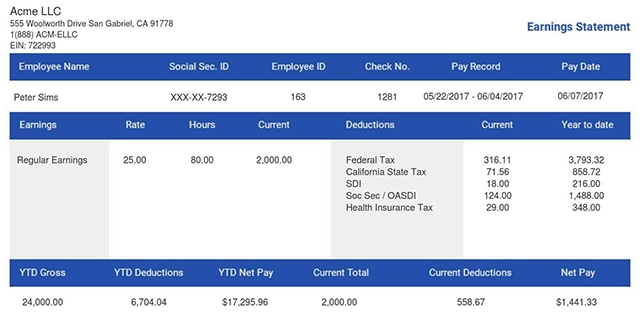
Your pay stub is where your employer's policy turns into real dollars. When you use PTO, it usually appears as its own earnings line, such as "PTO" or "Vacation," with hours times your regular rate.
Is PTO taxed? Yes. PTO pay counts as regular wages, so federal income tax, Social Security, Medicare, and any state tax come out of it like any other pay. Many stubs also show a PTO balance with hours earned, used, and left.
Does PTO count towards overtime? Under federal law, no. Overtime is based on hours you actually work. If you work 36 hours and take 8 hours of PTO, you're paid for 44 hours, but none of it is overtime pay.
Check your paycheck stubs each pay period. The PTO hours you used should match the PTO earnings line, and your balance should drop by the same amount. Mismatches are a common payroll mistake.
Setting Up a PTO Policy as an Employer
Clear written rules save arguments later, so hand them to every worker on day one. Spell out the PTO meaning work rules for your company in plain words. A free PTO policy template can speed this up. Cover these points:
- Eligibility: Who gets PTO, including part-time staff.
- Accrual rate: How many PTO hours each worker earns and when.
- PTO request process: How much notice is needed and who approves.
- Carryover and caps: What happens to unused hours at year end.
- Payout: Whether unused time is paid when someone leaves.
Keep records of every PTO request, approval, and balance. Good records help with state audits and wage claims. They also support work-life balance, since staff can see their time and plan rest. Many teams track this in their payroll or workforce management tool.
You Might Also Like
- State Pay Stub Laws
- Payroll Codes
- Employment Verification and Proof of Income Documents
- Accrued PTO Meaning
- Is PTO Taxed?
Conclusion
So, the short version of PTO meaning work: paid time off is time you're paid for while you're away from the job. How you earn it, use it, and cash it out depends on your employer's policy and your state. Workers should read their handbook and check their stub every pay period. Business owners should write a clear policy and keep accurate records. Need professional pay stubs that show PTO hours and balances? Use our paystub generator to create one in minutes.
- 1. Enter Your Information

- 2. Select Your Favorite Theme

- 3. Download Your Stub!

 By